
Indonesia Should Limit Local Content Rules for Semiconductors, OECD Says
Indonesia Should ‘Limit’ Local Content Rule for Semiconductors: OECD
Jakarta. The rich country club of OECD called on Indonesia to “limit” its local content requirements, saying that such restrictions can prevent its semiconductor ecosystem from flourishing.
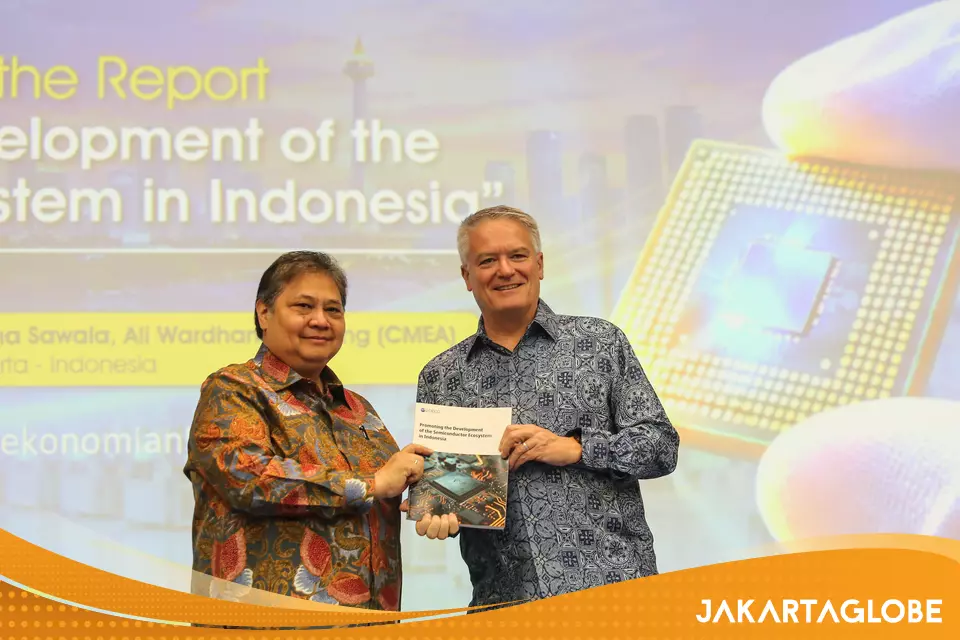
The OECD launched Wednesday its report on Indonesia’s semiconductor ecosystem. Jakarta has long insisted on pursuing the local content requirement, in which industries have to include a certain amount of domestic input in their production.
In its latest report, the OECD — short for Organization for Economic Co-operation and Development — wrote that the local content rule could undermine the growth of Indonesia’s semiconductor ecosystem, which remains at a nascent stage.
The organization warned of higher costs for firms if the local products are more expensive than the imports, thus “reducing the efficiency and competitiveness of Indonesian semiconductor end-user industries, lowering overall production and therefore demand for Indonesian semiconductors”.
It cautioned that the widespread rule could worry investors, citing the ecosystem’s current reliance on “highly specialized inputs that are not currently available in Indonesia”. The higher complexity and reporting burdens that such policies introduce are also likely to stymie investment.
“Ideally, Indonesia should limit the use of local content requirements, particularly where they undercut the international competitiveness of industries that require international inputs, such as electronics,” the report wrote.
The OECD even listed the semiconductor-using industries affected by the restrictions, including mobile phones, telecommunications equipment, public procurement goods, electric vehicles, to name a few.
At home, the government has been betting on the local content rule to not only cut dependence on imports, but also grow the economy. Asked whether limiting the local content rule can backfire on growth, OECD Secretary-General Mathias Cormann argued that Indonesia could unlock “more and better jobs from further developing its semiconductor industry”.
“But part of that is to make sure that some of the inputs as part of that process, the chip-making process and so on, are as competitive as possible,” Cormann told reporters in Jakarta.
“So by giving itself more options, more flexibility, Indonesia can put itself in a stronger position to really take advantage of the massive growth in global demand.”
Pressed whether Jakarta will follow up on the OECD’s recommendations to scrap the local content rule, Airlangga only replied that “the domestic semiconductor industries are mainly based in free trade zones”. Such areas provide import duty exemptions. Local content aside, sovereign fund Danantara has partnered with the British semiconductor giant Arm’s agreement to train 15,000 Indonesian engineers.
“We are quite strong in infrastructure and green energy. Logistics have improved, too. We have to make the most of this momentum. We mustn’t lose the data center boom that requires a lot of semiconductors or else, we would only be a market,” Airlangga said.
The report also came amidst Jakarta’s wish to join the OECD by 2028, believing that the rigorous accession process can put Indonesia on track to be a high-income economy.
Tags: Keywords:
Source: jawawa.id (https://jawawa.id/newsitem/indonesia-should-limit-local-content-rules-for-semiconductors-oecd-says-1795701019)
Originally published by jakartaglobe.id (https://jakartaglobe.id/business/indonesia-should-limit-local-content-rule-for-semiconductors-oecd)