
Indonesia Shakes Global Coal Market as Prices Hit 20-Month High
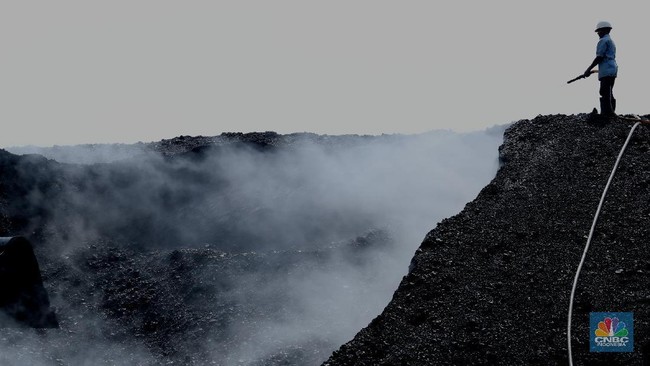
Major coal benchmark prices in Asia have risen to their highest levels in almost two years, triggered by new Indonesian export regulations that threaten to disrupt shipments. This situation is tightening supply amidst rising demand for power plant fuel as the summer season approaches.
According to Refinitiv data, coal prices closed at US$1_03.35 per tonne on Monday (8/6/2026), marking the highest position since October 2024, or approximately 20 months. Notably, in May 2026, Indonesia announced that PT Danantara Sumberdaya Indonesia (DSI) would take control of the shipment of several strategic commodities, including coal. The new system, implemented in June, has caused market confusion and delays in shipments from the world’s largest coal exporter, leading to expectations that Australian coal supply will help fill the market gap.
Coal demand is also expected to rise in the coming months as hotter weather hits Northeast Asia, increasing air conditioning usage in major consumer markets like China. Simultaneously, countries such as Japan are increasing coal usage to reduce reliance on Liquefied Natural Gas (LNG) after the closure of the Strait of Hormuz and attacks on major LNG export facilities in Qatar disrupted approximately 20% of global supply flows. Bloomberg data indicates that coal-fired power plants in Japan, a key buyer of Australian coal, are operating at higher levels than last year. Consequently, the Newcastle contract price curve has shifted to a backwardation structure, where short-term delivery prices are higher than future prices, typically signalling tight market supply.
In recent developments, the Minister of Energy and Mineral Resources, Bahlil Lahadalia, has decided to provide measured relaxation for national coal production. This will be regulated through revisions to the 2026 Work Plan and Budget (RKAB).
He stated that this move is a response to rising global coal prices driven by escalating global geopolitical tensions. Bahlil noted that relaxing domestic coal production could benefit the state, entrepreneurs, and the public. “Regarding the RKAB, including coal, we are closely monitoring the geopolitical tensions in the Middle East and global fluctuations. Ideally, the government, entrepreneurs, and the people want good prices and high production so that entrepreneurs profit, the state profits, and the people experience positive impacts. On that basis, we will provide measured relaxation; meaning, if prices are good, we will increase production. If prices begin to peak, we will implement policies to maintain the supply-demand balance,” he explained following a meeting with the Deputy Speaker of the House of Representatives, Sufmi Dasco Ahmad, and Danantara COO Dony Oskaria at the DPR Building on Monday.
He added that with the current upward trend in coal prices, increasing production would benefit the country. “We will monitor global prices; if they are favourable, we will implement measured relaxation. The goal is to secure good prices and ensure foreign exchange inflows,” Bahlil said. The government continues to monitor global geopolitical developments and their impact on world coal prices.
As previously noted, the government had set 2026 production targets in the RKAB at approximately 600 million tonnes. This represents a 24% decrease compared to the 2025 production realisation, which reached 790 million tonnes.