
Indonesia Sets 2027 Oil-Lifting Target at 612,500 Barrels a Day, but Risks Loom
Jakarta — Indonesia’s House of Representatives (DPR) approved the 2027 State Budget Bill as law at a plenary session on Tuesday (29 September 2026).
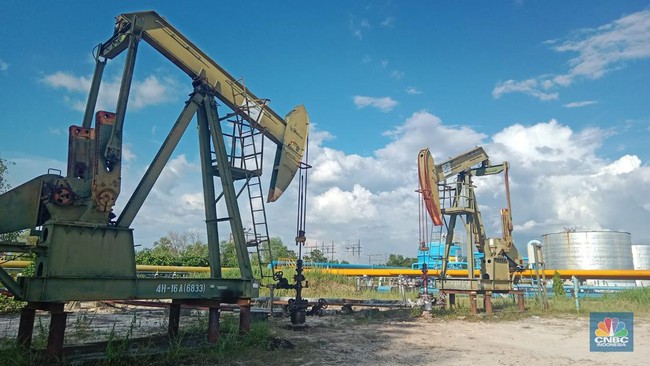
Among the targets set was oil and gas lifting for next year. Oil lifting is targeted at 612,500 barrels per day (bpd), while gas lifting is set at 954,000 barrels of oil equivalent per day (boepd).
Meeting the targets will not be easy, particularly as oil lifting has yet to reach 600,000 bpd.
According to data from the Special Task Force for Upstream Oil and Gas Business Activities (SKK Migas), average national oil production stood at 578,156 bpd as of 31 July 2026. National gas deliveries were 5,208 million standard cubic feet per day (MMSCFD), or 94.5% of the 2026 state budget target of 5,508 MMSCFD.
The government has also been urged to be alert to potential disruptions to oil and gas production in the coming years.
The ReforMiner Institute has warned of operational disruptions and investment barriers in the upstream oil and gas sector that could hamper efforts to meet national production targets.
Although the national upstream industry has managed to maintain a stable production profile and curb the natural decline rate of 15–20% a year at mature fields, the sustainability of the national lifting target faces three major on-the-ground challenges.
ReforMiner Institute research puts national oil lifting in the third quarter of 2026 at around 576,200–578,200 bpd. To sustain and increase output towards the national target, the government needs to address three key obstacles swiftly:
- Reliability of ageing production facilities
Ageing facilities and frequent unplanned shutdowns remain a major weakness in the upstream oil and gas sector. Preventive maintenance at key facilities is still not optimal, often disrupting the continuity of lifting.
- Heavy reliance on major producers
National oil lifting is highly sensitive to technical problems at its principal supporting blocks. For example, national output is affected when water cut and the gas-oil ratio (GOR) rise at ExxonMobil Cepu Ltd (EMCL), or when the power system at Pertamina Hulu Rokan (PHR) is disrupted.
- Permitting barriers and overlapping land use
Investment and operations in the upstream sector continue to face bureaucratic hurdles, including delays in environmental approvals (AMDAL and UKL/UPL) and permits to use forest areas (IPPKH/PPKH). Uncertainty over the status of Sustainable Food Agricultural Land (LP2B/LSD), as well as overlaps between operational sites and other sectors, continues to create investment bottlenecks.
ReforMiner Institute says legal certainty is needed through completion of the revision of the Oil and Gas Law, as well as a presidential instruction setting a maximum 30-day service-level agreement for integrated permits. Fiscal incentives, including flexibility in production-sharing splits, tax allowances and accelerated depreciation, are also needed to maintain the economics of enhanced oil recovery (EOR) at mature fields.
2027 State Budget
The House of Representatives formally approved the 2027 State Budget Bill as law at its seventh plenary meeting of the first sitting period of the 2026–2027 parliamentary year on Tuesday (29 September 2026). The meeting was chaired by House Speaker Puan Maharani.
The 2027 State Budget’s macroeconomic assumptions are:
Economic growth of 6.0%.
Inflation of 2.5%.
An exchange rate of Rp17,500 to US$1.
A 10-year government bond yield of 6.9%.
An Indonesian crude oil price of US$75 a barrel.
Oil lifting of 612,500 barrels per day.
Gas lifting of 954,000 barrels of oil equivalent per day.
Source: jawawa.id (https://jawawa.id/newsitem/indonesia-sets-2027-oil-lifting-target-at-612-500-barrels-a-day-but-risks-loom-1791539508)
Originally published by CNBC Indonesia (https://www.cnbcindonesia.com/news/20261009150720-4-774800/ri-patok-lifting-minyak-612500-barel-di-2027-waspada-gangguan-ini), translated from Indonesian