
Indonesia Sends 600 Workers to China for EV Battery Training Ahead of Karawang Plant Launch
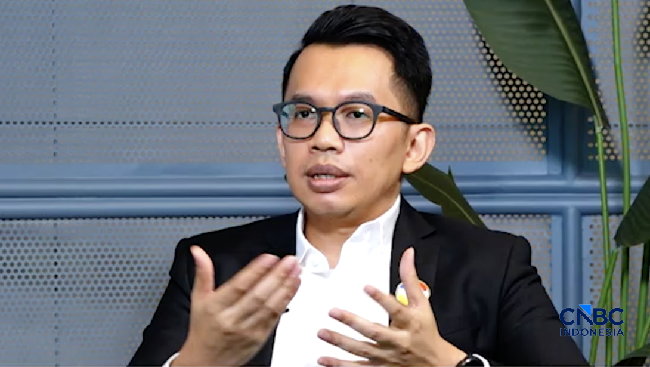
Indonesia Battery Corporation (IBC) has revealed it sent 600 Indonesian workers to China for hands-on training in electric vehicle (EV) battery manufacturing. The initiative is part of the development of the national EV battery ecosystem.
IBC President Director Aditya Farhan Arif explained that preparing high-quality human resources is a short-term priority for the company. The 600 workers were dispatched to gain direct industry experience ahead of the operational target for the CATIB battery cell plant in Karawang, West Java, a joint venture between IBC and Chinese battery giant CATL.
“For example, at CATIB, 600 Indonesian employees were sent to China for six months of education directly in the industry. We observed that the learning process there was very in-depth, not just classroom training, but until they could create their own standard operating procedures,” he said during the Mining Zone programme on Tuesday (23/6/2026).
The training programme is designed to close the skills gap between research and production needs. The goal is for workers to independently understand all technical aspects, from material management to battery cell assembly. “This is a very important knowledge transfer and will be accompanied by other efforts related to increasing technological capacity,” he added.
This human resource capacity building aligns with the operational target of the PT CATIB factory in Karawang, which is planned to begin commercial production in July 2026. The facility is a collaboration between IBC and Chinese battery giant CATL, projected to become a nickel-based battery production hub for both domestic and global markets.
“To form human resources at this industrial scale, they must be directly immersed in the industry. When the industry is not yet available, it becomes difficult. Therefore, we utilise every cooperation with global partners as a platform for human resource development,” he stated.
Minister of Energy and Mineral Resources Bahlil Lahadalia confirmed that the EV battery ecosystem project in Karawang will be completed by the end of July 2026. He described the project as one of the government’s strategic downstreaming programmes, reporting the progress to President Prabowo Subianto during a meeting at the palace.
“We held a meeting with the President to evaluate the downstreaming programme. I reported that our battery ecosystem programme for electric vehicles, a cooperation between CATL and Antam, is complete and will be inaugurated at the end of July,” Bahlil said.
In addition to downstreaming, Bahlil reported on national energy resilience, stating that Indonesia’s energy reserves are at a safe level, averaging above 20 days minimum.
The integrated EV battery ecosystem project involves PT Aneka Tambang (Antam), IBC, and Ningbo Contemporary Brunp Lygend Co. Ltd. (CBL), a joint venture of CATL, Brunp, and Lygend. The total initial investment for the upstream-to-downstream project reaches US$5.9 billion, equivalent to approximately Rp 96.04 trillion.
The project comprises six joint ventures (JVs). The upstream ecosystem includes JV 1, a nickel mining project by PT Sumberdaya Arindo with a production capacity of 7.8 million wet metric tons (wmt) of saprolite and 6 million wmt of limonite, which began production in 2023. JV 2 is a Rotary Kiln Electric Furnace (RKEF) smelter project by PT Feni Haltim with a capacity of 88,000 tons of refined nickel alloy per year, targeting initial production in 2027. JV 3 is a High Pressure Acid Leaching (HPAL) smelter project by PT Nickel Cobalt Halmahera with a capacity of 55,000 tons of MHP per year, targeting production in 2028.
The downstream ecosystem includes JV 4, a battery material project in East Halmahera producing cathode materials, cobalt sulphate, and ternary precursors with a capacity of 30,000 tons of Li-hydroxide, targeting production in 2028. JV 5 is the battery cell project by PT Contemporary Amperex Technology Indonesia Battery (CATIB) located in Artha Industrial Hill and Karawang New Industry City, West Java.