
Indonesia Seeks to Expand Chinese Investment in Renewable Energy
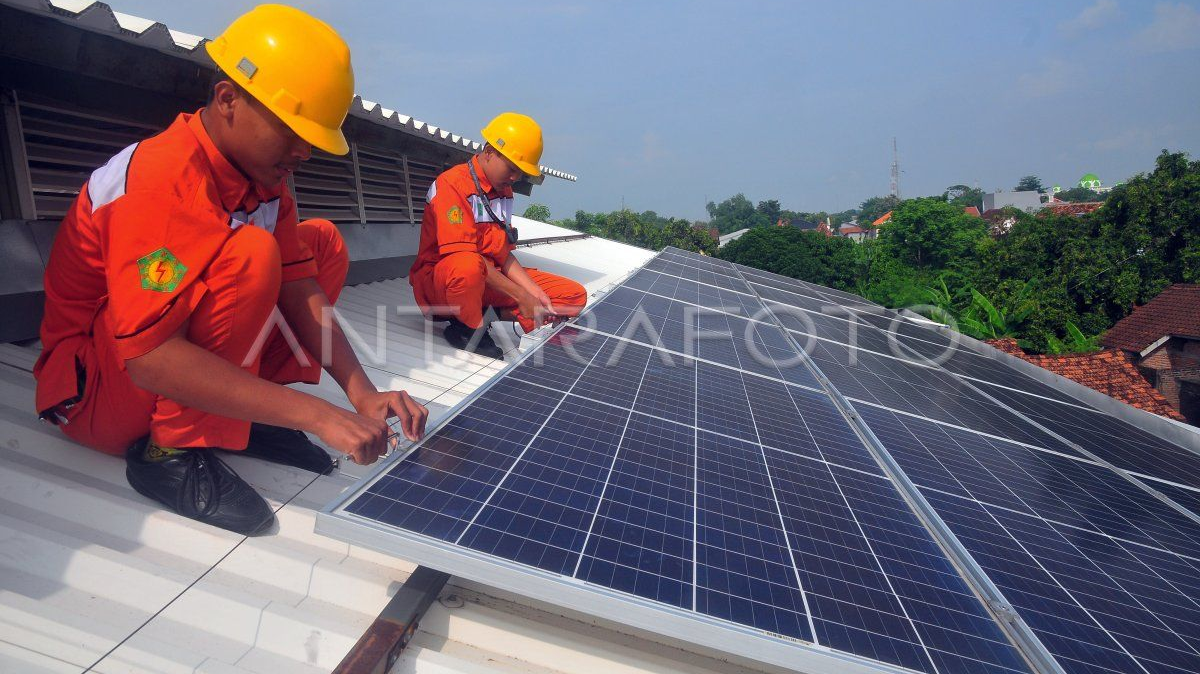
Expanding foreign investment in clean energy is one of the Indonesian government’s priorities as it accelerates the transformation of national industry. China is being targeted as a strategic partner because of its technological advantages and global renewable energy supply chains, Investor Daily reported.
The initiative was discussed at an Indonesia-China business forum, titled Mobilising China RE Investment into Indonesia, in Beijing on Monday (2 November 2026). Around 150 businesspeople, investors and government representatives from both countries attended.
The cooperation is intended not only to increase investment but also to strengthen bilateral economic ties. The government is also opening up opportunities for collaboration in sectors with stronger growth prospects and greater value added.
Clean-energy cooperation in focus
Deputy Minister for Creative Economy and Deputy Head of the Creative Economy Agency Irene Umar said partnerships to develop sustainable energy had significance beyond trade and corporate profits.
Irene said the involvement of multiple countries was needed to build a more sustainable future. She made the remarks while addressing the Indonesia-China business forum.
“When we talk about renewable and sustainable energy, the issue is not merely the quality of the transactions we undertake, but also how we shape the future of humanity,” Irene told forum participants on Monday.
Alongside clean energy, Irene said China’s creative economy offered other opportunities for cooperation. The gaming and short-drama industries were examples of fast-growing subsectors that make significant contributions to China’s economy.
Stronger ties between the two countries are expected to foster mutual appreciation and broaden the areas of partnership, so that economic relations are not based solely on trade and conventional industrial investment.
China’s renewable energy development
China’s clean-energy technology capacity is reflected in changes to its electricity generation mix and energy consumption. In 2025, the country’s carbon dioxide emissions intensity relative to gross domestic product (GDP) fell by 17.7 per cent compared with 2020.
Over the same period, non-fossil energy accounted for 21.7 per cent of total national energy consumption. This was supported by wind and solar power generation capacity of 1.84 billion kilowatts.
Capacity continued to expand in the first half of 2026. China’s total installed renewable energy capacity reached 2.46 billion kilowatts, equivalent to 60.7 per cent of the country’s total power generation capacity.
The figures reflect a major shift in China’s electricity sector. At the end of July 2026, renewable energy capacity exceeded coal-fired power capacity for the first time.
Government directs investment towards higher-value sectors
In recent years, Chinese capital has helped establish the foundations of basic industries in Indonesia and provided jobs for local workers. The government, however, wants to extend investment into other business areas.
Rizaldi Indra Janu, director of the Indonesia Investment Promotion Center (IIPC) in Beijing, said there was considerable scope to develop investment, particularly in industries that generate greater value added.
“From automotive to household goods, there is still ample room to expand into renewable energy, agriculture, the digital economy, healthcare and data centres,” Rizaldi said.
To support this expansion, the government has mapped several areas according to their industrial characteristics and economic potential.
West Java: The Cikarang and Jababeka areas have support ecosystems for the automotive, electronics, manufacturing and logistics industries.
Batam, Riau Islands: The area offers opportunities in exports, manufacturing, textiles and mineral component production.
East Java and Bali: Surabaya and Bali are seen as having potential for medical equipment and food processing industries.
In addition to identifying promising locations, the government is seeking to make investment more attractive through regulatory certainty and fiscal incentives. These measures are intended to support business activity and accelerate project implementation.
Available incentives include full or partial income tax relief through a tax holiday lasting five to 20 years. Investors may also receive a reduction of up to 30 per cent in net taxable income through a tax allowance.
Other incentives include a super tax deduction of 200–300 per cent. Business licensing has also been simplified through the Online Single Submission Risk-Based Approach (OSS RBA) system.
Chinese investment reaches US$38.34 billion
Data from the Ministry of Investment/Investment Coordinating Board (BKPM) show that investment from mainland China continues to contribute to Indonesia’s economy. Cumulative realised investment from 2021 to the first half of 2026 stood at US$38.34 billion.
The investment recorded average annual growth of 37 per cent and has generated jobs for 553,492 local workers.
Investment by reporting period was as follows:
2021: US$3.2 billion.
2022: US$8.2 billion.
2023: US$7.4 billion.
2024: US$8.1 billion.
2025: US$7.5 billion.
Second quarter of 2026: US$3.8 billion.
Basic metals remained the largest recipient of Chinese capital, accounting for 45 per cent of total investment, or US$17.2 billion.
The five business sectors receiving the most Chinese investment, according to the figures presented, were:
Basic metals industry: US$17.2 billion, or 45 per cent.
Transport, warehousing and telecommunications: US$5 billion, or 13 per cent.
Chemicals and pharmaceuticals: US$3.9 billion, or 10 per cent.
Housing, industrial estates and offices: US$2.6 billion, or 7 per cent.
Electricity, gas and water: US$1.6 billion, or 4 per cent.
Sulawesi is the largest investment destination
By region, Sulawesi received the largest share of Chinese capital, at US$15.47 billion, or 40.4 per cent of recorded investment.
Java ranked second, with US$11.92 billion, or 31.1 per cent. Maluku and Papua received US$7.52 billion, or 19.6 per cent.
At provincial level, the three largest recipients of realised investment were:
Central Sulawesi: US$14.16 billion.
North Maluku: US$7.09 billion.
West Java: US$5.39 billion.
Chinese investment supports Indonesia’s net-zero target
Expanding the partnership with China is also linked to Indonesia’s goal of reaching net-zero emissions by 2060 or earlier. To meet that target, Indonesia still needs substantial funding and faces challenges in accessing clean-energy technology with efficient and affordable processing costs.
China has an important position in global supply chains for renewable energy components. Its strengths include photovoltaic solar panels, wind turbines and electric vehicle (EV) batteries.
The availability of these technologies and production capacity is one of the factors behind Indonesia’s decision to expand investment ties with China. The partnership is expected to help meet the financing needs of domestic clean-energy infrastructure development.
Beyond increasing investment, the government has also made technology transfer a key objective of cooperation. Building the capabilities of local human resources is part of this strategy.
National capacity development is to be pursued through strategic partnerships involving state-owned enterprises and domestic private businesses. Under this approach, Indonesia-China cooperation will focus not only on bringing in foreign capital but also on strengthening the national industry’s ability to develop renewable energy technology.
Source: jawawa.id (https://jawawa.id/newsitem/indonesia-seeks-to-expand-chinese-investment-in-renewable-energy-1793634655)
Originally published by demokratis.co.id (https://demokratis.co.id/indonesia-investasi-china-energi-terbarukan), translated from Indonesian