
Indonesia Seeks to Develop Rare Earth Elements, Potential Cooperation with Japan
The Indonesian Mining Institute (IMI) has revealed that Indonesia has the opportunity to establish cooperation with Japan, particularly in the development of Rare Earth Elements (REE).
Chairman of the Indonesian Mining Institute, Irwandy Arif, stated that discussions regarding potential cooperation emerged during a recent meeting with the Head of the Mineral Industry Agency (BIM), Brian Yuliarto. Irwandy noted that discussions involving Japanese parties regarding cooperation with PT Timah are being considered. While PT Timah has previously engaged with foreign companies for the processing of monazite to produce REE, Uranium, and Thorium, no formal agreements have been realised to date.
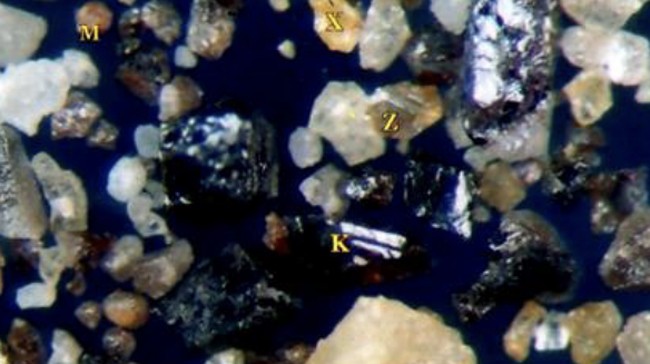
Indonesia possesses widespread REE potential, typically found as by-products of alluvial tin mining, nickel laterite, bauxite residue, and coal ash. Key minerals containing REE in Indonesia include monazite in Bangka Belitung, xenotime, and zircon.
Notably, the Mamuju region in West Sulawesi has drawn significant attention because it contains primary rare earth minerals, rather than merely by-products. This discovery has been noted by the Mineral Industry Agency (BIM) and may involve the Indonesian Mineral Association (Perminas).
Rare Earth Elements consist of 17 chemical elements in the periodic table with unique magnetic and chemical properties. They are classified into two groups: light rare earth elements and heavy rare earth elements. The heavy group is rarer and possesses much higher economic value due to its specific electron configurations.
In Indonesia, REE are generally found alongside the mining of other commodities such as tin, nickel, and bauxite. However, the recent identification of primary REE reserves in Mamuju, West Sulawesi, is a new focal point because the concentration is significantly higher than that of by-product minerals, opening opportunities for Indonesia to establish its own strategic mineral processing industry.
Research data indicates that the Mamuju find shows total REE concentrations as high as 4,500 to 6,000 ppm, far exceeding the 1,000 to 2,391 ppm found in Bangka Belitung. North Sumatra also holds potential with concentrations ranging from 2 to 1,400 ppm derived from granite weathering.
The largest uses for these elements include catalysts, glass, and polishing, with cerium accounting for 31% of usage. Lanthanum is also vital for catalysts and NiMH batteries, while Neodymium (Nd) is essential for permanent magnets. The use of REE-based magnets in sectors such as electric vehicle traction motors, wind turbines, and computer hard drives is projected to increase from 29% in 2023 to 41% by 2034.