
Indonesia Seeks to Break Free from Coal Dependency Since Soeharto Era
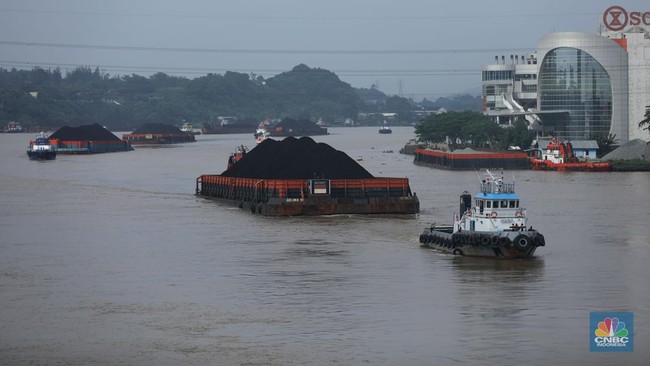
Indonesia’s Danantara Investment Management Agency has revealed that the government currently seeks to shift quadrants, from a nation reliant on natural resources to one championing technology. Managing Director of Industrialisation at Danantara stated that President Prabowo Subianto’s direction involves pursuing industrialisation based on technological foundations. This direction will lead Indonesia to move from a natural resource-dependent quadrant to an industrialised one utilising technology. “So, Mr Vice Minister explained that the government is like a ship, and this is our North Star—we want to head there. Why do we want to move from the quadrant of a nation that relies on natural resources, a resource-rich nation, towards more capability-driven, towards more technology-driven,” said Ardy during the kick-off of PINISI at Bank Indonesia’s headquarters in Jakarta on Monday (27/4/2026). Ardy noted that this intention has actually existed since the Soeharto regime, or 40 to 50 years ago, and will now be implemented. “Actually, this effort started 40-50 years ago from the time of Mr Soeharto, with Mr Habibie, unfortunately, then there was the monetary crisis back in 1998,” Ardy explained. Danantara then makes this industrialisation a principle in selecting investments. Danantara also sets three investment criteria: demand-driven, strategy-driven, and resource-driven. The resource-driven criterion includes the downstreaming programme to increase added value. “If all this time we’ve only sold our commodities, low added value, that’s a natural resource-based, resources-based economy. Well, an example of what we have with competitive value that’s already been done is first, of course, nickel, second CPO,” he clarified. Next is investment driven by demand, which Ardy explained includes one to replace imports. This initiative arises because Danantara sees that current domestic demand is large but dominated by import demand. “The target is if there’s demand that’s only being served by imports, if we can make certain investments and replace our imports, GDP will rise because we reduce imports.” The final criterion is strategy-driven investment, for example, in abnormal conditions like the current ones. “This is usually driven by whether it’s political turmoil, for example related to the defence industry, auto industry. Things that will make us a great nation in the future,” he said.