
Indonesia seeks global leadership through mangrove diplomacy
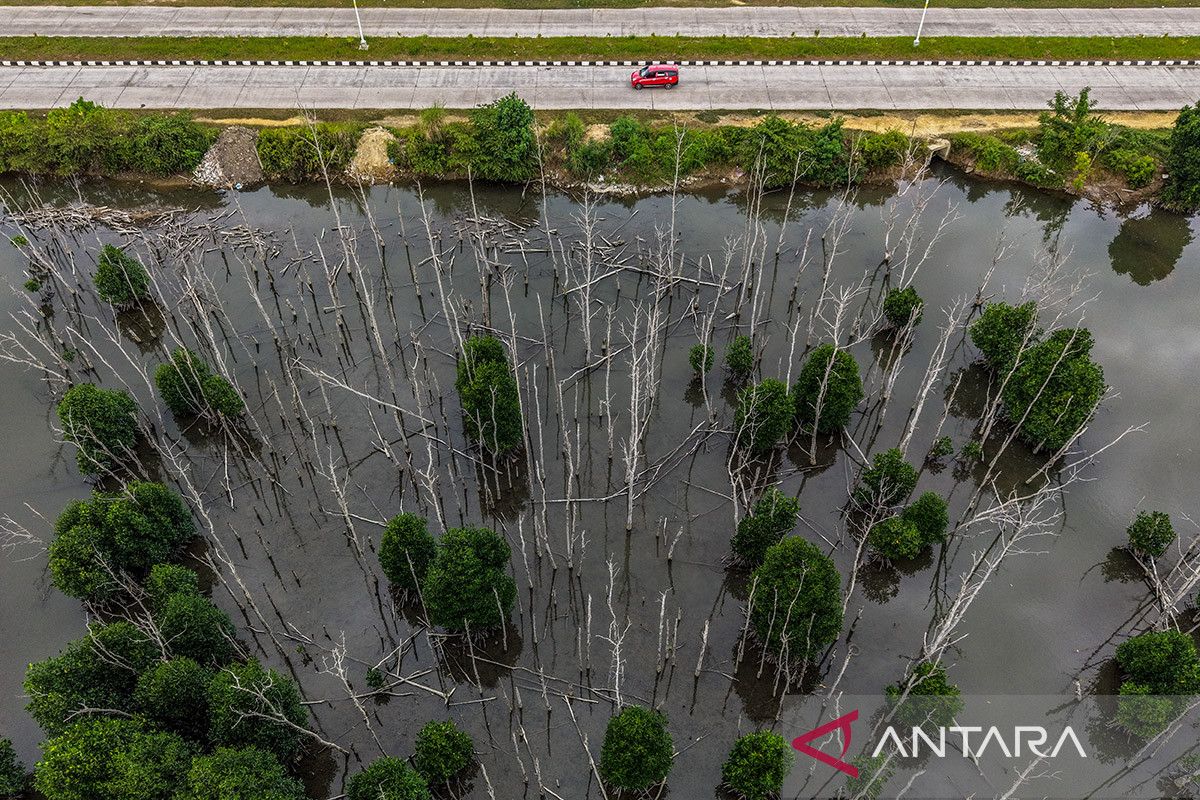
That gap has prompted the Ministry of Forestry to develop the World Mangrove Center (WMC), an initiative aimed at strengthening international collaboration on sustainable mangrove management.
In recent weeks, Indonesia has introduced the WMC at various international forums, including the ASEAN Working Group on Forest Management (AWG-FM) in Cambodia, the 30th APEC Experts Group on Illegal Logging and Associated Trade (EGILAT) in Shenzhen, China, and forestry cooperation talks with Australia.
The Ministry of Forestry has also said it will continue seeking broader recognition for the WMC through the 30th United Nations Climate Change Conference (COP30), the 21st session of the United Nations Forum on Forests (UNFF21), and the Asia-Pacific Economic Cooperation (APEC) forum.
The growing attention to the WMC comes as mangroves take on a larger role in the global environmental agenda. Once viewed mainly as coastal protection, mangroves are increasingly seen as a nature-based solution to climate change.
They absorb carbon, support biodiversity, reduce erosion risks, and sustain the livelihoods of coastal communities. That shift creates an opening for countries with practical experience in mangrove management to play a larger role in global environmental governance.
Indonesia has the assets to take on that role. With about 3.44 million hectares of mangroves, or nearly one-quarter of the global total, Indonesia has decades of experience in conserving, restoring, and managing tropical coastal ecosystems.
The challenge is no longer simply demonstrating the scale of those resources, but turning that experience into knowledge that can benefit other countries.
That is the rationale behind the Ministry of Forestry’s development of the WMC as a collaborative platform linking research, policy, financing, and mangrove management practices.
At the EGILAT forum in Shenzhen, Forestry Ministry Director for Forest Product Levies and Administration Krisdianto introduced the initiative to Australia and offered cooperation in research, innovation, and capacity building for coastal ecosystem management.
The WMC is therefore envisioned not simply as another international forum, but as a platform for building networks of knowledge and cooperation to strengthen mangrove management across national borders.
Yet one fundamental question remains. The world already has numerous organizations and forums dealing with climate change, forestry, and biodiversity.
What gap, then, remains for the World Mangrove Center to fill?
The answer could determine whether the WMC develops into an international reference center or simply adds another institution to an already crowded landscape of global environmental organizations.
Filling the gap
The question matters because the world does not lack commitments to protect mangroves. Numerous international agreements, organizations, and networks have already recognized the ecosystem as part of the response to climate change and biodiversity loss.
The problem lies not in the objectives, but in the lack of integration among science, policy, financing, and implementation on the ground within a common framework.
As a result, many countries pursue similar commitments but use different measures of success. Some focus on the area restored, others on carbon stocks, while the social and economic benefits for coastal communities are assessed using different approaches.
The differences are also evident in measurement, reporting, and verification (MRV) systems. Without commonly agreed standards, claims about restoration success, blue carbon potential, and ecosystem health can be difficult to compare and independently verify.
That can weaken not only the basis for policymaking, but also certainty for conservation financing and green investment, both of which depend on credible data.
Experience in global environmental governance suggests that such gaps can be bridged by institutions that connect science and policy. The Intergovernmental Panel on Climate Change (IPCC) has become a global reference by synthesizing scientific findings on climate change.
The Intergovernmental Science-Policy Platform on Biodiversity and Ecosystem Services (IPBES) performs a similar function for biodiversity. The influence of both bodies comes not from their authority to regulate countries, but from their ability to provide a trusted scientific foundation.
Arief Darmawan, an engineer at the National Research and Innovation Agency’s (BRIN) Center for Climate and Atmospheric Research, said a similar function should be developed through the World Mangrove Center.
He said the WMC should bridge science, policy, financing, and implementation while promoting common data standards and measurement methods that can be applied across countries.
Arief also stressed that successful mangrove management should not be measured simply by the area restored or the number of trees planted.
It should instead reflect the recovery of ecosystem functions, including hydrology, biodiversity, sedimentation, coastal connectivity, soil carbon stocks, and the benefits experienced by local communities.
Under that model, the WMC would not seek to replace existing international institutions. Its added value would instead come from connecting knowledge, policy, and field practices to produce scientific references that can be jointly used in mangrove management.
Building trust
Becoming an international reference center requires more than offering a relevant idea. The next challenge is building enough trust for the World Mangrove Center to be recognized as a credible scientific institution and for its work to be used internationally.
Indonesia has a foundation for that effort. Its experience managing mangroves across thousands of islands, implementing restoration programs, and involving coastal communities provides lessons that few other countries possess.
But Arief cautioned that possessing nearly one-quarter of the world’s mangroves provides ecological legitimac