
Indonesia Seeks Chinese Investment and Green Technology to Strengthen Energy Transition
BEIJING — The Indonesian Government is actively seeking strategic cooperation by widening the scope of investment from China, particularly in the renewable energy sector. The move reflects China’s leading position and technological strengths in green technology, which can support the global sustainability agenda.
The commitment was reaffirmed at the Indonesia-China business forum, “Mobilising China RE Investment into Indonesia”, held in Beijing on Monday (2 November 2026). The forum was attended by around 150 businesspeople, investors and government representatives from both countries.
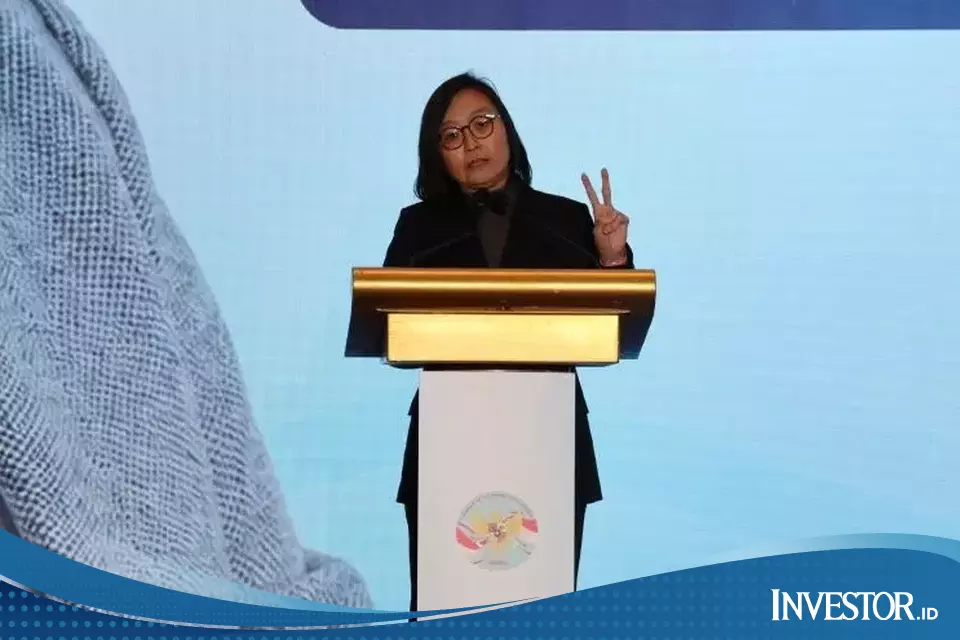
Deputy Minister for Creative Economy and Deputy Head of the Creative Economy Agency Irene Umar said cross-border cooperation in clean energy was not merely a matter of commercial calculations, but also a shared responsibility for the future of the planet.
“When we talk about renewable and sustainable energy, the issue is not just the quality of the transactions we undertake, but also how we shape the future of humanity,” Irene told participants on Monday.
She added that the cooperation aimed to foster mutual appreciation and strengthen the two countries’ strategic relationship. She also highlighted the rapid growth of China’s creative economy, including the gaming and short-drama industries, which now make a significant contribution to the economy.
China’s energy transition achievements offer global solutions
China’s strength in clean energy is reflected in its domestic achievements. In 2025, China reduced carbon dioxide emissions per unit of gross domestic product (GDP) by 17.7% compared with 2020. Non-fossil energy accounted for 21.7% of total national energy consumption, supported by installed wind and solar capacity of 1.84 billion kilowatts.
By the first half of 2026, China’s total installed renewable energy capacity had reached 2.46 billion kilowatts, or 60.7% of the country’s total power-generation capacity. It officially surpassed coal-fired power capacity for the first time at the end of July 2026.
Encouraging investment beyond basic industries
Rizaldi Indra Janu, director of the Indonesia Investment Promotion Centre (IIPC) in Beijing, said Chinese capital had played an important role in establishing Indonesia’s basic industrial foundations and creating jobs. The Government is now encouraging investment to expand into higher-value sectors.
“Automotive and household goods still have considerable room for growth, alongside renewable energy, agriculture, the digital economy, healthcare and data centres,” Rizaldi said.
He outlined potential investment locations for investors:
West Java (Cikarang and Jababeka): a strong ecosystem for automotive, electronics, industry and logistics.
Batam (Riau Islands): opportunities in exports, manufacturing, textiles and mineral components.
East Java (Surabaya) and Bali: potential in medical equipment and food processing.
To attract investors, the Government is guaranteeing regulatory certainty and making better use of a range of fiscal incentives.
These include income tax exemptions or reductions (tax holidays) lasting five to 20 years, a reduction of up to 30% in net income (tax allowances), super tax deductions of up to 200%–300%, and simpler business licensing through the Online Single Submission Risk-Based Approach (OSS RBA) system.
Chinese investment record and distribution in Indonesia
According to data from the Ministry of Investment/Investment Coordinating Board (BKPM), realised investment from mainland China in Indonesia totalled US$38.34 billion from 2021 to the first half of 2026. It grew by an average of 37% a year and generated employment for 553,492 local workers.
Annual investment was US$3.2 billion in 2021, rising to US$8.2 billion in 2022, before reaching US$7.4 billion in 2023, US$8.1 billion in 2024 and US$7.5 billion in 2025. It stood at US$3.8 billion through the second quarter of 2026.
The five leading sectors for Chinese investment were:
Basic metals: US$17.2 billion (45%).
Transport, warehousing and telecommunications: US$5 billion (13%).
Chemicals and pharmaceuticals: US$3.9 billion (10%).
Housing, industrial estates and offices: US$2.6 billion (7%).
Electricity, gas and water: US$1.6 billion (4%).
Sulawesi received the largest share geographically, at US$15.47 billion (40.4%), followed by Java with US$11.92 billion (31.1%), and Maluku and Papua with US$7.52 billion (19.6%). The provinces receiving the most investment were Central Sulawesi (US$14.16 billion), North Maluku (US$7.09 billion) and West Java (US$5.39 billion).
Indonesia has set an ambitious target of reaching net-zero emissions by 2060 or earlier. However, major challenges in delivering the national energy transition include the scale of the funding required and the availability of efficient, affordable clean-energy processing technologies.
China currently has the world’s largest supply chain for renewable energy components, including photovoltaic solar panels, wind turbines and electric-vehicle batteries.
Indonesia’s effort to engage China is intended not only to close the domestic investment gap, but also to encourage technology transfer and strengthen the capabilities of local workers through strategic partnerships with state-owned enterprises and domestic private-sector businesses.
Source: jawawa.id (https://jawawa.id/newsitem/indonesia-seeks-chinese-investment-and-green-technology-to-strengthen-energy-transition-1793634644)
Originally published by investor.id (https://investor.id/international/460422/perkuat-transisi-energi-indonesia-bidik-investasi-dan-teknologi-hijau-dari-china), translated from Indonesian