
Indonesia Seeks AI Investment, but Jatiluhur Data Centre Project Tests Regulatory and Infrastructure Readiness
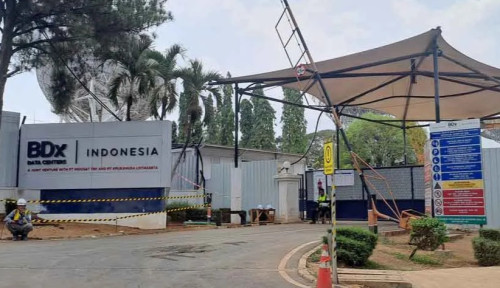
The temporary suspension of construction of an artificial intelligence (AI) data centre owned by Big Data Exchange (BDx) Indonesia in Jatiluhur, Purwakarta, West Java, has highlighted the challenges facing digital infrastructure investment in Indonesia. In addition to certainty over permits, the availability of water and energy is a key factor that must be considered to ensure data centre expansion does not disrupt public needs.
Nailul Huda, an economist at the Center of Economic and Law Studies (CELIOS), said demand for data centres in Indonesia would continue to rise as internet use grows and digital platforms become more widespread. However, that increased demand must be matched by the readiness of supporting infrastructure, particularly water and electricity supplies for facility operations.
“Growing data centre needs also require significant energy, particularly water for cooling and electricity,” Nailul told Warta Ekonomi on Saturday (10 October 2026).
He said data centre development could not be assessed solely in terms of the potential of the digital market and the scale of investment. The government and businesses also need to ensure that resource use does not harm ecosystems or reduce public access to essential services.
Nailul said electricity supplies needed adequate energy sources, including new and renewable energy. Water needs, meanwhile, should be assessed in light of supply sources and usage arrangements to avoid disrupting existing ecosystems.
He also highlighted the need for clear rules governing data centre construction in different regions. In his view, differing interpretations of the applicable regulations among local governments could create obstacles for developers.
“Permits relating to this ecosystem need to be clearly explained by the government, because some regions have different understandings. As a result, a particular regional head may reject a project,” he said.
In the context of investment, Nailul said the government needed to provide regulatory certainty while encouraging the development of data centre zones supported by adequate infrastructure. Water, electricity and telecommunications connectivity should be factored into planning from the outset to ensure investment is sustainable.
For Nailul, permitting issues in data centre construction are closely linked to certainty for businesses. Before committing substantial capital, investors need clarity on procedures, requirements and the readiness of infrastructure at their chosen location.
He said the government should provide local administrations with clear guidance on developing data centre zones, including arrangements for meeting water and energy needs.
Ideally, data centre zones should be developed through integrated planning, he said. This would allow developers to understand available resource capacity and assess the impact of facility operations on the surrounding environment.
Water availability, for example, should not be assessed solely by the size of the available allocation. The government also needs to understand how data centres use water, whether through circulation systems or other methods, and how this affects the needs of other sectors.
Alongside infrastructure readiness, Nailul said certainty over policies requiring personal data to be localised could affect the outlook for Indonesia’s data centre business.
He said policies encouraging people’s data to be processed and stored domestically, in accordance with applicable rules, could generate demand for local infrastructure. As more digital platforms are required to meet operational requirements in Indonesia, demand for domestic data storage and processing capacity could rise.
“Creating a domestic market is key for investors. People’s data must be processed and stored domestically to generate demand at home,” Nailul said.
He added that regulatory certainty and the creation of a domestic market could help investors estimate the long-term business potential of data centres.
However, these economic opportunities need to be matched by the government’s ability to provide a clear regulatory framework and ensure resources are available. This would allow growing demand for data centres without creating new problems for the environment or public services.
Rp3.5 trillion BDx project temporarily halted
The issues of infrastructure readiness and permits came into focus after West Java Governor Dedi Mulyadi temporarily halted construction of BDx Indonesia’s AI data centre in Jatiluhur, Purwakarta Regency.
The project, valued at Rp3.5 trillion, drew attention after the local government found during an inspection that required permit documents had not been completed. The documents in question included an Environmental Impact Assessment (AMDAL) and Building Approval (PBG).
Dedi stressed that the temporary halt was part of enforcing the rules, not an attempt to deter investment in West Java.
“When I asked yesterday, the building permit [IMB] had not been issued. Had the environmental assessment been issued? No. So I said construction should not proceed yet. The permit has not been issued. Where does the fault lie? With the Purwakarta local government? No. The consultant is at fault; they had not submitted the data by the time I arrived,” Dedi said in Bandung on Friday (2 October).
Dedi said the government would assess the project objectively, taking into account the environmental review. Input from academics at the University of Indonesia (UI) would also be sought to assess the project’s feasibility.
He said the project could be considered for continuation if the environmental assessment found that it met the requirements. Conversely, if the assessment found it unsuitable, construction should be stopped.
“Personally, if the environmental assessment objectively gives it a pass, there is no problem with proceeding. If the assessment says it cannot go ahead, then it must be stopped,” he said.
Dedi added that the interests of nearby residents remained a key consideration, particularly their access to water from the Jatiluhur Reservoir.
He warned that water use by the data centre industry must not reduce supplies needed by the public. Investment development, he said, must not come at the expense of the basic needs of residents in the surrounding area.
Meutya Hafid says computing and public needs must be balanced
Communications and Digital Minister Meutya Hafid also commented on the controversy surrounding the Jatiluhur AI data centre. She stressed that growing national computing needs must go hand in hand with the availability of energy and water for the public.
Meutya said data centres were necessary infrastructure for supporting digital activity. However, their construction must take account of a region’s capacity to provide resources without disrupting the needs of other sectors, particularly public services.
“With data centres, a balance must be found. We have needs and computing capacity requirements that require data centres. At the same time, we must consider whether energy supplies are sufficient; energy availability must not be disrupted for other purposes, especially public services,” Meutya said at the Ministry of Communications and Digital Affairs office in Jakarta on Wednesday (7 October).
“Water needs must not be disrupted either,” she added.
Meutya said the selection of data centre locations required coordination across sectors. The government must consider national computing needs, the number of internet users, connectivity quality, and the availability of water and energy in areas being considered for construction.
“The location also needs to be determined. Is water available there? What are the energy needs there, and is there a good signal?” she said.
She warned against excessive data centre construction without calculations of demand and the region’s capacity to support it. In her view, selected locations must be able to support data centre operations without reducing water or energy availability for the public.
The government, Meutya added, needed to ensure that computing infrastructure requirements were met while the public continued to have access to essential services.
“People’s needs must not be disrupted, but at the same time computing needs must be met,” she said.
Source: jawawa.id (https://jawawa.id/newsitem/indonesia-seeks-ai-investment-but-jatiluhur-data-centre-project-tests-regulatory-and-infrastructure-readiness-1791643838)
Originally published by wartaekonomi.co.id (https://wartaekonomi.co.id/read640010/indonesia-memburu-investasi-ai-tetapi-proyek-data-center-jatiluhur-menguji-kesiapan-regulasi-dan-infrastruktur), translated from Indonesian