
Indonesia Secures US$2 Billion Investment Commitments from 30 Chinese Firms
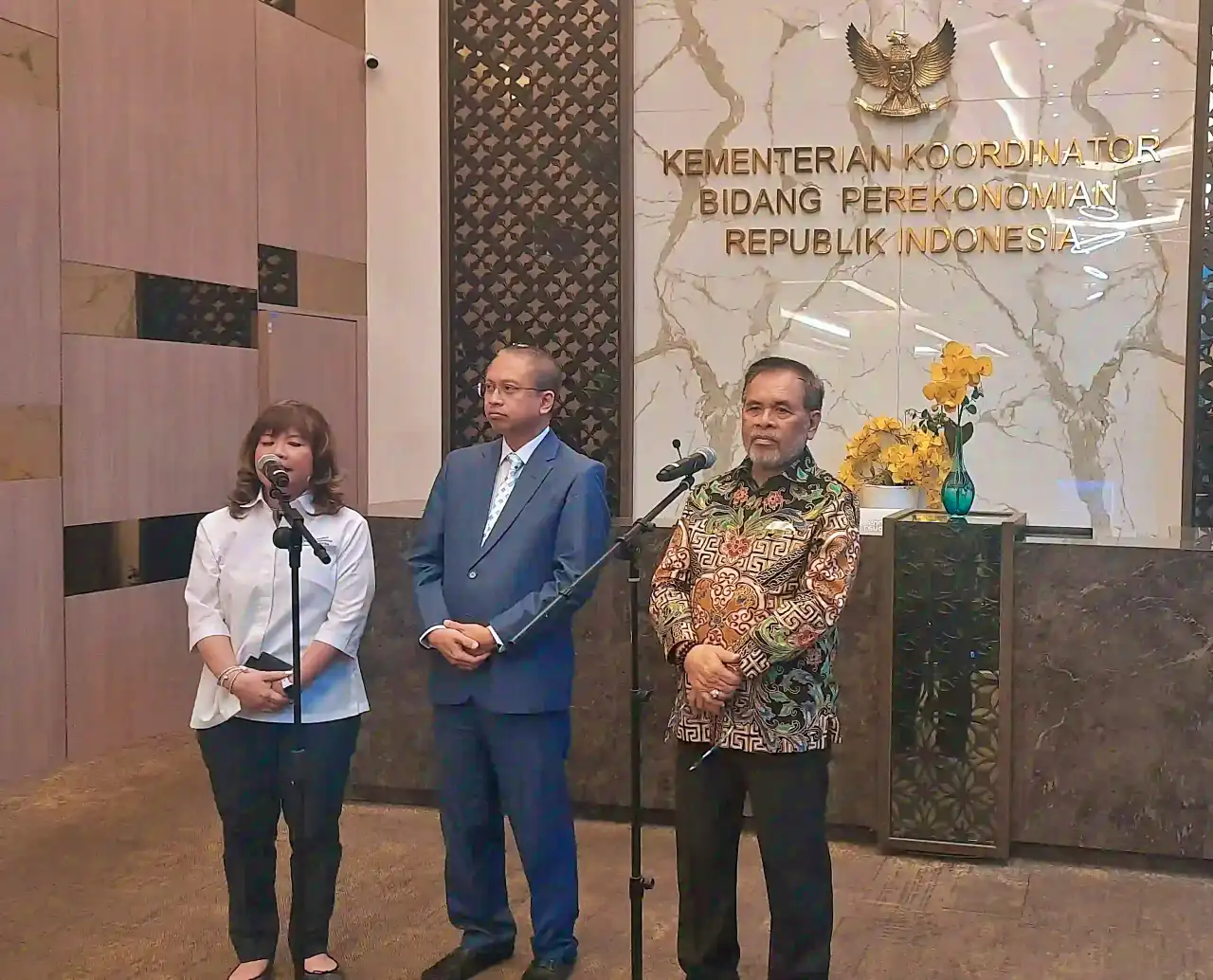
A bilateral business forum bringing together Indonesian and Chinese entrepreneurs at the Coordinating Ministry for Economic Affairs in Jakarta on Thursday (23/7) produced significant results. The meeting successfully generated new business deals and investment commitments worth US$2 billion.
Indonesia’s Ambassador to China, Djauhari Oratmangun, stated that he had brought approximately 30 Chinese company leaders operating in future technology, energy transformation, and healthcare sectors to meet potential partners in Indonesia.
‘I attended with around 30 companies from China engaged in future technology, innovation technology, and secondly in renewable energy, so energy transformation, and several in the healthcare sector… resulting in several collaborations and agreements worth approximately US$2 billion,’ Djauhari explained.
This new investment cooperation reinforces the economic growth trend between the two countries. Djauhari noted that throughout 2025, total trade between Indonesia and China reached US$168 billion. Entering 2026, Indonesia’s trade balance performance remains solid, with trade value from January to June 2026 reaching US$101 billion based on Chinese customs data. Indonesia recorded a trade surplus of US$5.6 billion, whilst investment inflows from China to Indonesia in the first half of 2026 approached US$10 billion.
Djauhari added that Chinese investor interest is now shifting towards high-technology and environmentally friendly sectors aligned with the Indonesian government’s priority agenda, such as waste-to-energy processing, artificial intelligence, and semiconductor manufacturing.
Beyond tangible investment commitments, the strengthening of bilateral economic cooperation is also reflected in the optimisation of the Local Currency Settlement scheme, reducing reliance on the US dollar. Implementation of trade transactions using the Rupiah and Yuan currency pair recorded a significant surge of 200 per cent year-on-year during the January to June 2026 period. This trend is considered to further bolster transaction cost efficiency and strengthen domestic exchange rate stability against global financial market volatility.