
Indonesia-Russia Trade Target Set at US$10 Billion as Kadin Engages SMEs and Boosts Investment
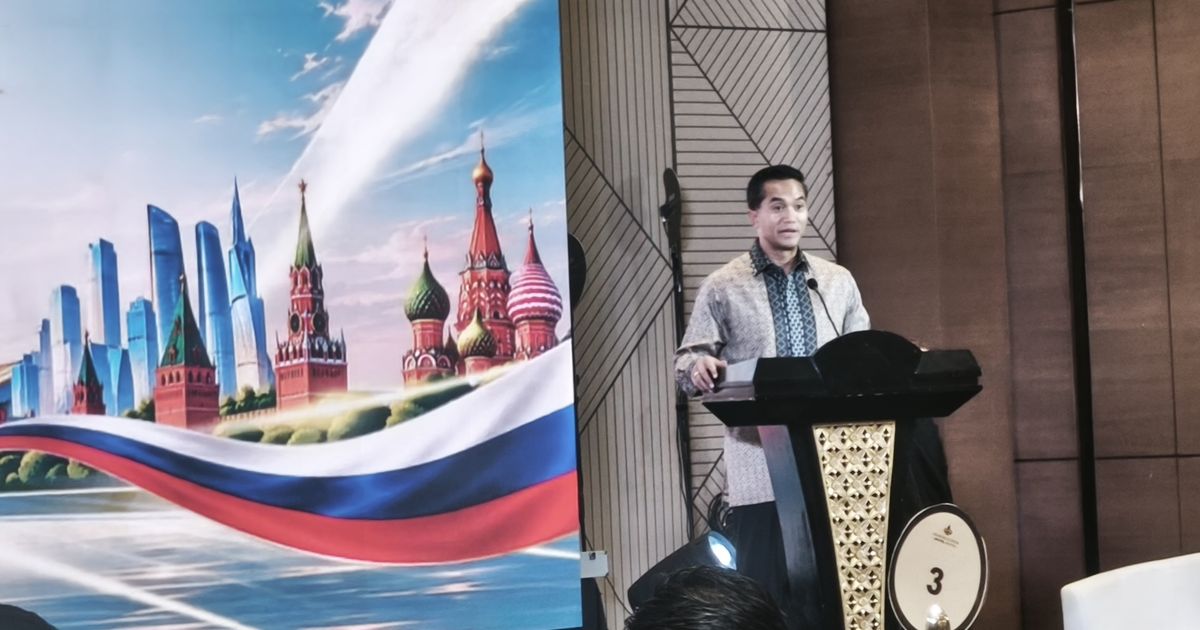
JAKARTA – The Indonesian Chamber of Commerce and Industry (Kadin) is seeking to strengthen economic ties between Indonesia and Russia by increasing trade, two-way investment and industrial co-operation.
The move follows the government’s target of doubling the value of Indonesia-Russia trade over the next five years, from about US$5 billion in 2025. President Prabowo Subianto announced the target in a speech at the ‘The Far East: Development for the Benefit of the People’ forum in Vladivostok, Russia, in early September 2026, in the presence of Russian President Vladimir Putin.
“I like the idea discussed by our two presidents,” Kadin Indonesia chairman Anindya Bakrie said at Artotel Mangkuluhur in Jakarta on Thursday (15 October 2026).
Anindya stressed that trade growth should be balanced so that businesses in both countries benefit.
To encourage exports, Kadin introduced the ‘We Buy from Indonesia’ book, which features around 80 global company brands, including Apple, Adidas, Tesla and Airbus, that have purchased certain components from Indonesia. Anindya said the opportunities should be used to encourage these companies to increase their purchases of Indonesian products and components.
Kadin is also developing a platform to help the government and businesses map Indonesia’s exports. With exports worth around US$300 billion across various industries, the mapping is expected to identify products sold, destination countries and trade values.
Through this approach, Kadin wants to ensure that trade opportunities go beyond government-level discussions and the signing of agreements. Businesses, particularly Kadin members, are expected to make practical use of these opportunities to expand markets and increase investment.
Role of SMEs
Anindya also highlighted the importance of micro, small and medium-sized enterprises (MSMEs) in sustaining the national economy. He said around 92% of Indonesia’s US$1.5 trillion gross domestic product (GDP) comes from activity outside government spending, including domestic consumption, investment and net exports.
Meanwhile, around 97% of businesses in the Kadin community are small and medium-sized enterprises. Their significant role means they should be involved in every initiative to strengthen trade and investment.
He said the 1997-98 crisis showed that MSMEs helped support the economy when companies came under pressure.
“So it is our duty to ensure they benefit from what we are discussing,” Anindya said.
Wider market access and investment opportunities are expected to give MSMEs scope to join supply chains and industrial partnerships between the two countries.
Potential in four areas
Anindya identified at least four areas with potential for bilateral co-operation: trade and market access, industrial partnerships, food and energy security, and transport and connectivity.
In trade, the two countries are seen as having opportunities to expand exchanges of products ranging from palm oil, food and consumer goods to fertiliser. In industry, Russia’s expertise in heavy industry could be combined with Indonesia’s efforts to strengthen its position in value chains through industrialisation.
Co-operation on food and energy security is also considered strategic. Indonesia has extensive land and water resources, while the development of renewable energy technology could create opportunities to diversify energy sources beyond coal, oil and conventional gas.
In transport and connectivity, co-operation between the two countries could help meet the needs of Indonesia, an archipelago of around 17,000 islands.
“Two-way investment is important. We have heard about many investments emerging from the visit to Vladivostok, Russia,” Anindya added.
On the same occasion, he thanked Didit A Ratam, chairman of Kadin Indonesia’s Indonesia-Russia and Belarus Committee, for his work to ensure that relations between the two countries deliver tangible economic benefits.
Anindya expressed hope that discussions at the Indonesia-Russia business forum would be productive and followed by trade and investment that are actually realised.
He noted that Indonesia-Russia relations have deep historical roots, dating back to the 1950s, or around 76 years. The closeness is reflected, among other things, in Russia’s support for the construction of Gelora Bung Karno Main Stadium, an important part of Indonesia’s sporting history.
Indonesia’s first president, Soekarno, also inaugurated Friendship Hospital in 1963. The hospital’s name symbolises the relationship between the two countries, established in the early years of the Republic of Indonesia.
For Anindya, this historical legacy can provide a foundation for strengthening the Indonesia-Russia partnership today.
“The challenge is to translate political and historical ties into broader, balanced economic co-operation that directly benefits the people and businesses of both countries,” he concluded.
Source: jawawa.id (https://jawawa.id/newsitem/indonesia-russia-trade-target-set-at-us-10-billion-as-kadin-engages-smes-and-boosts-investment-1792086628)
Originally published by investortrust.id (https://investortrust.id/business/119443/target-perdagangan-indonesia-rusia-capai-us-10-miliar-kadin-libatkan-umkm-dan-perkuat-investasi), translated from Indonesian