
Indonesia Rich in Gas, So Why Import LPG? Bahlil Explains the Cause
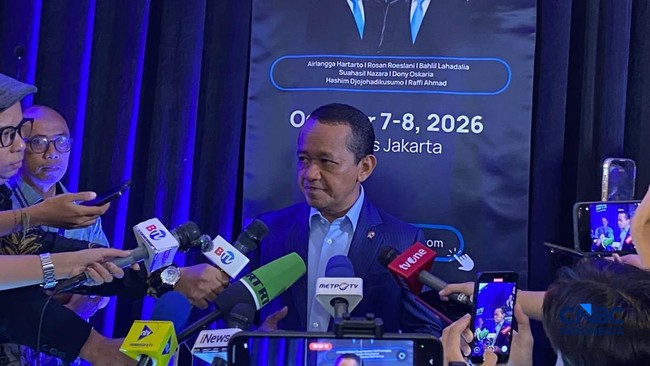
The Coordinating Minister for Downstreaming and Energy Transition, as well as the Minister of Energy and Mineral Resources, Bahlil Lahadalia, stated that Indonesia is essentially ‘rich’ in natural gas, even possessing the capacity to export Liquefied Natural Gas (LNG).
This raises the question: why does the country still import Liquefied Petroleum Gas (LPG)?
Bahlil explained that Indonesia’s total LPG requirement reaches approximately 8.5 million to 9 million tonnes annually, with 80% to 85% of this demand met through imports. “Our imports are roughly around 7 million to 7.5 million tonnes. The remainder is supplied by domestic industry,” Bahlil explained during the Investor Daily Summit 2026 on Wednesday (7/10/2026).
Bahlil elaborated that Indonesia possesses abundant gas, with the potential to export up to 30% of its total gas production as LNG.
“I was briefed that our gas is plentiful, but I asked why we do not produce LPG? It turns out the raw materials for LPG are C3 and C4, whereas the gas most abundant in Indonesia is C1 and C2,” Bahlil clarified.
Therefore, to reduce LPG imports, Bahlil stated that Indonesia must continue to pursue conversion efforts and actively seek gas resources that meet the specific criteria for LPG production.
“To achieve energy sovereignty, following the President’s direction, we must explore all of our natural resources. Firstly, we have successfully implemented the B50 programme,” Bahlil asserted.
Source: jawawa.id (https://jawawa.id/newsitem/indonesia-rich-in-gas-so-why-import-lpg-bahlil-explains-the-cause-1791381229)
Originally published by CNBC Indonesia (https://www.cnbcindonesia.com/news/20261007164721-4-774185/ri-kaya-gas-kenapa-impor-lpg-bahlil-ungkap-penyebabnya), translated from Indonesian