
Indonesia rewrites its economic model to drive faster growth
Indonesia Rewrites Its Economic Model to Power Faster Growth
Jakarta. Indonesia wants to grow faster without remaining dependent on the commodities that have long powered its economy.
Southeast Asia’s largest economy is betting that investment, mineral value-added processing, and a sweeping overhaul of state-owned companies can propel economic growth toward 8%, while renewable energy and digital infrastructure create new engines beyond commodities.
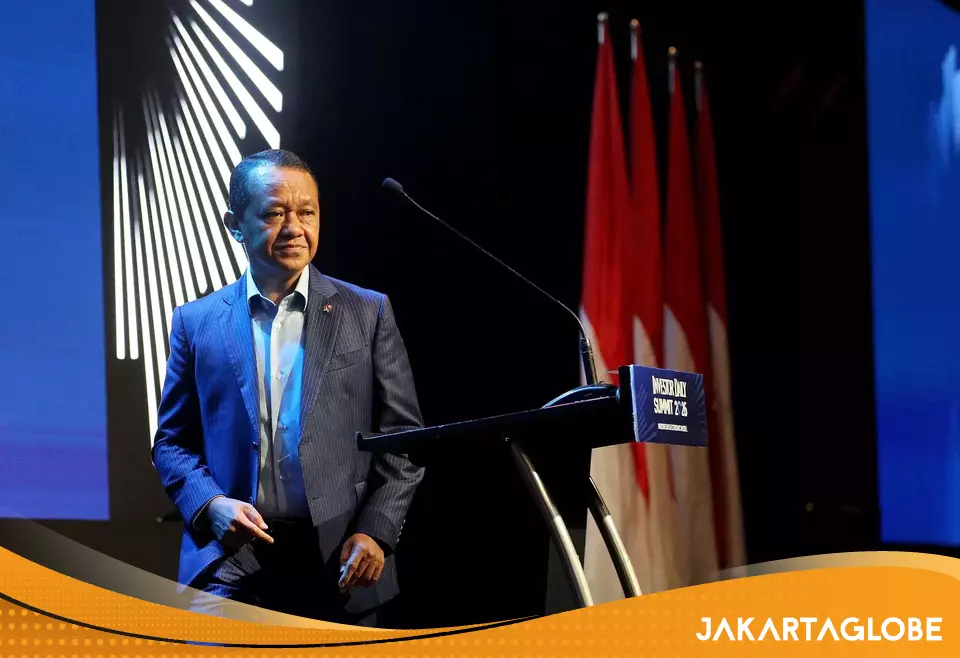
That was the broad message from the two-day Investor Daily Summit 2026 in Jakarta, held under the theme “Indonesia’s Economic Model.” Senior officials described an economic strategy that gives the state a large role in directing capital, industrial policy and the restructuring of state-owned companies, while seeking greater participation from private investors.
Rosan Roeslani, investment and downstream industry minister and chairman of Danantara, Indonesia’s sovereign wealth fund and state-asset manager, offered the government’s shorthand for the strategy.
“Downstream industry is the engine of transformation, while investment is the engine of growth,” he said.
The government is targeting more than Rp13,000 trillion ($780 billion) of investment over the next five years to support its 8% growth ambition. Investment rose from Rp1,714 trillion in 2024 to Rp1,931 trillion in 2025 and reached Rp1,010.6 trillion in the first half of 2026, creating about 1.45 million direct jobs, Rosan said.
From Ore to Industrial Chains
Raw-mineral processing, or hilirisasi in Indonesian, sits at the center of Indonesia’s economic model. Rather than exporting raw materials, the government wants its mineral wealth to feed domestic manufacturing, capturing more value and creating jobs along the way.
Nickel is the showcase. Indonesia has developed an increasingly integrated ecosystem covering ore, anodes and cathodes, battery cells, packs, and recycling. Nickel exports rose roughly tenfold, from about $3.3 billion in 2016-17 to around $33 billion in 2025, as more processing moved onshore, Rosan said.
The harder task is completing the chain. Bahlil Lahadalia, the newly appointed coordinating minister for downstream industry and energy transition, has warned against turning Indonesia into merely a supplier of semi-finished goods that are exported and eventually return as finished products.
That means pushing deeper into manufacturing, rather than stopping at smelters and intermediate products.
Dony Oskaria, Danantara’s chief operating officer, said the state-asset manager is itself part of this transformation. It is mapping companies by industry, benchmarking their performance globally and consolidating a sprawling state-enterprise network.
Danantara aims to reduce roughly 1,074 state-linked entities to about 250, eliminating duplication and improving the use of state assets. It is also assessing companies in finance, infrastructure, and mining that could be listed from 2027, using capital markets to impose greater transparency and accountability.
“We need to become an industry-based country. That is why the government is pushing to accelerate industrial development, particularly industries that can create a large number of jobs,” Dony said. He added that Danantara had already undertaken 21 downstream projects.
Energy is the Constraint
Industrialization has an inconvenient arithmetic: factories, mines, and data centers all require electricity. The energy transition is therefore becoming an economic question, not merely an environmental one.
Bahlil said Indonesia is developing a 100-gigawatt-peak solar program requiring about $73 billion of investment. Once completed, it could reduce the government’s electricity subsidy and compensation burden by roughly Rp 70 trillion.
The government also plans to raise ethanol blending, beginning with E20 in 2027-28 and eventually reaching E50, in an effort to curb gasoline imports. It is even exploring electricity exports, although Bahlil said energy deals must protect national interests.
Geopolitics makes the calculation harder. Wars and rivalries far beyond Indonesia are disrupting supply chains and threatening to raise fuel costs.
“Geopolitics is not merely a tension between the United States, Israel, Palestine, Ukraine, and Russia. Almost everyone is affected, including Indonesia,” Bahlil said.
Beyond Mines and Factories
Indonesia’s next growth cycle cannot depend entirely on heavy industry. Hashim Djojohadikusumo, President Prabowo Subianto’s special envoy for climate and energy, pointed to housing, construction, and the digital economy as additional sources of demand.
Housing and construction are linked to about 185 industries and account for roughly 14% of GDP, he said. Meanwhile, affordable internet, artificial intelligence, and data centers could open another frontier — provided Indonesia can produce enough electricity to power them.
“Indonesia has a competitive advantage in the era of AI and data centers,” Hashim, President Prabowo Subianto’s younger brother, said.
The government has announced a 100GW solar program equipped with energy-storage batteries, he added.
Tags: Keywords:
Source: jawawa.id (https://jawawa.id/newsitem/indonesia-rewrites-its-economic-model-to-drive-faster-growth-1791521415)
Originally published by jakartaglobe.id (https://jakartaglobe.id/business/indonesia-rewrites-its-economic-model-to-power-faster-growth)