
Indonesia Reaffirms Commitment to Just Energy Transition at GETES 2026
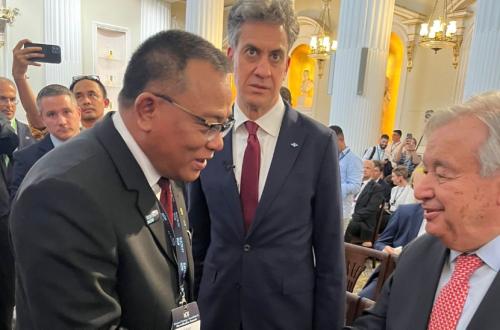
Indonesia’s government has reaffirmed its commitment to a just energy transition at the Global Electrification and Transition Energy Summit (GETES) 2026 in London, England. Minister of Environment/Head of the Environmental Control Agency (BPLH) Jumhur Hidayat stated that the energy transformation must be carried out responsibly so that its benefits can be widely felt without sacrificing the environment or labour groups. “For Indonesia, the future transformation must be done responsibly. We ensure that every development step taken continues to prioritise strict environmental standards to align with our national climate commitments and ensure protection for affected workers,” Jumhur said. This concept is known as a just energy transition. In this approach, efforts to reduce carbon emissions do not only focus on building clean energy but also consider the social and economic impacts that arise during the transition process. For Indonesia, this issue holds significant importance as the country is one of the world’s largest owners of biodiversity. Its vast tropical forests, peatlands, and mangrove ecosystems act as natural carbon sinks and support global climate balance. During the forum, Jumhur explained that Indonesia is committed to maintaining a balance between economic growth, energy transition, natural resource protection, and worker protection. According to him, all these aspects must go hand in hand to support sustainable development. This view aligns with the call from United Nations (UN) Secretary-General Antonio Guterres, who emphasised the importance of accelerating a fair and inclusive global energy transition. Addressing world leaders and energy industry players, Guterres reminded them that the success of the energy transition is not only measured by emission reductions but also by its ability to create new jobs and improve community welfare. Therefore, worker protection is a crucial element of the energy transition. Changes in the energy industry structure have the potential to affect the types of jobs available, necessitating skills upgrading, the creation of new job opportunities, and the provision of support for affected groups. Jumhur stated that Indonesia will continue to integrate development policies with strong environmental standards. This approach is expected to maintain consistency between economic growth targets and environmental conservation efforts. “Our priority is to ensure that the direction of development policy remains integrated with robust environmental guidelines. This approach serves as the foundation for Indonesia to maintain consistency between economic growth and environmental conservation targets,” Jumhur said. In addition to strengthening national policies, Indonesia is also encouraging increased international cooperation that is fair and transparent. Global collaboration is considered important to accelerate the development of clean energy while ensuring that the benefits of the energy transition can be felt by all countries, including developing nations.