
Indonesia Ready to Go Nuclear: Which Countries Are Being Courted?
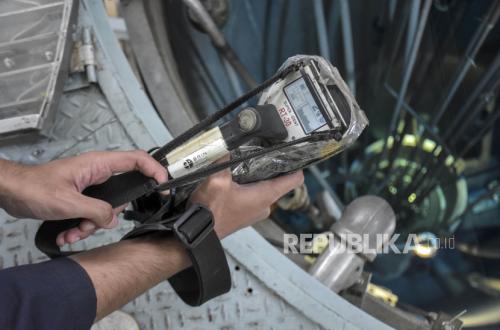
TANGERANG — Coordinating Minister for Downstreaming and Energy Transition Bahlil Lahadalia said several countries have offered to cooperate with Indonesia on nuclear technology. The offers have come from Russia, Germany, Japan, South Korea and Canada, as the government plans to develop nuclear power plants.
Bahlil shared the information while attending an Energy Security Symposium organised by the Indonesian Christian Intellectuals Association (PIKI) at Pelita Harapan University in Tangerang, Banten, on Thursday (15 October 2026). He cited Russia’s offer, which arose when he accompanied President Prabowo Subianto to a bilateral meeting with Russian President Vladimir Putin.
“One of the topics discussed was Russia offering nuclear technology to Indonesia. Germany has made the same offer. Japan has as well. South Korea and Canada have also made offers,” said Bahlil, who also serves as Energy and Mineral Resources Minister, as quoted on Tuesday (20 October 2026).
Bahlil did not provide details of any follow-up to the offers. The government has not announced which country it might partner with or which technology would be used to build the plants.
Plans to develop nuclear energy are included in state electricity company PLN’s 2025–2034 Electricity Supply Business Plan (RUPTL). The government has allocated 500 megawatts (MW) of nuclear power capacity, divided between the electricity systems in Sumatra and Kalimantan.
Each region has been allocated 250 MW through plans to build small nuclear reactors. The plants are targeted to begin operating in 2032 and 2033 as part of efforts to strengthen the national electricity supply.
PLN’s 2025–2034 RUPTL sets out plans to add 69.5 gigawatts (GW) of power generation and energy storage capacity. Nuclear power is one of the government’s options for meeting electricity demand while supporting the transition to a low-emissions power system.
Amid these plans, Bahlil welcomed PIKI’s recommendations on the use of nuclear energy. He praised the intellectual organisation’s contribution to providing input on national energy policy.
“Ladies and gentlemen, I am grateful for the recommendations put forward by PIKI following the discussions held some time ago,” said the Energy Minister and Coordinating Minister for Downstreaming.
Bahlil urged academics to strengthen cooperation with the government in developing policies. He said input from universities and intellectual organisations could support various programmes being prepared by the government.
He said the government had sought input from several universities and the Indonesian Muslim Intellectuals Association (ICMI). Bahlil wants PIKI to take part as well, through cooperation with the Coordinating Ministry for Downstreaming and Energy Transition.
“We have engaged universities, and I have also asked ICMI. Now I am asking PIKI to work with the Coordinating Ministry,” he said.
The potential cooperation would not be limited to nuclear energy development. Bahlil also invited PIKI to participate in 28 downstreaming programmes covering minerals and coal, oil and gas, fisheries, forestry and agriculture.
The government hopes contributions from academics will strengthen policymaking across these sectors. Nuclear power development remains subject to the planning stages set out in PLN’s 2025–2034 RUPTL.