
Indonesia Ranks Second in Global Energy Resilience, Bahlil Outlines Strategy
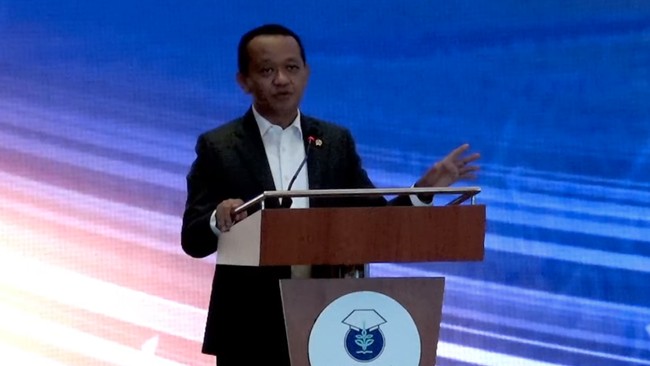
Indonesia has entered the top two in global energy resilience, with Energy and Mineral Resources Minister Bahlil Lahadalia outlining the strategy.
Jakarta, CNBC Indonesia - JP Morgan financial institution has placed Indonesia in second position out of 52 countries as the nation with the best energy resilience in the world amid geopolitical turmoil.
Energy and Mineral Resources Minister (ESDM) Bahlil Lahadalia assesses that the national energy condition still faces various challenges and is not yet fully ideal.
He highlighted the change in Indonesia’s position, which was formerly an oil exporter and a member of the Organisation of the Petroleum Exporting Countries (OPEC), but has now shifted to becoming an importer.
Currently, domestic oil production only reaches 605,000 barrels per day, while national consumption has touched 1.6 million barrels per day.
“In this condition, we must think creatively about how to achieve energy independence,” said Bahlil during his speech at the Business Forum of the IPB University Alumni Association, quoted on Monday (4/5/2026).
Nevertheless, in 2025, Indonesia recorded a different achievement. For the first time in ten years, national oil production successfully exceeded the target set in the state budget.
The production decline occurred because thousands of oil wells in Indonesia are very old, with some inherited from the Dutch colonial era left unproductive despite still having reserves inside.
Therefore, the government is encouraging Oil and Gas Cooperation Contract Contractors (KKKS) to use new technology so that these wells can resume production, with compensation in the form of incentives from the state and involving local communities to manage the oil wells legally.
Furthermore, there are hundreds of exploration areas where potential has been identified, with development plans on paper, but have not been executed for years. For this, the government is choosing a firmer approach.
The Abadi Masela Block, for example, which has been stalled for nearly three decades, has finally moved forward after the government gave a firm deadline to the managing operator.
“If you (INPEX) don’t proceed in 6 months, I’ll revoke it. And Alhamdulillah, now the Engineering, Procurement, and Construction (EPC) tender is underway,” explained Bahlil.
As a result, the US$21 billion project in Maluku has now entered the construction tender phase. Meanwhile, in East Kalimantan, the new find in the Ganal Block is projected to start significant production in 2029.
In the fuel oil sector, the achievement most felt by the public is the cessation of diesel imports in 2026, which marks a new milestone as it is achieved for the first time in history.
This success is supported by the mandatory biodiesel policy implemented gradually over nearly a decade, with the blending of diesel and palm oil now reaching 40% and planned to increase to 50% in July.
With this scheme, part of the diesel needs previously met by imports can now be replaced by domestically produced palm-based products.
Inspired by this success, the government is now preparing similar steps for petrol. Bahlil even visited Brazil, a country that has implemented mandatory ethanol blending earlier.
He assessed that the raw materials, such as cassava, corn, and sugarcane, are abundantly available in Indonesia. The government targets a 20% ethanol blending policy for petrol to be implemented starting in 2028.
“If we mandate 20%, it means we reduce petrol imports by 8 million kilolitres,” he emphasised.
For household gas, the challenges are different. Indonesia imports 7.47 metric tons (MT) of Liquefied Petroleum Gas (LPG) per year because domestic production, around 1.94 MT, only meets one-fifth of national needs. Additionally, LPG subsidies consume nearly Rp80-87 trillion per year from the state coffers.
As a solution, the government is developing Compressed Natural Gas or CNG, compressed gas packaged in cylinders, which is claimed to be 30 to 40 percent cheaper than LPG. This technology has been trialled in restaurants and some kitchens for the free nutritious meal programme, and is being prepared for the household market.
Amid these efforts, the government is adjusting crude oil supply sources. Previously, Indonesia heavily relied on supplies from the Middle East passing through the Strait of Hormuz.
Now, import sources are diversified from Africa, America, to Russia.
“If the President travels to seek oil, it’s not a holiday. We work to think about the 280 million lives in this nation,” revealed Bahlil.
The government also provides assurances that directly affect the public’s daily interests.
“Until 31 December, even if the ICP price is US$100, insya Allah the subsidised fuel and LPG prices will not rise,” he emphasised.
Energy resilience, according to Bahlil, is not built through one major policy in a short time, but through a series of strategic steps carried out gradually.
From optimising unproductive wells, accelerating oil and gas block development, to more directed import management, all are part of efforts to strengthen the national energy foundation.