
Indonesia Ranks Second Globally for TB; UMI Prepares Multidisciplinary Team
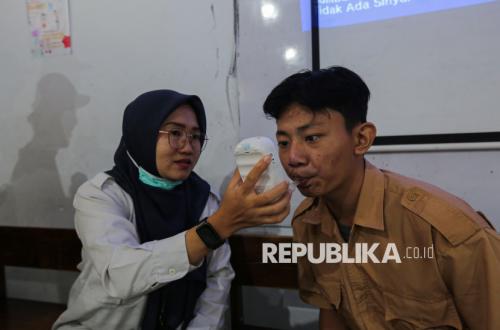
Universitas Muslim Indonesia (UMI) Makassar is preparing a multidisciplinary team to strengthen the Tuberculosis (TB) Consortium. This move is part of the university’s commitment to accelerating TB management in Indonesia.
UMI Rector Prof. Dr Hambali Thalock stated that TB management requires a cross-disciplinary approach. He noted that universities possess significant strength through the integration of education, research, and community service.
“We appreciate the trust placed in UMI by LLDIKTI IX. For this TB eradication programme, UMI is ready to deploy a multidisciplinary team,” Hambali said during the Regional IX Higher Education Service Institution (LLDIKTI) Coordination Meeting in Makassar.
The involvement of higher education institutions is increasingly relevant given Indonesia’s heavy TB burden. The latest World Health Organization (WHO) report noted that approximately 10.7 million people worldwide fell ill with TB throughout 2024. Indonesia accounts for about 10 per cent of these cases, ranking second only to India, which contributes around 25 per cent of global cases.
The Ministry of Health estimates there are approximately 1.09 million TB cases in Indonesia annually, resulting in about 125,000 deaths. In 2024, around 889,000 cases were notified, indicating a persistent gap between the estimated number of ill individuals and cases successfully detected and reported.
These challenges are also prevalent in South Sulawesi. The Ministry of Health previously identified South Sulawesi, along with several provinces in Java and North Sumatra, as high-burden areas, each recording over 40,000 cases. This situation makes the involvement of universities in eastern Indonesia strategically significant for expanding detection, research, and community-based interventions.
According to Hambali, the Faculty of Medicine could serve as the leading sector within the team. However, TB management extends beyond clinical approaches, as the Faculties of Pharmacy, Public Health, Economics, Engineering, and other disciplines can play roles according to their respective expertise.
“We must be data-driven. We need to determine whether the primary factor for TB in a specific region is purely health-related, environmental, or genetic. This is a tangible manifestation of UMI as an impactful campus providing solutions for the nation,” he said.
TB is Not Just a Matter of Treatment
TB is an infectious disease caused by the bacterium Mycobacterium tuberculosis, primarily affecting the lungs. Because it is airborne, factors such as housing conditions, population density, ventilation, community behaviour, access to healthcare, and socio-economic status are inseparable from disease control efforts.
A multidisciplinary approach can therefore help address the issue from various angles. The Faculty of Medicine can handle clinical aspects and diagnosis, Pharmacy can delve into medication and treatment adherence, Public Health can develop prevention and surveillance, while the Engineering faculty can examine environmental quality and residential ventilation.
The economic and social sectors also have a significant role to play. TB patients may require long-term treatment, leading to loss of income; furthermore, transportation costs to healthcare facilities, stigma, and family support can all influence treatment success.
WHO even places protecting communities from the economic burden of TB as a vital component of the global strategy to end the epidemic.
Hambali explained that a data-driven approach is necessary to understand the TB problem more comprehensively. The resulting mapping will serve as a basis for determining interventions appropriate to the character of each region and community.
Government Aims for Elimination by 2030
The Indonesian government targets TB elimination by 2030. One strategy being strengthened in 2026 is the tracing of all close contacts of patients to identify potential transmission as early as possible.
The Ministry of Health is even encouraging investigations into 100 per cent of families and close contacts of TB patients. This strategy shifts the management pattern from merely waiting for sick individuals to visit healthcare facilities to actively visiting environments where transmission is likely to occur.
This tracing is bolstered by the use of the Free Health Check programme, portable X-ray examinations, and rapid tests. Since April 2026, the Ministry of Health has also integrated the SATUSEHAT IndonesiaKu data with the Tuberculosis Information System to improve case finding and the continuity of patient follow-up.
However, the challenge does not end with finding patients. As of April 2026, the Ministry of Health still noted challenges in treatment success, contact investigation, and the provision of TB preventive therapy to high-risk groups.
National data shows that in 2024, only about 19.4 per cent of household contacts received TB preventive therapy. This figure demonstrates the significant room for improvement to ensure that those exposed do not develop into active TB cases.