
Indonesia Ramps Up Diplomatic Engine to Accelerate Economic Growth
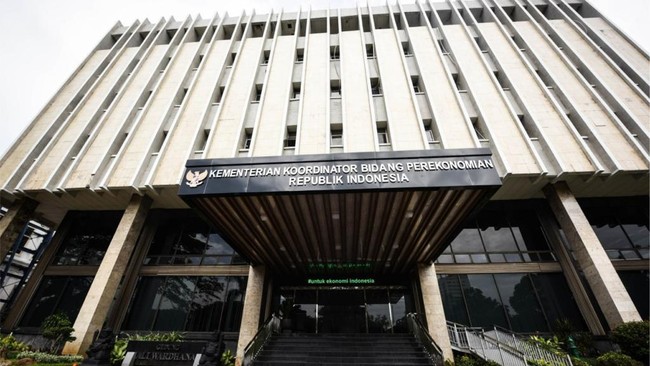
The Indonesian government is currently heating up its diplomatic engine as part of an instrument to accelerate economic growth. This is being done by leveraging the legal basis of Presidential Decree Number 4 of 2026 concerning the Task Force for the Acceleration of Government Programmes to Support Increased Economic Growth (Satgas P3-MPPE), which consists of five Working Groups (Pokja). One of these is Pokja IV for Economic Cooperation and International Relations, formed to optimise economic diplomacy in order to expand market access, strengthen international economic cooperation, and increase national investment.
“Because international economic cooperation issues are very important. Especially those related to CEPA, FTA, then tariff negotiations and so on, which greatly influence our economic growth,” said Susiwijono Moegiarso, Secretary of the Coordinating Ministry for Economic Affairs, while chairing the Pokja IV Satgas P3-MPPE Coordination Meeting at the Coordinating Ministry for Economic Affairs office on Tuesday (23/06).
Edi Prio Pambudi, Deputy for Economic Cooperation and Investment Coordination at the Coordinating Ministry for Economic Affairs, who also attended the meeting, explained that Pokja IV’s mandate is to carry out three main strategic pillars in Indonesia’s economic diplomacy. These three pillars are market analysis and strategy, diplomacy and coordination, as well as policy recommendations and implementation.
Through the market analysis and strategy pillar, Pokja IV collects and analyses geo-economic potential data, identifies trade barriers from partner countries, and maps opportunities for expanding market access and investment. In the diplomacy and coordination pillar, Pokja IV formulates strategic steps together with relevant Ministries/Agencies and stakeholders, accelerates the completion of economic partnership negotiations, and strengthens Indonesia’s leadership role in various international forums.
Meanwhile, through the recommendations and implementation pillar, Pokja IV encourages the harmonisation of domestic regulations with global standards, oversees the acceleration of international agreement ratifications, and resolves various implementation obstacles to maximise the benefits of economic cooperation for the business sector and the national economy. All these efforts are carried out through a work cycle that includes inventory, assessment, distribution, and evaluation to ensure the effectiveness and sustainability of the results achieved.
“Then regarding business assistance, we must proactively look at various issues. We also need to fight for labour-intensive industries whose market is now quite large, but we are competing in a narrow market,” said Edi. “For that, we need to increase cooperation with business actors. So that when our market expands, it can be immediately utilised by business actors,” he stressed.
On that occasion, Pokja IV also conducted an overview of the Accelerating Core Economics (PACE) Information System, an integrated cross-sector information system for reporting and monitoring international economic cooperation. The system contains information on the type of agreement, validity period, signatories, fields of cooperation, current stages and conditions, achievements or realisations in terms of investment, exports or other benefits, as well as obstacles and problems faced.