
Indonesia pushes D-8 to become a global halal economic powerhouse
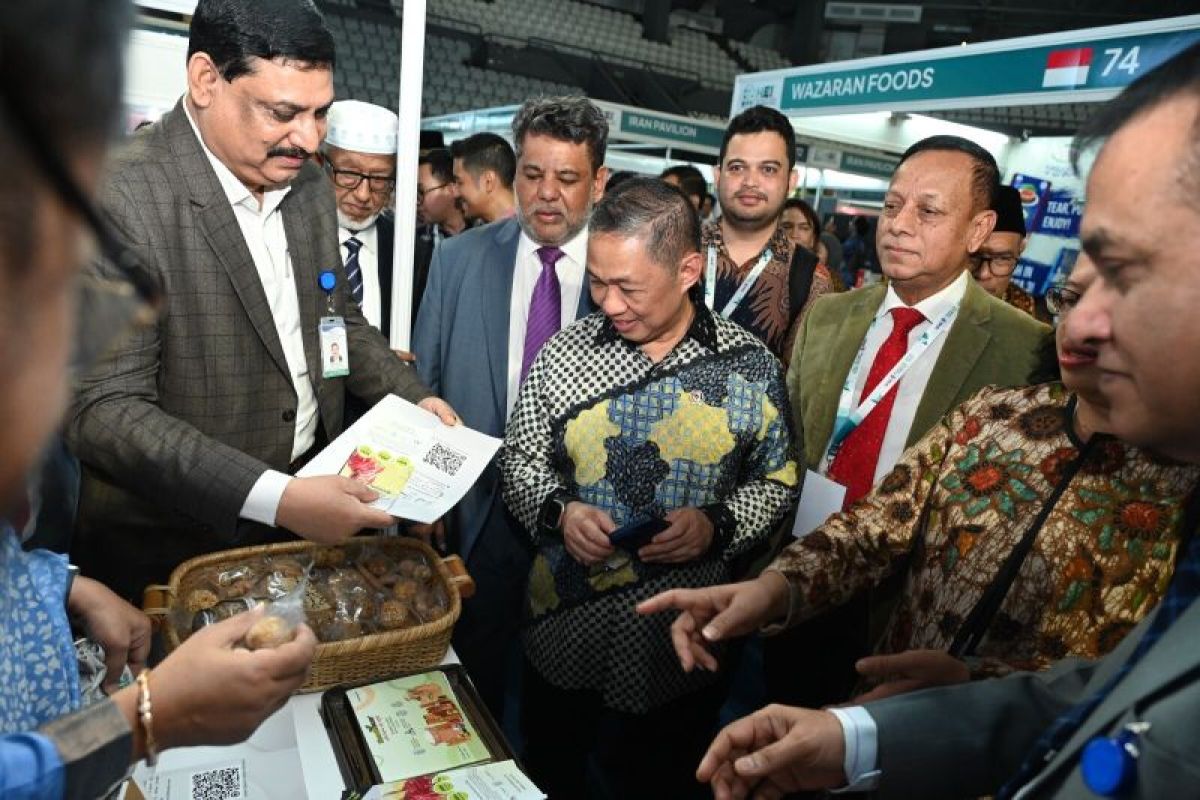
Jakarta (ANTARA) - Indonesia is encouraging the Developing Eight (D-8) cooperation organisation to become a new force in the global halal economy, through the hosting of the D-8 Halal Expo Indonesia (HEI) in Jakarta from 8–12 July 2026.
Deputy Foreign Minister Anis Matta stated that organising the D-8 HEI is a concrete step for Indonesia—as the D-8 Chair for 2026–2027—to drive national economic growth by strengthening Indonesia’s economic integration with the Islamic world.
“Amid various global economic challenges, Indonesia continues to push for national economic growth. One of the pathways is by strengthening Indonesia’s economic integration with the Islamic world, including through the development of the halal economy,” said Deputy Foreign Minister Anis in a written statement from the Indonesian Ministry of Foreign Affairs.
Carrying the theme “Strengthening D-8 Halal Economy Through International Collaboration”, the exhibition will serve as a primary platform for business players, industries, investors, and policymakers to strengthen the halal value chain among D-8 members and open wider access to global markets.
The D-8 HEI 2026 is expected to strengthen economic partnerships and encourage the expansion of business-to-business cooperation across various sectors, including food and beverage, beauty, fashion, pharmaceuticals, tourism, finance, and digital services.
This effort aligns with the target of increasing trade between D-8 nations to US$500 billion (Rp9,014 trillion) by 2030.
D-8 Secretary-General Sohail Mahmood expressed appreciation to Indonesia for hosting the inaugural D-8 Halal Expo in Jakarta.
He hopes this activity will act as a catalyst for private sector networking and cooperation, intra-D-8 trade and investment, the strengthening of research and capacity building, and the expansion of cooperation within the halal economy ecosystem.
Over the five-day event, D-8 HEI will feature trade exhibitions, business matching, and D-8 HEI Talks panel discussions, bringing together government officials, business actors, and investors from D-8 nations.
The event has already attracted high enthusiasm from exhibitors, buyers, and visitors from D-8 member states as well as several other countries, including the Netherlands, Djibouti, India, Palestine, France, Uzbekistan, and Jordan.
Executive Director of the National Committee for Islamic Economy and Finance (KNEKS), Sholahudin Al Aiyub, emphasised that the D-8 Halal Expo is designed as a platform to generate concrete business collaborations, including matchmaking that brings exporters and importers together.
“Indonesia is striving to facilitate the birth of business partnerships, knowledge exchange, and concrete trade transactions,” he said.
The hosting of the D-8 HEI 2026 is an embodiment of President Prabowo Subianto’s statement at the 11th D-8 Summit in Cairo on 19 December 2024, which emphasised the importance of establishing halal value chains through the strengthening of halal economic networks and Indonesia’s commitment to becoming one of the world’s main halal economy hubs.
The D-8 was formed in 1997 to strengthen economic cooperation and development among its member states: Indonesia, Bangladesh, Iran, Malaysia, Egypt, Nigeria, Pakistan, Turkey, and Azerbaijan—which joined as a full member after completing the ratification process of the D-8 Charter on 19 March 2025. The D-8 Secretariat is based in Istanbul, Turkey.
As an economic cooperation forum, the D-8 possesses significant collective strength with a total population of approximately 1.3 billion people, or 16 per cent of the world’s population, and a combined gross domestic product of around US$5.1 trillion (Rp91,953 trillion).
The D-8 chairmanship rotates among member states. Currently, Indonesia holds the D-8 Chairmanship for the 2026–2027 period.
Previously, Indonesia served as the D-8 Chair during the 2006–2008 period, which included the signing of the D-8 Preferential Trade Agreement (D-8 PTA) in Bali.
Since coming into effect in June 2024, the trade agreement has been utilised by national exporters, with export values reaching approximately US$36.4 million (Rp597.2 billion).
In addition to strengthening trade, D-8 cooperation is also directed towards strengthening the halal ecosystem through cross-border investment, industrial cooperation, and innovation, ensuring that halal products and services are increasingly integrated into global value chains.