
Indonesia Pursues Hydrogen Development Despite High Production Costs, Says Minister Bahlil
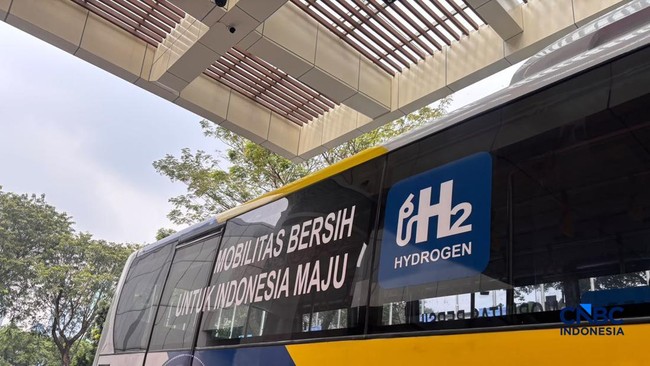
Energy and Mineral Resources Minister Bahlil Lahadalia has acknowledged that the high cost of production remains a major challenge in the development of hydrogen in Indonesia. Despite having an abundance of raw materials, the price of this alternative energy is considered not yet competitive compared to fossil fuels or even biodiesel.
Bahlil revealed that technological efficiency is the solution to reducing the economic value of hydrogen in the future. He continues to encourage research collaboration to create more affordable production instruments for both industrial and national transportation needs.
“The problem is… this is the challenge. The problem is that the cost of hydrogen is still expensive compared to other energy products,” Bahlil stated at the Global Hydrogen Ecosystem Summit and Exhibition (GHES) 2026 in Jakarta.
Based on the results of discussions with his research team, Bahlil compared the economics of hydrogen with the cost of non-subsidised B50 biodiesel. He noted that the energy cost from hydrogen is currently still above the price of that plant-based fuel, which is around Rp 18,600 per litre.
However, the Minister is optimistic that the price of hydrogen will become increasingly competitive with other energy sources within the next five to ten years. He projected that ongoing global geopolitical dynamics, which make access to crude oil more difficult, will accelerate the shift towards hydrogen.
“My belief is that with the war continuing and the uncertain geopolitics making it no longer easy for us to get oil in new blocks, it won’t be long before the price of hydrogen is far more competitive with other oil and gas sources,” he asserted.
To achieve this, the government is currently preparing appropriate regulations to attract investors to accelerate the development of hydrogen infrastructure in the country. The government is also inviting research institutions, such as the National Research and Innovation Agency (BRIN), to find technological innovations that can reduce operational costs so that the target of clean energy self-sufficiency can be realised immediately.
“To get there, many variables are needed. First is technology, second is the market, third is we need investors, and fourth, to accelerate this, regulations are needed,” he concluded.