
Indonesia proposes 'responsible freedom of navigation' to address current maritime issues
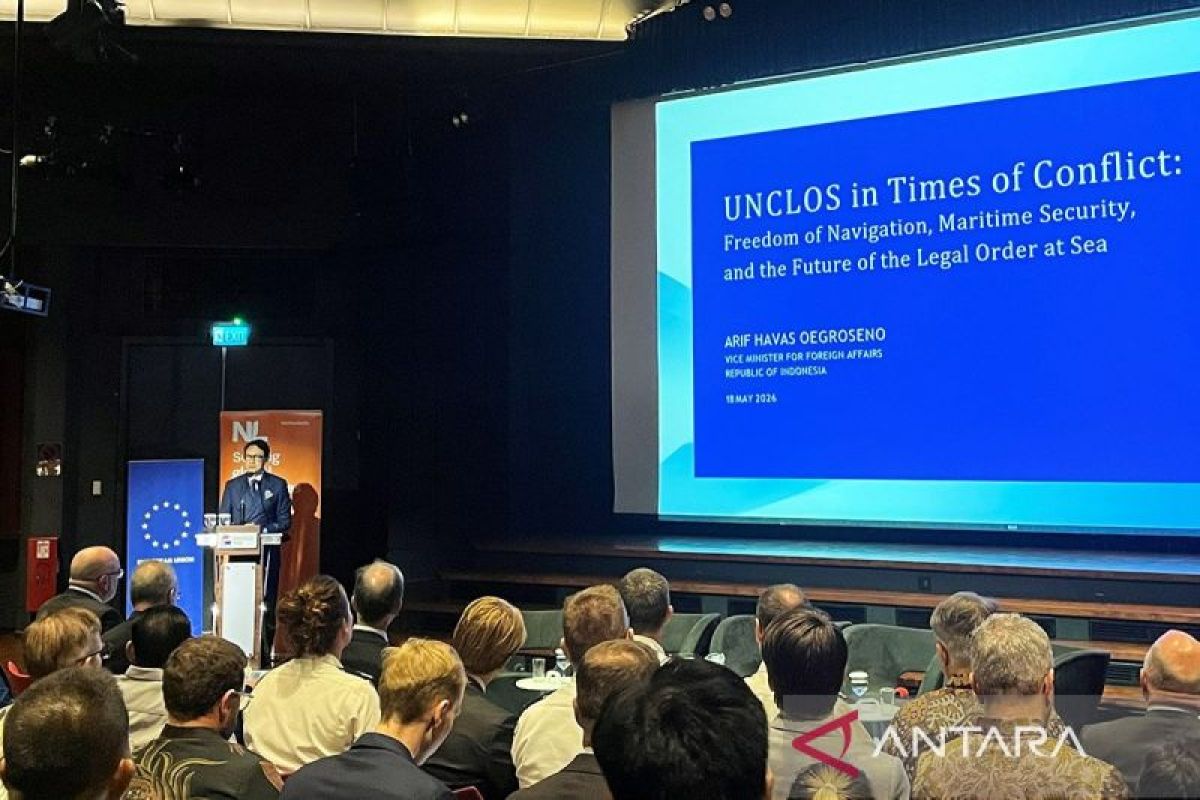
Jakarta (ANTARA) - Indonesia’s Deputy Foreign Minister, Arif Havas Oegroseno, has revealed that the country is proposing a five-point principle of ‘responsible freedom of navigation’ as an effort to ensure the relevance of the law of the sea regarding contemporary issues.
In a statement during a symposium regarding the enforcement of UNCLOS in the present day at the Netherlands Embassy in Jakarta on Monday, Havas stated that freedom of navigation is increasingly intersecting with maritime rivalries and coastal security interests.
“Maintaining freedom of navigation under the principle of good faith and ensuring that maritime freedom is fully consistent with peaceful objectives based on the UN Charter,” said Havas regarding the first point of his proposed principle. He emphasised that freedom of navigation must not be used as a pretext for “acts of intimidation, intelligence gathering, and shows of force” at sea.
The second principle, he noted, is the recognition of the rights of maritime and coastal states to pursue their security interests while maintaining due regard for the rights and interests of other parties. According to the Deputy Foreign Minister, current principles of freedom of navigation need to accommodate the concerns of archipelagic and coastal states regarding their maritime vulnerability and security.
Furthermore, he presented the third point of his proposed principle as the protection of the marine environment, considering that modern commercial shipping has an increasing impact on marine life. The fourth point involves granting maritime and coastal states the right to implement maritime defence measures temporarily and proportionally in accordance with international law.
Finally, the fifth point of his proposed ‘responsible freedom of navigation’ framework is an agreement to resolve various maritime navigation issues through recognised international legal mechanisms. Havas acknowledged that these five points are open for discussion and debate by stakeholders, particularly international law experts, maritime law specialists, and observers of the issue.
“This concept is not entirely new, so I hope these points serve as material for discussion here and further afield,” said Deputy Foreign Minister Havas.