
Indonesia Promotes Sago Downstreaming to Attract Japanese Investors
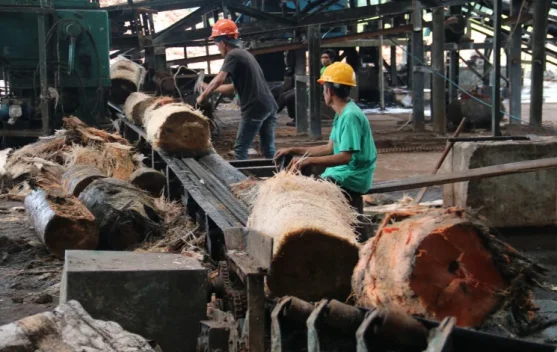
Indonesia Pushes Sago Downstreaming to Attract Japanese Investors
05 Nov 2026 20:37 WIB
Voice of Indonesia
Key Points
Indonesia targets Japan to boost sago starch exports, with market share projected to reach 14 percent in 2025.
Downstream investment and technology cooperation could turn Indonesia’s abundant sago into higher-value food, industrial, and biofuel products.
RRI.CO.ID, Jakarta – Indonesia is targeting the Japanese market to expand sago starch exports while accelerating the downstream processing of this commodity. The share of national sago starch exports to Japan is projected to increase from 2 percent in 2021 to 14 percent in 2025.
Minister of Industry, Muhammad Sarmuji, said that the development of the sago industry needs to focus on increasing the production of processed products, investment, and technology transfer. This strategy is expected to strengthen the competitiveness of the processing industry while opening new markets for value-added products.
“We have such an abundance of sago. It is a native Indonesian plant that produces starch and has great potential as a source of food raw materials and an alternative carbohydrate,” said Minister Sarmuji while opening the 2026 Sago Business Forum in Jakarta on Thursday, November 5, 2026, as quoted by Antara.
According to Minister Sarmuji, the sago industry cannot rely solely on the sale of raw materials. Product diversification needs to be expanded to include not only noodles, rice substitutes, pasta, and cookies but also non-food products such as bio-packaging and bioethanol.
Sago processing also has the potential to implement a circular economy by utilizing solid and liquid waste to produce animal feed, biogas, and other derivative products. This step can improve production efficiency while expanding the economic value of sago as a commodity.
Minister Sarmuji hopes the business forum will open up partnership opportunities between Indonesian and Japanese industry players by promoting processing potential, exploring investments in producing regions, and advancing technological development.
“I invite Japanese industry players and investors to explore various opportunities for cooperation with the sago industry in Indonesia,” he said.
Such investments have the potential to drive industrial growth and job creation across several sago hubs, including East Seram, the Meranti Islands, Nias, and Mentawai. “This will strengthen our commitment to food self-sufficiency and reinforce our food sovereignty, ensuring that food security is not limited to rice alone,” stated Minister Sarmuji.
Meanwhile, Counselor at the Japanese Embassy, Keisuke Kosonuma, considers Indonesia to hold a strategic position in the global sago supply chain. Approximately 85 percent of the world’s sago-growing areas are in Indonesia, but its use for industrial purposes remains limited.
According to Kosonuma, sago has the potential to serve as a raw material for food, industry, and even biofuel. Japan requires a stable supply of food raw materials, while Indonesia possesses abundant sago resources; thus, cooperation between the two countries can provide economic benefits for both parties. ***
News Recomendation
Loading latest news…..
Source: jawawa.id (https://jawawa.id/newsitem/indonesia-promotes-sago-downstreaming-to-attract-japanese-investors-1793893819)
Originally published by rri.co.id (https://rri.co.id/en/business/2873946/indonesia-pushes-sago-downstreaming-to-attract-japanese-investors)