
Indonesia Prepares to Host 2030 World Conference on Disaster Risk Reduction
Indonesia is preparing to host the World Conference on Disaster Risk Reduction in 2030. In preparation, a Nusantara Framework for Sustainable Resilience is being drafted for presentation at the event. A key focus of the conference is ensuring that no party is left behind in building a safe and sustainable future, including communities in regions that contribute the least to the causes of crises but are most affected by disaster risks, as they also have the most limited capacity and resources to survive, adapt, and recover.
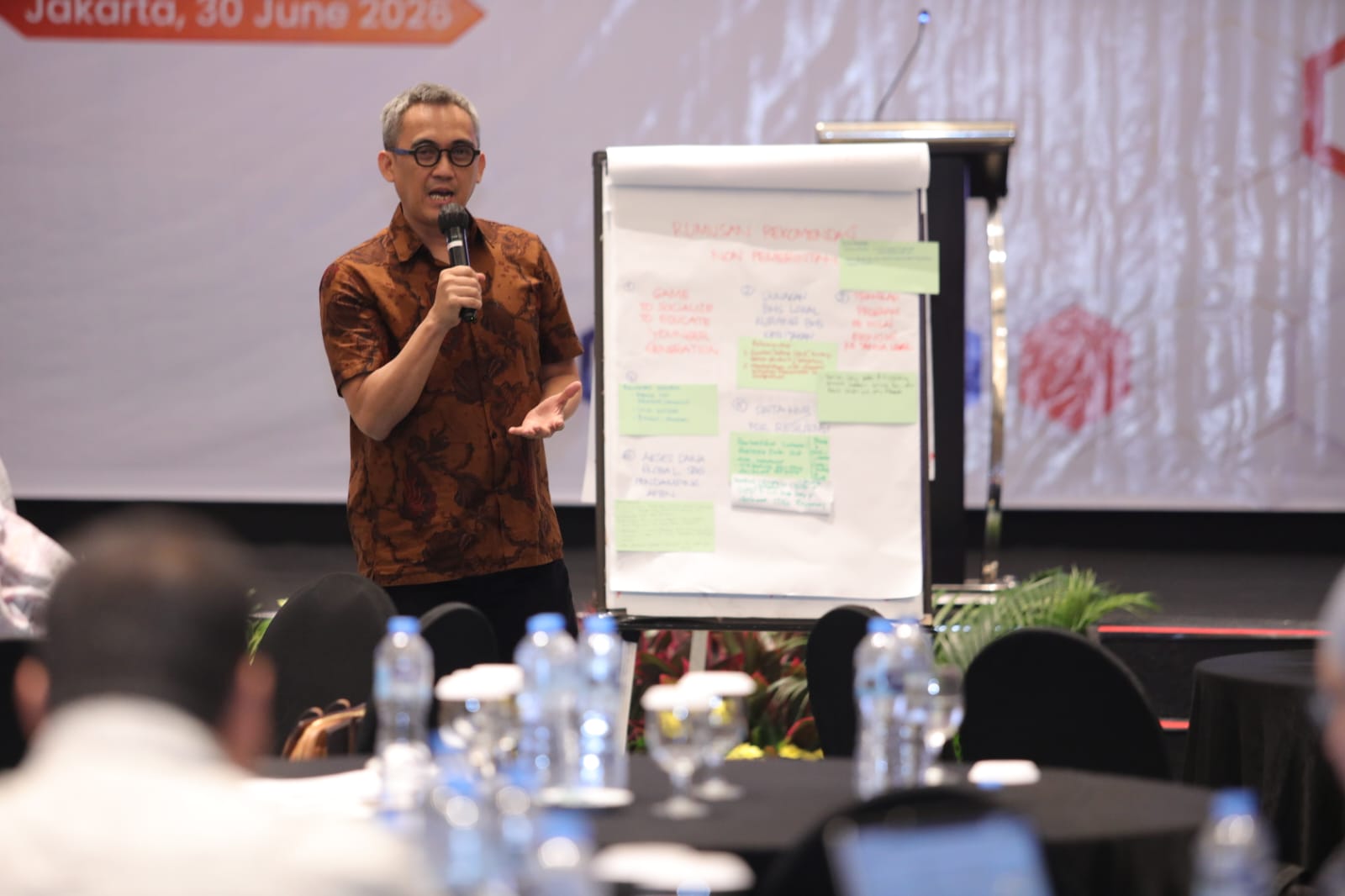
This topic was explored at a National Seminar Towards Sustainable Resilience in Jakarta, which serves as the initial series leading to the Global Forum for Sustainable Resilience (GFSR) 2026. The seminar carried the theme ‘Integrating the Climate Change Agenda, Disaster Management, and Sustainable Development through the Alignment of the Paris Agreement, Sendai Framework, and Sustainable Development Goals to Strengthen the Post-2030 Global Architecture.’ The GFSR 2026 will be held on 9-10 September 2026 in Jakarta, as part of the 5th Asia Disaster Management and Civil Protection Expo and Conference (ADEXCO) 2026, which is also part of the Indonesia Energy & Engineering (IEE) Series 2026.
The forum will examine various issues and anticipations regarding climate change, disaster risk, and sustainable development challenges that are increasingly evident across regions. The impact is rising vulnerability and increasingly constrained fiscal space. The topic explored at the global conference is ‘Global Resilience Recharged: From Fragmented Action to Aligned Impact,’ emphasising that while global frameworks and commitments are already in place, collective energy, coherence, and accountability must be strengthened to produce tangible impact.
Raditya Jati, Deputy for Systems and Strategy at the National Disaster Management Agency (BNPB), explained that the Road to GFSR 2026 series is designed to build continuity in discussions, from reflection on experiences and lessons learned, to strengthening integration between agendas, and aligning policy and implementation. ‘The resilience being built is more integrated, inclusive, and sustainable,’ Raditya stated. He stressed that climate change, disaster risk, and sustainable development are no longer separate challenges but systemic risks that are interconnected and have the potential to erode development gains already achieved. Therefore, the three main global agendas—the 2015 Paris Agreement, the 2015–2030 Sendai Framework, and the Sustainable Development Goals—need to be integrated into a unified movement to realise a resilient society, a robust economy, and a sustainable environment for current and future generations.
The concept of Sustainable Resilience was first introduced by Indonesia at the Global Platform for Disaster Risk Reduction meeting in Bali in 2022. Since then, support for the concept has continued to grow at regional and global levels, from the 2023 ASEAN Leaders’ Declaration, recognition in the G20 forum, to being officially included in the outcome document of the Global Platform for Disaster Risk Reduction meeting in Geneva in 2025. Raditya conveyed that there are five main pillars in realising Sustainable Resilience: good governance, sustainable investment, application of science and technology, development of resilient infrastructure, and active community participation.
‘For communities in disaster-prone areas, affected by climate change, with economic limitations, and experiencing inequality in access to basic services, this period is crucial to ensure the availability of adequate protection, adaptive capacity, and recovery support,’ he said. The challenge faced is that agendas often still run separately, with governance systems, financing mechanisms, institutional mandates, data systems, indicators, and reporting not yet fully integrated. Thus, commitment and ambition are no longer the issue, but rather the national commitment to coherence, alignment, and implementation effectiveness.
Addressing this challenge, Raditya continued, Indonesia introduced and developed the concept of Sustainable Resilience, which places climate action, disaster risk reduction, and sustainable development as a single integrated agenda. This concept was first introduced by the President of the Republic of Indonesia at the Seventh Session of the Global Platform for Disaster Risk Reduction (GPDRR) in Bali in 2022. The main idea of Sustainable Resilience is that these three agendas need to be understood and implemented as one integrated effort, not treated as standalone agendas running through separate mechanisms or competing in planning and budgeting. Instead, the three must become a common basis for policy formulation, development priority setting, resource allocation, and programme implementation at national and regional levels. This concept places people and local contexts at the centre of attention, while strengthening governance, investment, infrastructure, science, technology, and institutional capacity as driving elements. Through this concept, development is not only directed towards achieving growth and sectoral targets but also to ensure that the development process is risk-based, inclusive, adaptive, and has long-term resilience against various forms of shocks and pressures. This idea has gained broad international recognition through the Bali Agenda.