
Indonesia possesses strong capital to build peace amidst diversity
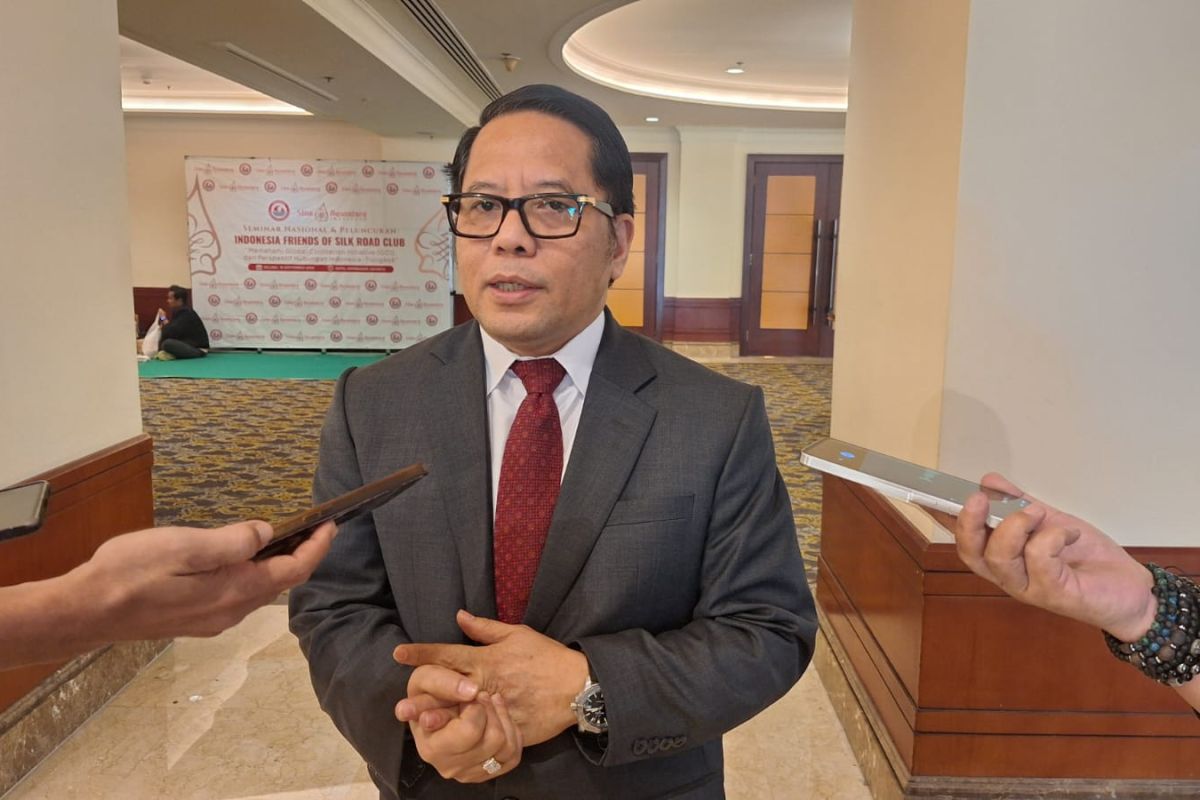
The Secretary-General of the Ministry of Religious Affairs, Kamaruddin Amin, stated that Indonesia possesses strong social capital for building peace amidst diversity in ethnicity, race, culture, and religion.
“The Ministry of Religious Affairs’ perspective is that harmony should not be defined merely as the absence of conflict or violence, but must be realised as active harmony through concrete actions that reflect humanity across nations, cultures, and religions,” Kamaruddin Amin said in a statement in Jakarta on Wednesday.
Kamaruddin’s remarks were made during the National Seminar and Launch of the Indonesia Friends of Silk Road Club (IFSRC) in Jakarta. The seminar was held under the theme “Understanding the Global Civilization Initiative (GCI) from the Perspective of Indonesia–China Relations.”
According to Kamaruddin, Indonesia’s experience in managing diversity can serve as capital for building mutual understanding between nations, cultures, and religions. He noted that harmony does not end with a state of no conflict but needs to be manifested through real actions that strengthen cross-border human relations.
He assessed that this idea is relevant to the Global Civilization Initiative (GCI) introduced by Chinese President Xi Jinping, which emphasises dialogue, respect for diversity, the preservation of cultural heritage, and people-to-people connections as part of efforts to build cooperation between civilisations.
He stated that culture plays a vital role in building respect for differences and diversity. Therefore, the cultural potential held by both Indonesia and China can be capitalised upon as a strength to reinforce people-to-people relations.
“From a cultural perspective, how culture respects differences and values diversity—that is something to be capitalised upon by both countries, Indonesia and China,” he said.
Kamaruddin noted that China is one of the world’s great civilisations with long-standing experience in building culture. Consequently, initiatives that bring Indonesian and Chinese societies together are seen as capable of opening wider spaces for cooperation.
Deputy Speaker of the Indonesian House of Representatives, Sari Yuliati, who served as one of the keynote speakers, emphasised that the international challenges of the 21st century cannot be addressed solely through economic approaches and formal diplomacy. Long-term stability requires trust, respect, and mutual understanding between peoples.
“Diplomacy in the 21st century can no longer rely solely on Government-to-Government (G2G) approaches, but must also be deeply rooted in People-to-People (P2P) exchanges,” she said.
The seminar noted that there are approximately 20,000 Indonesian students currently studying at various universities in China. Alongside researchers, journalists, and business communities from both nations, they are considered to hold strategic positions as grassroots diplomats or informal cultural ambassadors strengthening Indonesia-China relations.
As such, the IFSRC is expected to go beyond being a discussion forum and instead become a space for cross-sector collaboration, bringing together academics, researchers, media, religious and cultural figures, youth organisations, educational institutions, and the business world.