
Indonesia Pilots Buffet-Style Free Nutritious Meal Program in Schools
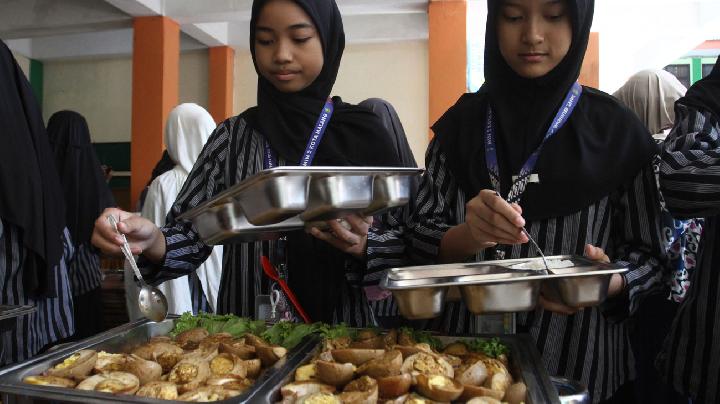
Indonesia Pilots Buffet-Style Free Nutritious Meal Program in Schools
Reporter
October 6, 2026 | 11:16 am
TEMPO.CO, Jakarta - Indonesia’s National Nutrition Agency (BGN) is piloting a buffet-style serving model for the Free Nutritious Meal (MBG) program in schools to improve food quality by ensuring meals are served warmer and fresher to students.
BGN Head Sudaryono stated that the trial is currently being conducted at select Nutrition Fulfillment Service Units (SPPG, or better known as MBG Kitchens) to assess the model’s effectiveness in maintaining food quality while minimizing the time gap between cooking and consumption.
“On October 5, we launched a pilot program—likely involving over 60 kitchens—for classroom-based buffet service. The food is transported to the classroom while still warm and then served there,” Sudaryono said in a statement confirmed in Jakarta on Tuesday, October 6, 2026.
Sudaryono explained that this “central kitchen” model is being evaluated and tested by emulating the school meal provision system used in Japan. The model offers several advantages, primarily by reducing the waiting time between cooking and consumption.
“We anticipate two main benefits: first, the food tastes better because it is served warm. Second, it is naturally fresher due to the lack of delays, thereby reducing the risk of food spoilage that could lead to health issues,” he elaborated.
Beyond food quality and safety, the buffet system is also considered to have the potential to reduce food waste. Beneficiaries can take portions according to their needs, while any remaining food can be consumed by other beneficiaries.
“So far, the reports I’ve received indicate a good consumption rate. The food is fresher; if someone wants a second helping, there is still food available, and waste is minimized thanks to the buffet format,” Sudaryono said.
The BGN views this model not merely as a technical shift in food distribution, but also as a way to strengthen the educational aspect of the MBG program’s implementation. Under this scheme, schools are involved to ensure the serving process runs smoothly and adheres to established standards.
Sudaryono explained that implementing a buffet system requires preparedness from both the kitchen staff and the school. Students can be involved in the serving process on a scheduled basis, provided that appropriate equipment is used and hygiene protocols are maintained.
“Once the buffet system becomes routine, it will be excellent—much like in other countries—though it certainly requires adequate training,” he said.
BGN is currently monitoring the pilot implementation across various regions. The evaluation results will inform decisions regarding the broader rollout of the buffet model, taking into account the readiness of kitchens, schools, and human resources, as well as the specific characteristics of the beneficiaries in each area.
Read: BGN Allows MBG Kitchens to Switch Foundations Over Unfair Financial Demands
Click here to get the latest news updates from Tempo on Google News