
Indonesia performs first open fetal surgery to address congenital abnormality
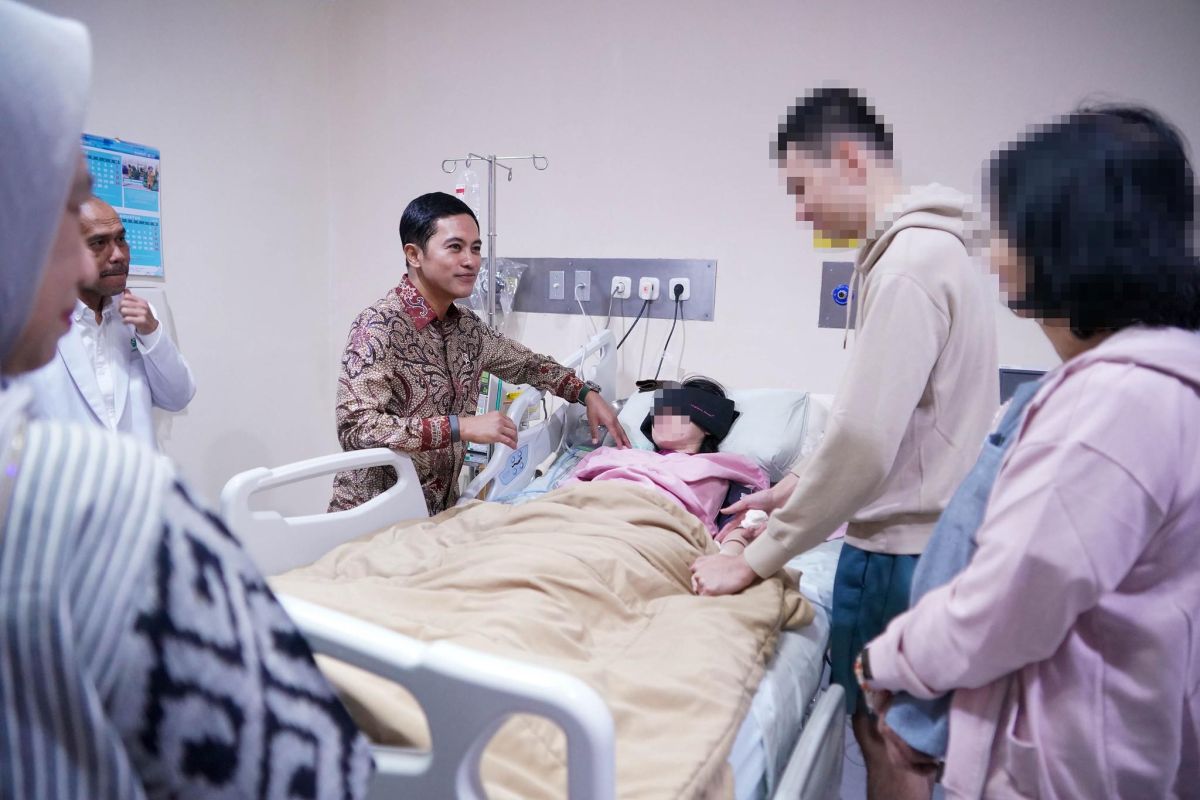
The Ministry of Health has announced that Indonesia has achieved a significant breakthrough in national maternal and child healthcare with the successful completion of the country’s first open fetal surgery to treat myelomeningocele, one of the most severe forms of spina bifida, a congenital abnormality of the spine.
The procedure was performed by a multidisciplinary team from Harapan Kita Women and Children’s Hospital, which serves as the National Center for Women and Children’s Health, together with a team from Mater Mothers’ Hospital in Brisbane, Australia.
“This is the first operation in Indonesia, fetal open surgery, meaning open surgery on the foetus while still in the womb. This is an extraordinary breakthrough and it was all carried out by Indonesian doctors,” said Deputy Health Minister Dante Saksono Harbuwono.
He explained that myelomeningocele is a congenital abnormality of the spine and nervous system that occurs when the spinal column and nerve tissue do not close completely during foetal development.
The condition can cause impaired nerve function, paralysis, bladder and bowel dysfunction, and an increased risk of hydrocephalus.
The abnormality can be detected during pregnancy through fetomaternal ultrasound examination. Once a diagnosis is confirmed and following a series of examinations and screenings, including genetic abnormality screening, patients may be considered for fetal surgery according to medical indications.
Professor Dante stressed that the success of the operation demonstrates that Indonesia now possesses the human resources and technological capability to provide medical services that were previously often performed abroad.
“The technology is already remarkable, and the skills of our doctors in Indonesia are also capable. This is a 17 August gift for the Indonesian medical world, that we can now perform fetal open surgery on the first Indonesian baby,” said Professor Dante.
He also committed to continuing to promote the development of healthcare worker competencies, strengthening referral networks, international collaboration, and the equitable distribution of advanced services so that more people can access quality healthcare without having to seek treatment abroad.
The Head of the Neurosurgery Team at Harapan Kita Hospital, Dr Alfi Aulia Rahmah, said that corrective surgery performed while still in the womb is expected to reduce further nerve damage and lower the risk of long-term complications, including hydrocephalus.
She added that the success of the procedure depends heavily on collaboration across various disciplines, from neurosurgeons, fetomaternal specialists, obstetricians and gynaecologists, anaesthetists, nurses, to other supporting staff.
The collaboration between the Indonesian and Australian teams is expected to continue in order to strengthen Indonesia’s ability to perform fetal surgery independently, while maintaining the safety of mother and baby as the primary principle.
The Director General of Advanced Health at the Ministry of Health, Dr Azhar Jaya, said that the development of high-technology medical services is also supported through the transformation of government hospital management.
“The surplus funds from Harapan Kita Hospital will be returned to the community in the form of training and mentorship,” said Dr Azhar Jaya.
The President Director of Harapan Kita Hospital, Dr Reni Wigati, affirmed that the development of fetal therapy is part of the hospital’s long journey as a national maternal and child health centre. After the Australian team returns to their country, Harapan Kita Hospital is targeted to be able to continue the service independently.
“Our multidisciplinary team is ready. After this, Harapan Kita will continue with the next patients and also pass on this capability to other hospitals that have strengths in the fetomaternal field,” she said.