
Indonesia Pays, Who Benefits? Questioning Stakeholder Alignment in Hajj Dam Policy
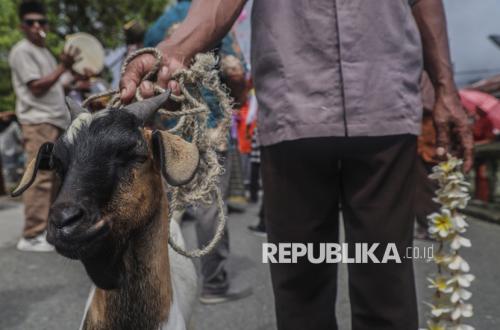
Every hajj season, hundreds of billions of rupiah in dam funds flow from Indonesian pilgrims to the Holy Land. Thousands of animals are slaughtered. Millions of kilograms of meat are processed through modern facilities, frozen in high-tech cold chains, and then distributed to various parts of the world through international humanitarian networks.
Yet behind the grandeur of this system, there is one question that is rarely asked seriously: Indonesia pays, but who enjoys the benefits?
This question is not a form of narrow nationalism, nor an attempt to pit sharia against public welfare. On the contrary, this question arises from unease over the absence of social alignment in the governance of the hajj dam, which involves millions of Indonesian Muslims as the world’s largest contributors of hajj pilgrims. The alignment appears to be stuck in the realm of ideas, not yet fully channelled effectively.
In the 2026 hajj season, the number of Indonesian pilgrims reached around 221,000. With the majority of pilgrims performing the Tamattu’ hajj, which requires the dam, the economic potential generated is estimated to exceed Rp600 billion per year, equivalent to more than 2,000 tonnes of slaughtered meat. This value will repeat every hajj season.
Ironically, when thousands of tonnes of dam meat must be distributed to various countries because local absorption capacity in the Haram land is no longer sufficient, Indonesia still faces problems of stunting, protein deficiency, and food insecurity in various regions. This is where the real problem begins.
Encouraging the alignment of dam benefits through official diplomatic channels. It must be acknowledged that the Saudi Arabian government, through the Adahi project, has succeeded in building one of the largest meat slaughtering and distribution systems in the world. The waste problem that was once a concern has been largely resolved through processing, freezing, and international distribution mechanisms.
However, administrative success is not always synonymous with the optimisation of public welfare. The measure of sharia success lies not only in the orderly slaughtering but also in the accuracy of the intended beneficiaries.
The fact that most of the dam meat is distributed to various countries—as openly stated by the Saudi Adahi authority—shows that the benefits of the dam have in practice transcended the geographical boundaries of the Haram land. In other words, the Islamic world has effectively accepted that the social benefit of the dam can move according to human needs.
If those benefits can cross continents to various regions in need, then it is entirely reasonable for Indonesia to ask why its own people have not yet become a priority in a structured and sustainable distribution agenda.