
Indonesia Pavilion at Venice Biennale Brings Archipelagic Art to the Global Stage
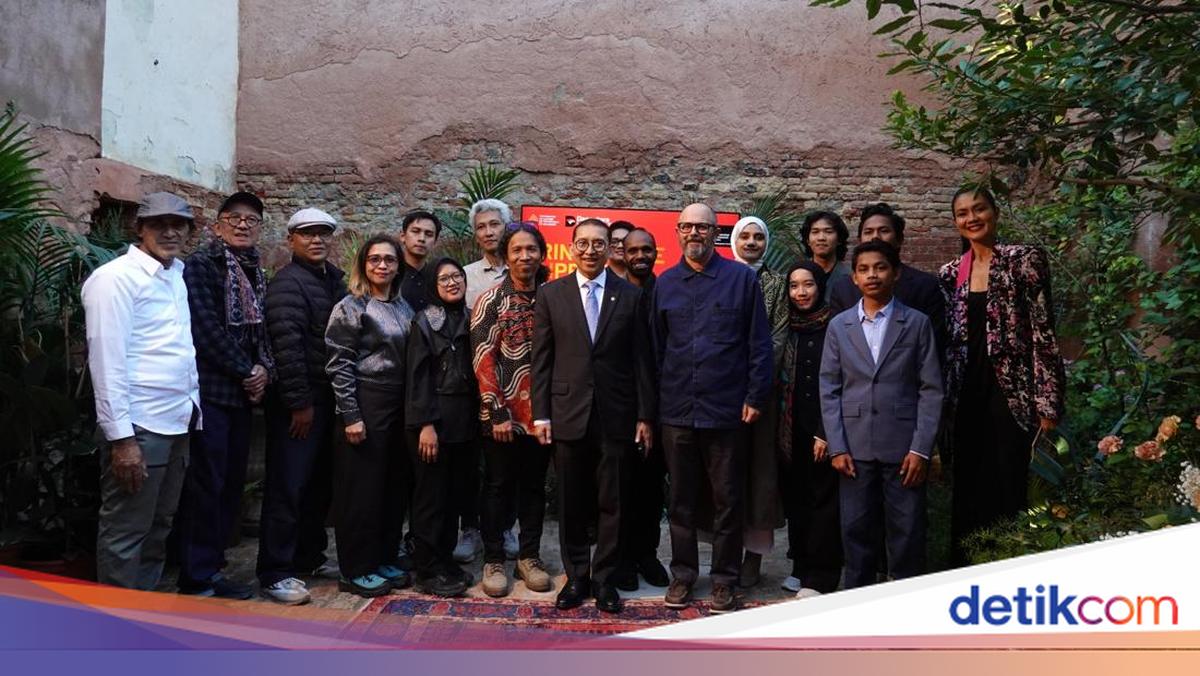
Under the theme ‘Printing the Unprinted’, the Indonesia Pavilion is organised by the Republic of Indonesia’s Ministry of Culture through the Directorate General of Cultural Diplomacy, Promotion, and Cooperation, with support from the Danantara Indonesia Trust Fund, and in collaboration with Scuola Internazionale di Grafica, Negeri Elok, the National Arts and Culture Talent Management, and Venice Art Factory. The Indonesia Pavilion is located at Scuola Internazionale di Grafica, Cannaregio 1798, Venice, with a preview day on 7 May 2026 and the exhibition running from 9 May to 22 November 2026.
The Indonesia Pavilion is curated by Aminudin TH Siregar. In its curatorial process, Scuola Internazionale di Grafica was selected as the pavilion’s location due to its close ties to graphic arts practices, printing, and process-based artistic production. Through this approach, the works are not merely produced in Indonesia and then shipped to Venice, but are also developed through residencies, dialogues, and direct collaborations in that space.
At the opening of the Indonesia Pavilion, Indonesian Minister of Culture Fadli Zon stated that Indonesia’s participation in the Venice Biennale 2026 holds significant meaning for strengthening Indonesia’s cultural diplomacy on a global level. According to him, Indonesia’s presence this year is an important moment as it marks the first participation under the independent Ministry of Culture.
“We believe that culture is not merely heritage, but also the foundation for the future. Indonesia is present not only to introduce its culture to the world, but also to shape global conversations through art,” said Fadli Zon in a written statement on Friday (8/5/2026).
Fadli Zon emphasised that Indonesia is a megadiverse civilisation with more than 17,000 islands, 1,340 ethnic groups, and 718 regional languages. This cultural richness is shaped by a long history of maritime exchanges, spiritual traditions, artistic innovations, and living heritage that continues to evolve to this day.
“Indonesia has one of the most dynamic cultural ecosystems in the world. Even Indonesia’s prehistoric heritage shows that this archipelago has long been one of the oldest centres of human creativity. With the cultural wealth it possesses, Indonesia has the potential to become one of the world’s cultural centres, where tradition, imagination, and the future meet,” he explained.
This spirit is reflected in the theme ‘Printing the Unprinted’, which is a celebration of the power of imagination that transcends the boundaries of reality.
“Through the works displayed in this pavilion, Indonesian artists present speculative narratives that fill uncharted spaces, unheard voices, forgotten memories, and futures that have never been imagined,” he stated.
He explained that ‘Printing the Unprinted’ brings together seven Indonesian artists across generations: Agus Suwage, Syahrizal Pahlevi, Nurdian Ichsan, R.E. Hartanto, Theresia Agustina Sitompul, Mariam Sofrina, and Rusyan Yasin. Through the medium of graphic printmaking, the artists present the creation process as a space for encounters, idea exchanges, and re-readings of the history, identity, and imagination of Nusantara.
Conceptually, the exhibition draws from a fictional narrative about a great 15th-century voyage inspired by the imaginary manuscript of Datu Na Tolu Hamonangan from Harajaon Pusuk Buhit in Sumatra. This narrative opens a speculative reading of the relationship between Asia and Europe, while also debating perspectives on global history that are often constructed through arrivals, discoveries, and claims.
“In addition to the main exhibition, the Indonesia Pavilion also features a series of programmes including artist residencies, art discussions, workshops, and symposia. All programmes are designed to strengthen knowledge exchange, expand Indonesia’s art networks, and present process- and collaboration-based artistic practices,” he clarified.
As part of strengthening the arts and culture talent ecosystem, the Ministry of Culture through the National Arts and Culture Talent Management (MTN) programme, together with the curator, invited Negeri Elok to involve seven Indonesian talents. They collaborate with the seven pavilion artists in the creation process and idea exchanges in Venice.
This collaboration uses an art therapy approach that positions art not only as aesthetic expression, but also as a medium for building empathy, nurturing memories, alleviating trauma, and strengthening personal and collective resilience. The Indonesia Pavilion serves as a space for intergenerational dialogue, healing, and collective meaning-making.
Fadli Zon stated the importance of collaboration in building the future of culture. According to him, culture cannot develop on its own, but requires cross-sector support from government, the public, and the private sector.
“Culture is the source of identity, values, and imagination, while the creative economy is the force that transforms culture into innovation, opportunities, and global influence. Therefore, Indonesia continues to strengthen the relationship between art, tradition, and the creative industry, from visual arts, film, music, literature, to animation, games, and digital culture,” he said.
He added that Indonesia continues to open opportunities for international cooperation through strengthened cultural partnerships, including through the Indonesiaraya Fund and various international residency programmes.
Through the ‘Printing the Unprinted’ exhibition, the Indonesia Pavilion not only presents artworks, but also offers perspectives on the history, imagination, and future of culture. Indonesia’s presence at the Venice Biennale 2026 serves as an important marker that art can be a space for diplomacy, collaboration, and global conversations rooted in Nusantara experiences.
“The Indonesia Pavilion is an open space for dialogue, idea exchanges, and building intercultural bridges. We invite the global art community to see Indonesia as a partner”