
Indonesia on Disaster Alert! BMKG Issues Warning as Australian Monsoon Strengthens
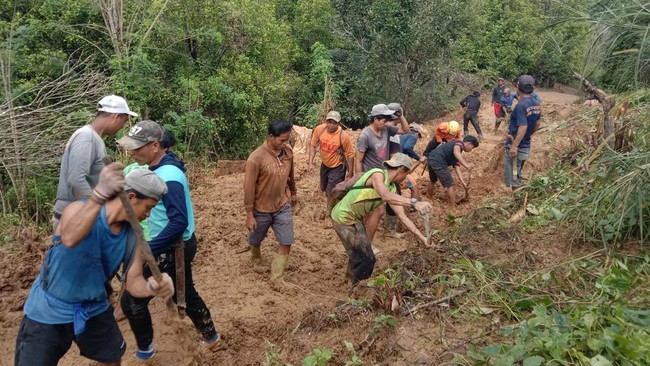
The Indonesian Meteorological, Climatological, and Geophysical Agency (BMKG) has warned of a strengthening trend in the Australian Monsoon. This monsoon is noted for bringing dry air masses to parts of Indonesia, which will lead to reduced cloud formation. This condition is particularly prevalent during the morning and afternoon, resulting in more optimal sunlight reaching the earth’s surface and maximum solar radiation.
BMKG monitoring recorded that between 29–31 May 202le, maximum temperatures exceeding 35.0–36.4 °C were recorded in North Sumatra, Riau, South Papua, Banten, and Central Sulawesi. However, the BMKG noted that the Australian Monsoon is currently weaker than normal, meaning rainfall still occurs in several areas. Light to very heavy rainfall was observed in various regions during the same period, with the highest rainfall recorded in Maluku (102.5 mm/day), Central Sulawesi (70.5 mm/day), Jakarta (70.4 mm/day), South Papua (63.0 mm/day), North Sumatra (59.8 mm/day), and Highland Papua (40.8 mm/day).
Furthermore, atmospheric dynamics such as Equatorial Rossby Waves, Kelvin Waves, negative OLR anomalies, and the emergence of Tropical Cyclone Jangmi near the Philippine Sea north of Papua are supporting increased rainfall growth. Consequently, BMKG has issued a weather alert effective from Tuesday (2 June 2026) to next Monday (8 June 2026).
BMKG’s analysis of recent global climate indicators shows El Niño conditions in the Pacific Ocean, with a Niño 3.4 index of +0.67 and an SOI value of -14.7. This generally reduces rainfall potential across most of Indonesia, though regional atmospheric dynamics may still support cloud growth, particularly in northern and eastern Indonesia.
BMKG Early Warning:
Period 2–4 June 2026:
Weather is generally dominated by light to heavy rain. Moderate rainfall intensity is expected in Aceh, North Sumatra, West Sumatra, Riau, Riau Islands, Bangka Belintung, Banten, West Kalimantan, Central Kalimantan, East Kalimantan, North Kalimantan, South Kalimantan, North Sulawesi, Gorontalo, Central Sulawesi, West Sulawesi, South Sulawesi, North Maluku, Maluku, Southwest Papua, Central Papua, Highland Papua, and Papua.
Alert for heavy-to-very-heavy rain: West Java.
Alert for strong winds: Aceh, North Sumatra, Riau Islands, Central Java, DI Yogyakarta, East Java, East Nusa Tenggara, West Nusa Tenggara, West Kalimantan, Central Kalimantan, North Sulawesi, Gorontalo, West Sulawesi, South Sulawesi, Southeast Sulawesi, Maluku, Southwest Papua, and Central Papua.
Period 5–8 June 2026:
Moderate rainfall intensity is expected in Aceh, West Sumatra, Riau, Bangka Belitung, Jakarta, West Java, West Kalimantan, Central Kalimantan, East Kalimantan, North Kalimantan, North Sulawesi, West Sulawesi, Gorontalo, South Sulawesi, Southeast Sulawesi, North Maluku, Maluku, Southwest Papua, West Papua, Central Papua, and South Papua.
Alert for heavy-to-very-heavy rain: Highland Papua.
Alert for strong winds: Aceh, Bangka Belitung, West Java, Central Java, DI Yogyakarta, East Java, West Kalimantan, Central Kalimantan, South Kalimantan, North Sulawesi, Gorontalo, West Sulawesi, South Sulawesi, Southeast Sulawesi, Maluku, West Nusa Tenggara, East Nusa Tenggara, Maluku, West Papua, Southwest Papua, Papua, Central Papua, and South Papua.
Preparing for Hydrometeorological Disasters:
BMKG has urged the public and stakeholders to increase vigilance against extreme weather that could trigger hydrometeorological disasters. Motorists are also advised to be wary of heavy rain accompanied by lightning and strong winds, which could disrupt travel. Additionally, the public is advised to be cautious of falling trees, collapsing billboards, flooding, and lightning strikes by avoiding sheltering under trees, advertisements, or fragile structures.
Separately, the Head of the BNPB Disaster Data, Information, and Communication Centre, Abdul Muhari, issued a similar reminder. The BNPB urges the public to remain prepared for disasters triggered by extreme weather during the seasonal transition, such as strong winds, extreme rain, tornadoes, floods, and high waves. The public is also advised to remain alert to geological disasters like earthquakes and to prepare emergency disaster kits as a precautionary measure.