
Indonesia on Alert for Climate Threats: BMKG Chief Issues Latest Warning
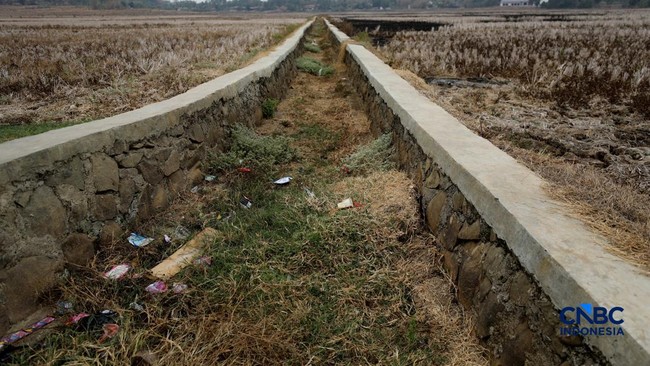
Jakarta, CNBC Indonesia – Intensifying climate change is beginning to deplete water supplies, particularly as global warming reduces rainfall and increases the intensity of climate anomalies such as El Niño.
The Meteorology, Climatology and Geophysics Agency (BMKG) has stressed the importance of climate change mitigation and adaptation to safeguard national water security. Changes in temperature and rainfall patterns, along with rising sea levels, could disrupt the water balance and increase the risks of drought, hydrometeorological disasters and crop failure.
BMKG chief Teuku Faisal Fathani said the agency’s data show that Indonesia’s average surface temperature has risen by 1.04 degrees Celsius over the past 45 years. Annual rainfall, meanwhile, has followed a downward trend of as much as 2–3% per decade, particularly in areas south of the equator. Sea levels have also been rising by 4.4 ± 0.4 millimetres a year.
“These conditions pose a serious challenge for our communities. Changes in climate cycles are disrupting the water balance and triggering increasingly extreme weather anomalies,” Faisal said at a National Water Self-Sufficiency coordination meeting at the Coordinating Ministry for Infrastructure and Regional Development, as quoted on Monday (19 October 2026).
He said the changes affect the water cycle and could increase a range of risks, from prolonged drought and forest and land fires to disruption of agriculture and public health.
Water availability is a critical concern, he added, particularly during the dry season. Reduced groundwater and surface-water supplies during prolonged drought can directly affect various sectors, including agriculture and households’ everyday access to clean water.
“The impact will be felt directly by all sections of society. It is not only the agricultural sector that will suffer losses; a clean-water crisis will make daily life extremely difficult, including for women managing household and family needs,” Faisal said.
To mitigate these risks, BMKG recommends aligning policies across agencies, extending early-warning systems nationwide and making optimal use of weather modification through cross-agency coordination. These measures are needed as part of a strategy to protect water security, particularly in drought-prone areas.
“BMKG recommends strong policy coordination, wider coverage of early-warning systems and the optimal use of weather modification across agencies as a water-security strategy in drought-prone areas,” Faisal said.
BMKG also highlighted the need to strengthen technology and infrastructure for water-resource management. Its recommendations include expanding flood and drought early-warning systems, improving digital hydrological data systems and building the capacity of central and local government institutions to respond to the effects of climate change.
The agency also recommends harmonising regulations and drawing up cross-agency operating guidelines to prepare for climate-related disasters. Optimising national policy on the use of weather modification is another priority in its strategy to improve water resilience.