
Indonesia on Alert: BPS Warns of Garlic Price Surge, Points to Rupiah Weakness as Cause
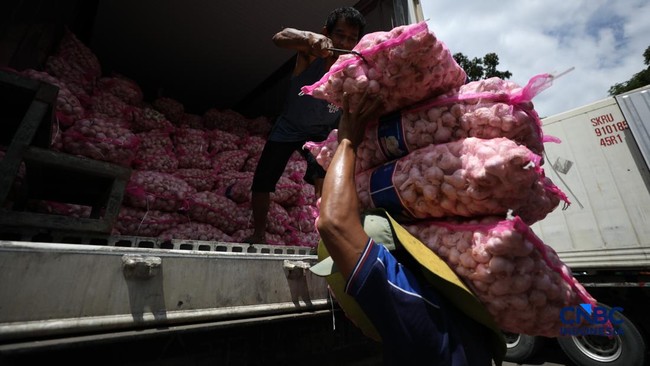
Jakarta, CNBC Indonesia - The Central Statistics Agency (BPS) has revealed that the weakening of the rupiah exchange rate is one of the causes behind the continuous rise in garlic prices domestically. This situation has made imported garlic more expensive, compounded by rising international logistics costs that are further pressuring prices at the consumer level.
BPS Head Amalia Adininggar Widyasanti stated that garlic is now the commodity that needs the most vigilance, as price increases have occurred across most regions of Indonesia.
“One of the dynamics we are seeing is that the increase in garlic prices is partly due to the weakening of the rupiah exchange rate and rising international logistics costs,” Amalia said during the Regional Inflation Control Coordination Meeting at the Ministry of Home Affairs (Kemendagri) on Monday (13/7/2026).
Amalia explained that in June 2026, inflation was primarily driven by the food, beverages, and tobacco group. Commodities contributing the most to monthly inflation included shallots, garlic, rice, carrots, fresh fish, and cooking oil, which has started to show price increases.
However, she noted that price pressure on shallots began to ease in July. In contrast, garlic has become a commodity requiring serious attention.
“Garlic needs serious attention because 269 districts/cities have already experienced price increases,” she said.
BPS recorded that the national average price of garlic has now reached Rp42,611 per kilogram (kg), far above the Consumer Sales Reference Price (HAP). A total of 269 districts/cities, or 74.72% of Indonesia’s regions, have experienced garlic price increases.
The highest price was recorded in Papua Pegunungan, reaching Rp100,000 per kg.
Amalia also highlighted several regions experiencing significant price spikes, such as South Aceh with a price of Rp50,000 per kg, or 31.6% above the HAP, North Gorontalo at Rp50,000 per kg, and Deiyai Waghete Regency reaching Rp79,000 per kg, or 107.89% above the HAP.
On the other hand, BPS assessed that the price surge was not caused by a lack of import supply. Throughout January to June 2026, the volume of garlic imports actually increased.
“Throughout January to June 2026… this is a very preliminary figure. Garlic imports from January to June 2026 have increased by 28.44% compared to the same period last year, reaching 229.16 thousand tonnes,” Amalia stated.
BPS noted that around 96.83% of Indonesia’s garlic imports are fresh or chilled garlic. Meanwhile, 98.31% of the supply came from China, totalling 183.62 thousand tonnes from January to May 2026. The remainder came from India, amounting to 3.15 thousand tonnes.
Although the cumulative import volume increased, the import value also rose because garlic prices in the international market are becoming more expensive.
“Looking at garlic imports, the import value increased amidst a decline in import volume in June 2026. This means that because the import value rose while the volume relatively fell, the unit value of garlic imports also increased. The development of the unit value for garlic imports in June appears relatively high, indicating a rise in imported garlic prices,” she explained.
Meanwhile, the Directorate General of Domestic Trade at the Ministry of Trade (Kemendag) also confirmed that garlic prices remain above the reference price.
Director of Domestic Market Development at Kemendag, Nawandaru Dwi Putra, said that as of 10 July 2026, the national average price for Honan garlic reached Rp39,315 per kg, or 5.5% above the National Food Agency’s (Bapanas) reference price.
For kating garlic, the national average price was recorded at Rp41,270 per kg, or 4.56% above the reference price.
According to Nawandaru, the price pressure was triggered by the strengthening of the US dollar against the rupiah, causing the price of garlic from source countries, especially China, to increase.
“One indication of this increase is the strengthening of the US dollar against the rupiah, or the weakening of the rupiah against the dollar, which triggers price increases in the country of origin, the largest being China, and this is also triggered by rising distribution costs,” Nawandaru said at the same event.
He added that the increase in logistics costs was also influenced by international shipping conditions. Based on information from the Shanghai Container Freight Index, following the Strait of Hormuz crisis, there were seizures of Chinese-flagged vessels by various countries, causing distribution costs to soar.
To curb the price increase, Nawandaru said his party is coordinating with the Directorate General of Foreign Trade at the Ministry of Trade so that importers can direct garlic-carrying vessels directly to major ports in eastern Indonesia. This measure is expected to cut distribution costs and suppress garlic prices, which are currently highest in the eastern region of Indonesia.
“We are currently coordinating developments with our colleagues at the Directorate General of Foreign Trade, and we hope that business actors… although this is B2B in nature, we hope our encouragement or appeal can be complied with by importing business actors who are currently bringing garlic commodities into the country,” he concluded.
Source: jawawa.id (https://jawawa.id/newsitem/indonesia-on-alert-bps-warns-of-garlic-price-surge-points-to-rupiah-weakness-as-cause-1783918338)
Originally published by CNBC Indonesia (https://www.cnbcindonesia.com/news/20260713105816-4-750300/ri-waspada-bps-ingatkan-soal-bawang-putih-tunjuk-sumber-penyebab), translated from Indonesian