
Indonesia Officially Launches Waste-to-Energy Project in Bali, Set to Power 100,000 Homes
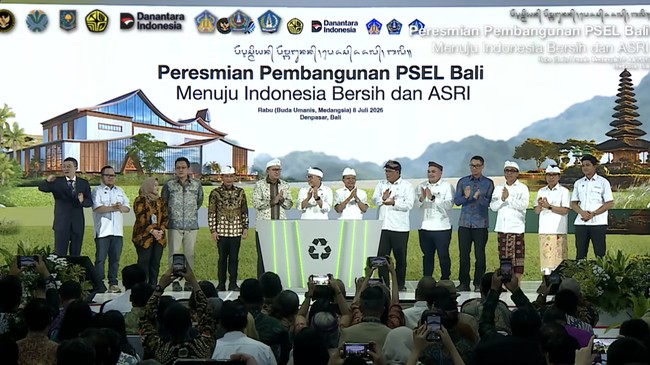
Indonesia, through the Danantara Indonesia Investment Management Agency (BPI), has officially commenced the construction of a Waste-to-Energy (PSEL) project in Denpasar Raya, Bali, marked by the signing of a Power Purchase Agreement (PPA) and the project’s inauguration on Wednesday (8/7/2026).
The development of this PSEL project is a follow-up to the issuance of Presidential Regulation Number 109 of 2025 concerning Urban Waste Management through Waste-to-Renewable Energy Processing Based on Environmentally Friendly Technology.
In the future, the PSEL project in Bali is targeted to be capable of processing more than 500,000 tonnes of waste per year, representing more than 40% of Bali’s total waste generation. The project is also projected to reduce emissions from landfills (TPA) by up to 80% and suppress carbon emissions by approximately 640,000 tonnes of CO2 per year.
“From an energy perspective, this initiative will produce green energy capable of supplying the needs of around 100,000 households in Bali. This initiative is valued at 3 trillion IDR, is expected to create 1,200 green jobs, and will reduce landfill land requirements by approximately 80%,” explained the Chief Investment Officer (CIO) of Danantara Indonesia, Pandu Sjahrir, on Wednesday (8/7/2026).
Facts and Data of the Indonesian PSEL Project:
Status: National Strategic Project (PSN)
Locations: Bali, Bekasi & Bogor
Capacity: 1,500 tonnes of waste per day
Operational Target: First Semester of 2028
Benefits of one PSEL Facility:
Economic:
IDR 8.5 trillion - IDTR 14.2 trillion (Indicative economic value per location over 30 years)
3,500 - 4,500 construction jobs
270 - 330 permanent operational jobs
GDP contribution of IDR 1.3 - 1.6 trillion (during construction) + IDR 180 - 220 billion per year (during operation)
Social:
500,000 households served
10 - 15 supporting industrial sectors boosted
Technology transfer, providing added value in the form of research, education, and green technology
Public health: reducing health risks and incidents of excessive waste accumulation
Environmental:
Reducing emissions by up to 80% (compared to conventional landfills)
National scale: 13.2 million tonnes of waste processed and managed
1.5 million households supplied with electricity
3.96 TWh total electricity production per year
0% leachate flow into the environment
19 million tCO2e reduced annually through landfill avoidance
2 million m3 potential for mixed construction materials to be utilised
Countries that have adopted PSEL:
Japan: With over 1,100 facilities, Japan has the highest density of such facilities in the world.
China: China has experienced the fastest growth in waste-to-energy facilities, moving from hundreds to over a thousand facilities in the last two decades.
Sweden: The first country in the world to adopt waste-to-energy facilities. Currently, 54% of household waste in the country is processed into energy.
Denmark: Waste-to-energy facilities serve as recreational facilities for citizens.
Singapore: Land scarcity has led Singapore to utilise PSEL as a primary solution.
Source: jawawa.id (https://jawawa.id/newsitem/indonesia-officially-launches-waste-to-energy-project-in-bali-set-to-power-100-000-homes-1783500712)
Originally published by CNBC Indonesia (https://www.cnbcindonesia.com/news/20260708135240-4-749142/ri-resmi-memulai-proyek-sampah-jadi-listrik-ini-fakta-datanya), translated from Indonesian