
Indonesia Officially Launches Carbon Unit Registry System
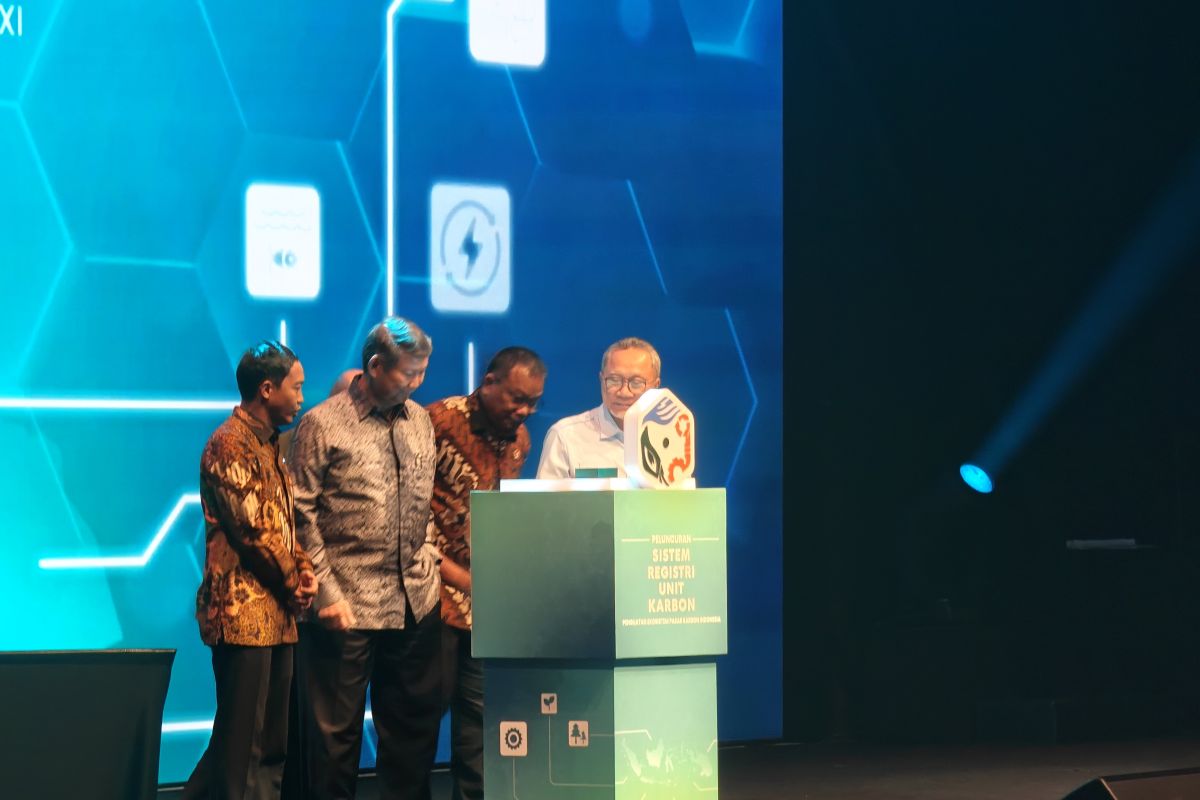
The Indonesian government has officially launched the Carbon Unit Registry System (SRUK) as a historic step in optimising governance and accelerating carbon trading in the country.
Speaking at the launch in Jakarta on Thursday, Minister of Forestry Raja Juli Antoni stated that this registry system is a crucial instrument for realising an inclusive green economy in Indonesia, accelerated by the strong commitment of President Prabowo Subianto’s leadership to fast-track national strategic policies. “With the leadership of President Prabowo Subianto, he truly makes the impossible possible. What was once deemed impossible has now become possible,” he said.
As an initial step in commencing carbon trading based on this new system, the government has issued trading permits for four Forest Utilisation Business Permits (PBPH) since 6 July 2026. The Minister stressed that Indonesia’s carbon trading scheme is designed not only to benefit elite groups or large corporations but must also reach communities at the grassroots level. The government projects that the economic turnover from this carbon sector can be enjoyed by groups managing 8.3 million hectares of social forestry and 1.4 million hectares of customary forests across the archipelago.
“This signifies that carbon trading is not just for the elite, not just for those who are already wealthy, but also for those at the very bottom, at the grassroots,” said Raja Juli, while expressing his appreciation to the internal ranks of the Ministry of Forestry, including the Directorate General of Sustainable Forest Management (PHL) and the Directorate of Social Forestry, who have overseen the integration of this system until it was ready for operation.
Previously, regulations regarding the procedures for carbon trading through greenhouse gas emission offsets in the forestry sector were also finalised through the Minister of Forestry Regulation Number 6 of 2026. With this, he expressed optimism that Indonesia could become a global carbon trading epicentre, supported by reliable regulations that enable trading to commence, while the simplification of permits in conservation areas will also open up accountable and high-integrity carbon trading opportunities.
The implementation of the national carbon economic value instrument is projected to attract green investment of up to 5.8 billion US dollars. Furthermore, the implementation of this instrument can also reduce greenhouse gas emissions by approximately 570 million tonnes of CO₂ equivalent.