
Indonesia Needs Rp 1,000 Trillion for AI, Luhut Outlines Funding Strategy
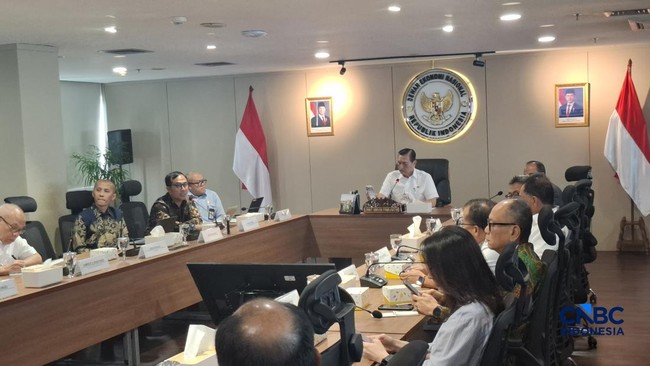
Indonesia requires trillions of rupiah in investment to meet the data centre infrastructure needs that will underpin artificial intelligence (AI) technology by 2030. This was disclosed by the Chair of the National Economic Council (DEN), Luhut Binsar Pandjaitan. He explained that the national data centre capacity requirement is estimated to reach 3 gigawatts by 2030. To meet this need, Indonesia requires investment of around US$60 billion, or approximately Rp 1,066 trillion. “In 2030, three gigawatts is roughly 60 billion dollars. Do we have that kind of money? We don’t. So how do we do it? We will figure out how to obtain it,” Luhut said at the Indonesia Ethical AI Summit in Jakarta on Wednesday (17/6/2026). He stated that the government is open to cooperation opportunities with investors through various business models, including long-term lease schemes that would eventually allow the assets to become Indonesian property. “Perhaps we ask someone to invest, we lease it, and after a number of years it becomes ours. Indonesians have plenty of ingenuity,” he remarked. Luhut said the government is currently reviewing the utilisation of infrastructure owned by PT Telkom Indonesia (Persero) Tbk. to support the development of the national data centre ecosystem. According to him, this step could reduce the need for government spending to build new facilities. “The issue is, yesterday I spoke with Telkom’s president director and the team, about the data centre. How do we handle this now? We thought, why not just use Telkom? So no more money is spent,” Luhut explained. “Telkom just does business, the government supports it because the assets belong to the government, rather than building new ones,” he added. Luhut revealed that he has directly proposed the use of AI to President Prabowo Subianto to strengthen government governance, including improving oversight of state revenues related to the state budget (APBN). The proposal emerged during a meeting at the National Economic Council. At that time, President Prabowo asked about the direction of Indonesia’s critical mineral export policy. According to Luhut, the government needs to halt unrestricted exports and replace them with a more integrated monitoring system. “So during the meeting at the Economic Council, the President asked about minerals, how critical mineral exports are handled? I said, I fully agree, sir, just stop it,” Luhut said on stage at the Indonesia Ethical AI Summit in Jakarta on Wednesday (17/6/2026). He explained that the government can utilise an existing digital system, namely Simbara, the Inter-Ministry/Agency Mineral and Coal Information System. Luhut believes integrating this system will have a significant impact on state revenues through stricter, technology-based supervision. “So don’t allow it freely, but with a good system. What system? I said, sir, just use the existing Simbara plus improvements,” Luhut stated. “It is all integrated. And it will greatly help state revenues,” he added. Furthermore, Luhut said digital transformation will also be widely applied to public services. He mentioned that all future public services will be pushed to operate digitally, including the business licensing system through Online Single Submission (OSS). As an example, Luhut revealed that AI can accelerate the document evaluation process, which previously took a long time. According to him, a 1,600-page OSS document can be analysed by AI in just seconds. “We created the online single submission yesterday, 1,600 pages, and AI read it in just 30 seconds, directly providing comments on every page,” he concluded.