
Indonesia Needs More Entrepreneurs to Boost the Economy
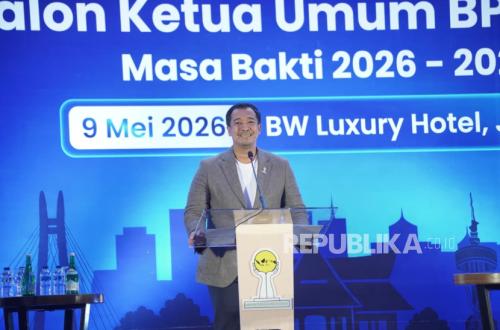
The need to increase the number of national entrepreneurs has resurfaced ahead of the 18th National Congress of the Indonesian Young Entrepreneurs Association (Hipmi). Indonesia is assessed to need at least 4% of its total population as entrepreneurs to bolster the economic structure towards becoming an advanced nation.
This issue emerged during the candidate debate stage at the 18th Hipmi National Congress at BW Luxury Hotel, Jambi, on Saturday (9/5/2026). Hipmi National Board Chairman candidate, Ade Jona Prasetyo, offered strategies to accelerate the birth of new young entrepreneurs through strengthening the national entrepreneurship ecosystem.
Jona views entrepreneurship as still a pathway for economic mobility for many young Indonesians. He stated that his life experiences have shaped his belief that entrepreneurship can change the future. “Their dreams today are my dreams from 15 years ago,” Jona revealed.
According to him, becoming an entrepreneur is a quick way to improve individual economic conditions while opening new job opportunities. Therefore, he wants to make Hipmi a space for collaboration among cadres in various regions. “But I can’t move alone. I need support from BPD friends, BPC, Hipmi University, and all Hipmi cadres to together realise the dreams of 70 million Indonesian youth,” Jona said.
The national economic growth target of 8% set by President Prabowo Subianto, according to Jona, requires an active role from young entrepreneurs. He champions the vision of making Hipmi a home for collaboration among young entrepreneurs that is inclusive and globally competitive towards Golden Indonesia 2045.
In his presentation, Jona outlined several strategic agendas. First, strengthening food self-sufficiency through modernising the agriculture sector and enhancing the capacity of agricultural MSMEs. Second, strengthening energy self-sufficiency through optimising renewable energy, reducing energy imports, developing B40 biodiesel, and downstreaming coal into electricity.
Third, accelerating industrial downstreaming by encouraging business actors to level up from traders to producers through increasing the added value of natural resources, foreign investment, and technology transfer. Fourth, increasing the People’s Business Credit (KUR) limit from Rp500 million to Rp2 billion so that MSMEs have broader financing space. “It needs to be fought for so that MSMEs have greater financing space to grow and level up,” Jona stated.
He also highlighted the still tight access to bank financing for MSMEs. “The solution is to raise the limit, while simplifying the requirements,” he said.
In addition, Jona encourages the consolidation of regional governments and regional-owned enterprises (BUMD) to become engines of local business financing, with Hipmi acting as a driver of local industrial development. According to him, affirmative action for MSMEs is important so that business actors can access digital technology, expand markets, and increase competitiveness.
“Encourage MSMEs to go public. The way is through digitalisation and AI so that MSMEs are more efficient, access global markets, and analyse market data better,” Jona explained.
Internally in the organisation, he emphasises strengthening cadre development through more structured career paths from BPC, BPD, to BPP. Cadre education and training programmes will also be strengthened through the establishment of a national-standard Hipmi training body.
“Ensure sustainable cadre development. Programmes like Hipmi Go need to be continued so that alumni and cadres remain active, develop globally, and do not stop after their term ends,” he said.