
Indonesia Needs 8.6 Million Tonnes of LPG per Year: Bahlil's Latest Strategy
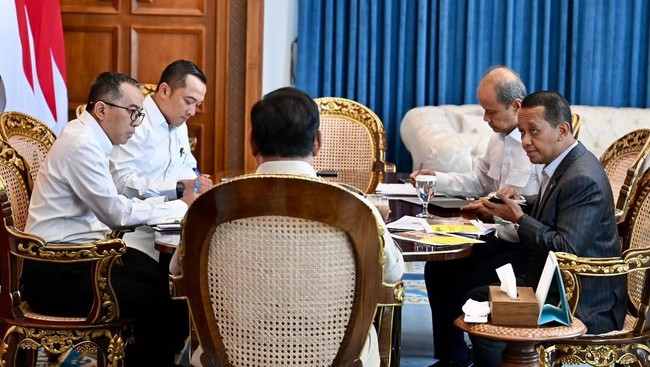
Indonesia’s Energy and Mineral Resources Ministry (ESDM) records that national consumption of Liquefied Petroleum Gas (LPG) reaches 8.6 million tonnes per year. Unfortunately, domestic production only manages to reach 1.6 to 1.7 million tonnes per year. As a result, to meet LPG needs, the government still relies on imports from abroad. To address this, the government continues to formulate various strategic measures to optimise the use of domestic gas in order to achieve energy independence. One domestic energy alternative under study is the utilisation of Compressed Natural Gas (CNG). Energy and Mineral Resources Minister Bahlil Lahadalia stated that the CNG utilisation plan is still in the discussion stage. His side will soon finalise it so that energy independence can be realised. “Right now, it’s still under discussion, as I reported earlier, we are making CNG. But this is still under discussion, I must finalise it, and this is one of the best alternatives for us to push so that our energy independence in the LPG sector can be achieved,” Bahlil said, quoted on Tuesday (28/4/2026). Bahlil explained that CNG raw materials can be met from the domestic industry, namely from liquid gases C1 and C2 which are then compressed until reaching a certain pressure. Liquid gases C1-C2 are natural gas dominated by methane (C1) and ethane (C2) components that have been liquefied to facilitate storage and transportation. Currently, there are 57 trading business entities operating in the CNG sector. “CNG is from gas, but from liquid gases C1, C2. And our domestic industry has plenty of it. But it uses a device that can then be compressed up to 250 to 400 bar pressure. So its usage can be good. But once again, this is still in the consolidation stage so we can achieve better results,” he explained. CNG itself is already widely used by various industries, such as hotels, restaurants, and several Gas Fuel Filling Stations (SPBG), with raw materials sourced domestically. Therefore, the Government plans to optimise the use of domestic energy. “But for CNG, some is already used. For hotels, restaurants, it’s already used. Some SPBG are also used. And the raw materials are not imported, all domestic. Now this is what we’re trying to find as an alternative. Because in this uncertain geopolitical era, we must find a formula to achieve survival mode. All production available domestically, that’s what we prioritise,” Bahlil emphasised. CNG can also serve as the Government’s weapon to face the global energy crisis, alongside oil and gas lifting optimisation, fuel diversification such as B50 utilisation, and LPG diversification besides Dimethyl Ether (DME) utilisation.