
Indonesia Needs 5.3 Million Green Workers by 2029, Key Skills Required
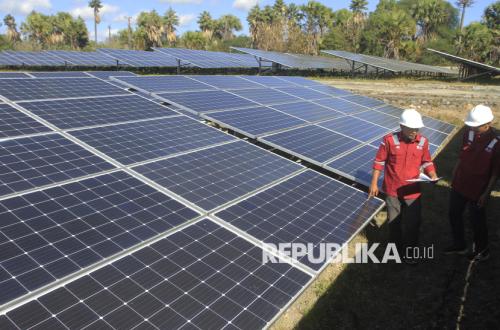
Indonesia is projected to need more than 5.3 million green workers by 2029. The Deputy Head of Mission of the Embassy of the Federal Republic of Germany, Oliver Sperling, believes this demand must be balanced with investment in skills, vocational education, and industry involvement.
Sperling stated that green jobs do not solely depend on policy and technological developments. The success of the transition towards a green economy is heavily determined by the workforce’s ability to operate and develop such technologies.
“Policy can determine the direction and technology can provide us with the tools. However, the most important ingredient for success is talent. Commitment only yields results when we invest in people,” Sperling said during the Indonesia Green Jobs Conference (IGJC) 2026 in Jakarta.
According to Sperling, the need for workers with green skills will increase alongside Indonesia’s investments in renewable energy, circular production, energy efficiency, and low-carbon technology. The development of green skills, he noted, should be positioned as an investment to meet green job demands while simultaneously supporting economic transformation.
Germany has collaborated with Indonesia in the development of vocational education and training for over two decades. Sperling noted that this cooperation must adapt to the changing labour market needs resulting from the green transition. “Investing in green skills is a direct investment in the future,” he remarked.
Sperling stated that the creation of green jobs is not the sole responsibility of the government. The business world, industry, educational institutions, civil society, youth, and the innovation sector all play a role in preparing the workforce for this sector.
He cited several German-Indonesian collaborations that combine technological development with workforce skill enhancement. One example is a partnership between a German company and a development finance institution to launch the first mobile hydrogen training programme in Indonesia.
This programme equips Indonesian technicians and engineers with the skills required to work in the hydrogen sector. According to Sperling, the advancement of clean energy technology must proceed in tandem with workforce readiness.
Another example is the solar-powered cold storage facility at the Bogor Agricultural Institute (IPB). While the technology for the facility was provided by a German company, its operation still requires technical personnel capable of running the cooling system efficiently. “Technology only works if skilled technicians are available,” he said.
Sperling also highlighted a Siemens programme that provides vocational high school (SMK) students with practical experience at the company’s service centre in Cilegon. Through cooperation with the German-Indonesian Chamber of Commerce and Industry (EKONID), students gain experience in a professional working environment before graduation.
He noted that Siemens, Bayer, Astra Group, and Daimler Commercial Vehicles have created more than 400 apprenticeship opportunities.
This scheme demonstrates the link between vocational education and industrial needs in preparing the workforce for green jobs. “Schools build the theoretical framework, and young people master expertise through practice,” he said.
Sperling also emphasised that green job development must encompass a broader group. Opportunities to acquire skills and enter the green labour market, he said, must be available to women, youth, and workers in the informal sector.
Sperling noted that the younger generation present at the conference will be a vital part of the development of Indonesia’s green labour market. Students, researchers, and innovators are not only beneficiaries of this transformation but will also determine the types of jobs and skills needed in the future.
“We want to hear your perspectives as we seek ways to build a future that is truly inspiring and engaging for the next generation,” he said.
In addition to creating jobs in Indonesia, the green transition also opens opportunities for labour mobility. Sperling stated that Germany has experience in energy efficiency and hydrogen that can be shared with Indonesia.
This cooperation has the potential to open opportunities for Indonesian workers to develop careers in Germany. However, according to him, labour mobility should not be viewed merely as the movement of workers to German companies or projects.
The experience gained by workers through German companies, workshops, or energy projects can also be used to enhance the capacity of Indonesian industry and the economy.
To support this, Germany and Indonesia are working to ensure that labour qualifications and certifications are recognisable and comparable in both countries.
Sperling believes Indonesia has the foundation to develop green jobs. Bappenas, along with relevant ministries, has mapped the key skills required and is aligning vocational education with the demands of an increasingly green economy.
He mentioned that Indonesia’s green workforce development roadmap projects a need for more than 5.3 million green workers by 2029. “Now is the time to move towards action,” he said.
According to Sperling, Indonesia’s next challenge is not merely setting green job targets, but ensuring that society has access to relevant training, obtains certifications that meet industrial needs, and views green jobs as a promising career choice.
“When young professionals feel that they have a future, that is when commitment produces impact,” he concluded.