
Indonesia Must Move Beyond Downstreaming
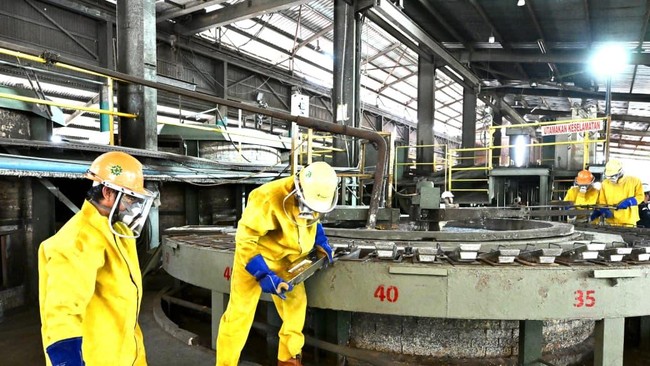
Downstreaming has become an important instrument in Indonesia’s economic transformation strategy. For years, Indonesia has sought to change how it manages its natural resources, moving from simply exporting raw materials to processing them domestically.
This approach has brought an important shift in how the country views its mineral wealth and strategic resources. But as global economic competition is increasingly shaped by technology, innovation and manufacturing capabilities, Indonesia needs to ask a bigger question: where should national industrialisation go after downstreaming?
That question matters because success in processing natural resources does not necessarily mean a country has mastered industry. A country may build mineral-refining facilities, increase output of intermediate goods and attract manufacturing investment, yet remain dependent on foreign technology, machinery, design, engineering and intellectual property.
In such circumstances, value is added domestically, but the economy’s ability to master more complex stages of production may not develop at the same pace. Downstreaming should therefore not be seen as the end goal of industrialisation. It is a gateway to building broader production capabilities.
Indonesia’s current challenge is to move from processing raw materials to mastering technology, from commodity production to high-value-added manufacturing, and from dependence on resource-based investment to an economy with its own productive capabilities.
In this context, it is important to distinguish between increasing value added and increasing economic complexity. Value added can rise when raw materials are processed into intermediate goods.
Economic complexity, however, requires a broader range of capabilities: knowledge, technology, skills, engineering and supplier networks that enable a country to produce an increasingly diverse and sophisticated range of goods. The two are connected, but one does not automatically lead to the other.
The economic complexity approach developed by Professor César Hidalgo offers an important perspective on this issue. A country’s economic capabilities are determined not only by its natural resources, but also by the accumulation of productive knowledge embedded in its companies, workforce, institutions and industrial networks.
Countries able to combine these capabilities have greater opportunities to develop more complex products and enter industrial sectors with higher productivity.
For Indonesia, this perspective changes how we view downstreaming. Success cannot be measured solely by the number of processing facilities built or the production capacity installed.
We also need to assess whether Indonesian companies can master engineering processes, whether domestic industry can manufacture machinery and components, whether research institutions are connected to manufacturing needs, and whether the national workforce has the skills to develop the next generation of technology.
Take the battery industry, for example. Developing a battery ecosystem gives Indonesia the opportunity to connect its mineral wealth with materials production, cell manufacturing, energy-storage systems and recycling technology.
But a country’s position in the value chain depends on more than the availability of raw materials and production facilities. Expertise in materials technology, battery design, management systems, production engineering and product innovation also determines how much economic value can be retained domestically. Without improving these capabilities, Indonesia risks becoming an important production site without fully mastering the technology that will shape the industry’s direction.
The same applies to the energy sector. Developing solar, wind, geothermal and energy-storage technologies should do more than increase power-generation capacity. It can also provide a foundation for manufacturing components, electronic devices, control systems and electrical equipment, as well as developing software and national engineering expertise. In other words, energy-development needs can provide an initial market for strengthening domestic technology industries.
Indonesia therefore needs an industrialisation strategy that goes beyond a commodity-based approach. The government must identify the industrial capabilities it wants to build over the long term. This does not mean that every technology must be produced domestically all at once.
A realistic strategy should instead set out stages for acquiring capabilities, from producing components competitively and upgrading domestic suppliers to developing engineering expertise, research and technological innovation.
Industrial policy must also move beyond simply providing investment incentives towards building capabilities. Fiscal incentives, industrial estates, procurement policies and financing support should be linked to improvements in national production capabilities.
Foreign investment remains important, particularly for bringing in capital, technology, market access and industrial experience. But such partnerships should create opportunities for domestic companies to join supply chains, improve workforce skills, develop suppliers and build research and development capabilities.
At the same time, policies to increase domestic content should be designed more strategically. Domestic Content Requirements (TKDN) can help create initial demand for locally made products and give national industries an opportunity to grow.
But success should not be measured only by the percentage of local content. More important is whether such policies improve productivity, quality, technological expertise and the competitiveness of Indonesian companies. Protecting the market without building capabilities could create industries dependent on policy rather than able to compete.
Another issue of equal importance is the relationship between industry, education and research. Industrialisation requires not only capital and machinery, but also people with the knowledge to design, operate, repair and develop technology.
Universities, research institutions, polytechnics and companies must be connected within a single innovation ecosystem. Without such links, Indonesia will struggle to turn manufacturing investment into an accumulation of productive knowledge that can be used to develop the next generation of industries.
This is where the state’s institutional capacity becomes decisive. An industrialisation strategy cannot be implemented through the policies of a single ministry alone. Natural-resource policy must be connected with industry, energy, trade, investment, education and research policies.
The government needs the capacity to identify priority sectors, coordinate different policy instruments, evaluate investment outcomes and adjust its strategy as technology and global markets change. The state must be more than an incentive provider or regulator; it must also be capable of steering economic transformation.
Ultimately, Indonesia needs to change how it measures the success of industrial development. It is not enough to count how much mineral output has been processed, how much investment has arrived or how many production facilities have been built.
We need to measure how much technology has been mastered, how many national companies have moved up the value chain, how deeply domestic suppliers are involved, and how far Indonesian industry has entered more complex global value chains.
Downstreaming has opened the way for a change in Indonesia’s economic structure. But industrialisation must not stop at processing resources. The next challenge is to build the ability to design, create and develop products and technologies with greater strategic value.
Indonesia must move from being a resource-rich country to a country rich in capabilities. The strength of future economies will be determined not only by what a country possesses, but also by what it can create. Downstreaming is the start of that journey; mastery of technology, innovation and industrial complexity is the next goal to pursue.
Source: jawawa.id (https://jawawa.id/newsitem/indonesia-must-move-beyond-downstreaming-1794786622)
Originally published by CNBC Indonesia (https://www.cnbcindonesia.com/opini/20261109104122-14-783452/indonesia-harus-melangkah-melampaui-hilirisasi), translated from Indonesian