
Indonesia Must Learn from Malaysia and Thailand to Prevent Automotive Disaster Part 2
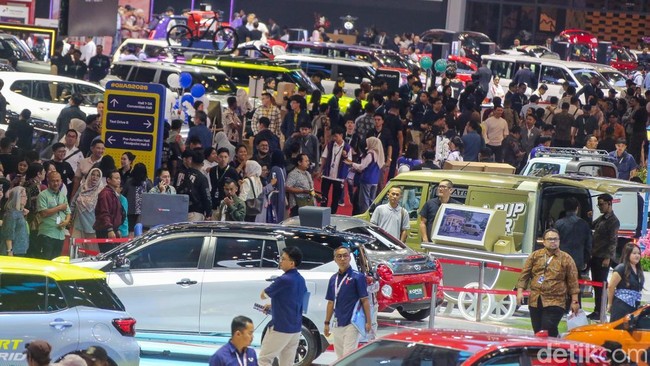
Jakarta, CNBC Indonesia - Indonesia’s automotive industry is beginning to show signs of recovery after facing sales pressure throughout 2025. However, this momentum needs to be maintained with appropriate policies, particularly regarding the vehicle tax structure that directly impacts car prices and consumer purchasing power.
Senior automotive observer Bebin Djuana believes the government cannot rely solely on the term ‘incentives’ to drive the market. According to him, the overall automotive tax policy structure needs to be reviewed so that vehicle prices in Indonesia are more competitive compared to neighbouring countries.
‘Do not use the term incentive again; it is better to review tax policy. If not, we will face part two of the automotive industry’s collapse next year. What is wrong must be boldly corrected and improved,’ Bebin told CNBC Indonesia, quoted on Monday (24/8/26).
This concern arises as Indonesia still faces relatively high vehicle prices, while neighbouring markets are able to maintain large sales volumes. In 2025, Indonesia’s car sales were recorded at 803,687 units, down 7.2% from 865,723 units in 2024. In contrast, Malaysia posted sales of 820,752 units, up 0.5% and a record high.
Bebin then highlighted the price differences of vehicles, which he said show that the issue of price competitiveness cannot simply be passed on to consumers.
‘The example is right before our eyes. How much does the Xenia cost in our country, and how much does the Perodua—which is essentially the same as the Xenia—cost for Malaysians? Would we say our Xenia is better? Or that our people’s purchasing power is better than theirs?’ he said.
Electric Cars as the Backbone?
The comparison between Indonesia and Malaysia is interesting because Malaysia has a smaller market in terms of population, yet its new vehicle sales are now able to match or even surpass Indonesia’s. One of the supporting factors is the dominance of national brands Perodua and Proton. In 2025, these two brands controlled 62.3% of the Malaysian market, with Perodua alone selling 359,904 units, or about 41.4% of the market.
In the electric vehicle sector, Indonesia is not actually lagging behind. National BEV sales reached 103,931 units in 2025, soaring 141% compared to 43,188 units in 2024 and taking a 12.93% share of total national car sales. However, this growth was largely driven by imported vehicles, with about 75% of Indonesia’s EV sales in 2025 coming from China.
Malaysia recorded 30,848 EV sales in 2025, up 109% year-on-year. EV share was about 5.1% of new vehicle registrations. Meanwhile, Thailand was far more aggressive, with electric car sales reaching about 140,000 units in 2025, or nearly a quarter of the market, supported by the EV3.5 scheme, tax and import duty exemptions, and local production requirements.
The differences show that Indonesia’s problem is not just charging infrastructure. Thailand built an EV ecosystem while forcing investment and local production, while Malaysia utilised a combination of national brands, conducive financing, and tax policy. Thailand has even attracted EV supply chain investment of about 140 billion baht as of October 2025 and has more than 7,000 DC fast chargers.
The 1 Million Unit Milestone Has Not Been Seen Again
On the Indonesian side, the market began to recover in 2026. Wholesale sales from January to July reached 517,742 units, up 18.3% compared to the same period the previous year, while July alone reached 81,115 units. This means the problem is not simply a lack of demand, but how pricing policy, taxes, financing, product strategy, industrial localisation, and after-sales service can make the recovery sustainable.
‘If this industry can start rolling again, the hope is not just to return to how it was, but to become better and stronger so that the aspiration of reaching 2 million units in sales can be achieved. It should be remembered that this industry contributes to state revenue,’ said Bebin.
Previously, LPEM FEB UI analysed national car sales data released by Gaikindo. In 2011-2013, sales always exceeded production. However, from 2014 until 2024, production exceeded sales. In fact, the gap between excess production and sales has been growing wider each year.
Then, in 2025, car sales from January 2025 to January 2026 never exceeded 100,000 units, with average sales around 60,000-70,000 units. Only in December 2025 did sales nearly touch 100,000 units, precisely at 94,102 units.
Likewise in 2026, from January to June, national car sales remained below 100,000 units each month, both in wholesale and retail sales. The highest sales were recorded in February with 81,271 units wholesale and 78,239 units retail.
Sadly, the last time national car sales exceeded 1 million units was in 2023. After that, annual sales have always been below 900,000 units.
Source: jawawa.id (https://jawawa.id/newsitem/indonesia-must-learn-from-malaysia-and-thailand-to-prevent-automotive-disaster-part-2-1787557920)
Originally published by CNBC Indonesia (https://www.cnbcindonesia.com/news/20260824122658-4-761854/ri-harus-belajar-dari-malaysia-thailand-cegah-petaka-otomotif-jilid-2), translated from Indonesian