
Indonesia Modernizes Air Force with New Rafale Jets and Expanded Pilot Training
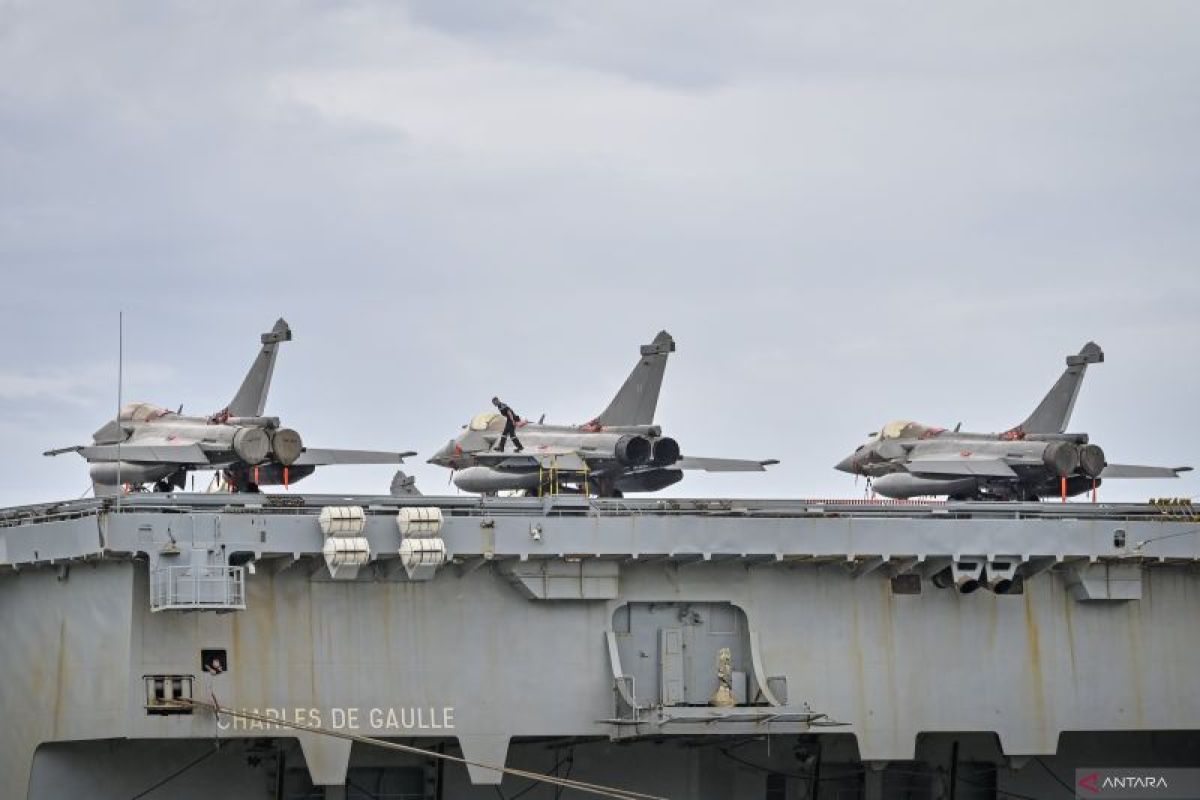
President Prabowo Subianto’s administration has placed strong emphasis on strengthening national defense by expanding the country’s primary weapon systems (alutsista).
In 2026 alone, he handed over six Dassault Rafale fighter jets, four Dassault Falcon 8X aircraft, and one Airbus A400M Atlas transport aircraft to the Commander of the National Defense Forces (TNI), General Agus Subiyanto.
Additionally, two T-50i Golden Eagle aircraft units were delivered via air cargo from South Korea.
Most recently, the Ministry of Defense confirmed the purchase of 12 M-346F Block 20 fighter jets manufactured by the Italian company Leonardo to serve as trainer aircraft for Indonesian Air Force (TNI AU) fighter pilots.
“One of the considerations is to meet the Indonesian Air Force’s pilot training needs while also maintaining operational readiness,” the Head of the Defense Information Bureau of the Defense Ministry, Brigadier General Rico Ricardo Sirait, stated.
The contract for the purchase of these 12 fighter jets has reportedly been signed and is now effective. Provided everything remains on track, Indonesia is expected to begin receiving the aircraft in 2030.
Related news: Indonesia buys 12 Italian Leonardo M-346F Block 20 jets
On the other hand, efforts to increase both the quantity and quality of Indonesian Air Force pilots have become crucial.
Indonesian Air Force Chief of Staff Marshal Mohamad Tonny Harjono and his team have taken action in response to President Prabowo’s commitment.
Expanding the pilot workforce
By 2026, the Air Force Chief of Staff has begun laying the groundwork by providing briefings to flight instructors and navigators at the Adisutjipto Air Force Base in Yogyakarta.
In the directive delivered on January 5, Harjono highlighted the importance of revising the Flight School curriculum to better reflect modern warfare requirements and improve training efficiency, thereby enhancing the quality of instruction for aspiring pilots.
On January 8, he established a collaboration with all flight schools across Indonesia to supply capable pilot candidates.
This initiative aligns with President Prabowo’s directive to optimally harness Indonesia’s pilot potential in support of national defense interests.
Subsequently, during the Indonesian Air Force Leadership Meeting for the 2026 Fiscal Year on February 13, Harjono outlined five key priorities to guide the organization’s transformation in response to the evolving strategic landscape and the increasingly complex nature of modern warfare.
Two of these five priorities are the modernization of defense and security equipment and improvement of human resource quality.
Progress is gradually emerging in the efforts to realize President Prabowo’s vision.
As of April 9, 31 civilian pilots have been recruited to serve as the Air Force pilots.
“We are currently focusing on training them to become pilots for transport aircraft or helicopters,” Harjono remarked.
These pilots then undergo standardization and adaptation training conducted by the Air Force at Adisutjipto Air Force Base.
Besides bringing in external pilots, the Air Force is increasing the number of pilots drawn from its existing personnel, including by modifying the curricula of both the Air Force Academy (AAU) and the Flight School.
Previously, aspiring pilots only began flight training after graduating from the AAU. Now, cadets in their third or final year at the AAU are already being trained as Flight School students.
“We hope to secure young pilots with the necessary skills whom we can further develop and improve,” Harjono said.
Related news: PTDI delivers eighth NC212i aircraft to strengthen TNI’s air defense
His office is also preparing future Indonesian pilots by reaching students at the school level, including 22 participants in the Republic of Indonesia Cadet Corps’ (KKRI) scholarship and accelerated education program.
One such initiative was carried out by the Deputy Chief of Staff of the Air Force, Vice Marshal Tedi Rizalihadi, at the SMK 1 Angkasa vocational school located at Halim Perdanakusuma Air Force Base on March 9, 2026.
Enhancing pilot skills
While expanding Indonesia’s pool of capable pilots is essential, equal attention must be given to those already serving in the Air Force. This appears to be a key priority for the force at present.
This is reflected in the thousands of flight hours accumulated by Air Force pilots from January through August this year.
One of them is Major (Pilot) Fulgentius Dio “Lizard” Prakoso, who has logged 2,000 flight hours on the F-16 Fighting Falcon.
Followed by Major (Pilot) Yerick “Otter” Ardyan Finandhita, who recorded a total of 2,000 flight hours in the T-50i Golden Eagle fighter jet.
There is also Major (Pilot) Ahmad “Jaglion” Finandika Nur Rasyid, who secured a total of 1,000 flight hours in the Sukhoi Su-27/30.
Related news: Airbus A400M to boost air defense capability: Prabowo
Furthermore, several other Air Force pilots had successfully completed solo flights. Among them are Second Lieutenant (Pilot) Fahmi Reyhansyah and Second Lieutenant (Pilot) Farhan Ramadhan, who piloted the EMB-314 Super Tucano fighter aircraft.
Followed by First Lieutenant (Pilot) Muhammad Ervin Adamy, First Lieutenant (Pilot) Dentang Perdana, and Second Lieutenant (Pilot) Muhammad Rizal Fahlevy, who successfully flew the F-16 Fighting Falcon, as well as Second Lieutenant (Pilot) Derievo Muhammad Zakwan, with the T-50i Golden Eagle.
Furthermore, First Lieutenant (Pilot) Dofandya Abdul Rachlien Syukur and Second Lieutenant (Pilot) Alliyan Mahfudz flew the Sukhoi Su-27/30.
Another milestone was achieved by Lieutenant Colonel (Pilot) Oliv Rizando, Lieutenant Colonel (Pilot) Rakhmanto Jati, Major (Pilot) Reza Yori, and Major (Pilot) Andy Paulus who successfully completed solo flights in the Dassault Rafale fighter jet.
These achievements should be seen not merely as individual accomplishments but as milestones for the Indonesian Air Force, demonstrating the growing