
Indonesia Matters to the World: The Evidence in Coal
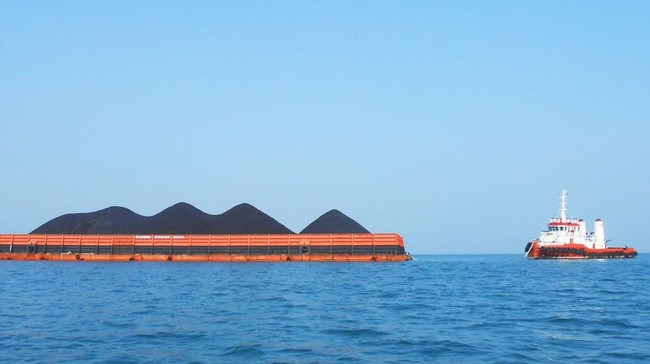
Jakarta, CNBC Indonesia — Indonesia has considerable influence on the world, as illustrated by its ownership of some of the world’s largest natural resources, including coal.
In a presentation by Bahlil Lahadalia, Coordinating Minister for Downstreaming and Energy Transition and Minister of Energy and Mineral Resources, Indonesia accounted for 43% of coal traded globally: 500 million tonnes out of the 1.3 billion tonnes traded on international markets.
However, despite being the world’s largest source of traded coal, Indonesia is unable to set prices itself.
Bahlil said coal prices were still determined by foreign parties. “Indonesia supplies 43% of that coal, but the price is set by foreign parties. The goods are ours, but someone else sets the price,” he said at a national working meeting of the Indonesian Indigenous Entrepreneurs Association (HIPPI) in Jakarta on Monday (12 October 2026).
In an effort to take greater control of pricing, the Ministry of Energy and Mineral Resources has tightened production allocations under the Work Plan and Budget (RKAB) to balance supply and demand. The strategy is considered effective in helping to stabilise Indonesian coal prices on international markets.
As a result of the policy, Indonesian coal production in 2026 was adjusted downwards compared with 2025. Despite lower volumes, the value of trade transactions and non-tax state revenue (PNBP) from the mining sector have risen.
“Coal production in 2026 is lower in volume than in 2025, but the value of transactions has exceeded that of 2025, and our state revenue — our PNBP — has increased,” he added.
Tighter Indonesian production pushes prices up, putting pressure on the world
According to Refinitiv, coal prices rose 0.7% to US$151.55 a tonne on Monday (12 October 2026), marking a second consecutive day of gains.
Thermal coal prices in China have surged to a three-year high. The increase has been driven by slow growth in domestic production and supply disruptions from Indonesia, China’s main supplier, amid a rally in energy prices linked to the US-Iran war.
According to the China Coal Transportation and Distribution Association, the benchmark price of coal for power generation reached CNY1,004, or about US$150 a tonne, on Monday (12 October 2026.
This was the first time prices had exceeded CNY1,000 in two years. Since mid-July, they have risen by about 25%.
Coal remains China’s main source of electricity generation, accounting for about half of its power mix, despite the rapid expansion of renewable energy in recent years.
China’s domestic coal production fell by more than 3% between January and August 2026 compared with the same period a year earlier. Amid domestic production constraints, shipments from Indonesia, the main supplier of China’s imported thermal coal, have also fallen sharply this year.
India is also facing supply problems, with power cuts beginning to affect households, small factories and steel plants. The disruptions have come as coal stocks at many power stations have fallen and electricity demand has surged because of hotter weather and a sharp drop in hydropower generation.
Government data at the end of September showed that the proportion of coal-fired power stations with critically low stocks had risen in recent weeks to more than 40% of all operating plants. On 1 October, 85 power stations were reported to have coal stocks below 25% of their normal requirements.
Exports fall, but state revenue rises
Statistics Indonesia (BPS) recorded a 9.33% year-on-year fall in Indonesian coal exports to 227.7 million tonnes between January and August 2026.
Kpler reported that exports in August 2026 totalled just 36.1 million tonnes, down 25.3% from August the previous year.
Tri Winarno, Director General of Minerals and Coal at the Ministry of Energy and Mineral Resources, said the 2026 RKAB adjustments cut average monthly coal production by 8 million tonnes and nickel ore production by 13 million tonnes.
He said measured production management had proved capable of increasing state revenue without excessive exploitation.
“This shows that good management, and not producing recklessly, can have a positive impact on the state and all of us,” he said.
PNBP from coal rose to Rp66 trillion as at 31 August 2026, from Rp59 trillion in the same period a year earlier. The Rp7 trillion increase came despite average monthly production falling from 68 million tonnes in 2025 to 60 million tonnes in 2026.
“Monthly production is down by 8 million tonnes, but our PNBP is up by Rp7 trillion. That means we are seeing an annual increase of Rp1 trillion while production falls by 8 million tonnes,” he said.
Private sector still dominates Indonesian coal
According to a presentation by PT Bukit Asam Tbk (PTBA), Indonesia has total coal reserves of 31.9 billion tonnes, making it the world’s sixth-largest holder. It ranks behind the United States, with 247.9 billion tonnes; Russia, with 162.2 billion; China, with 157 billion; Australia, with 149.5 billion; and India, with 127.7 billion.
Most of those reserves remain under private-sector control. The share of national coal resources managed by state-owned PTBA is only about 5.81%.
PTBA President Director Bambang Ismawan said Indonesia’s total coal resources amounted to 98.41 billion tonnes, while PTBA held 5.71 billion tonnes. PTBA controlled 2.88 billion tonnes of proven reserves, or 9.03% of the national total of 31.89 billion tonnes.
“Bukit Asam’s share is only 5.81%. What does that mean? It means the sector is not controlled by the state. Most coal today is in private hands. That is what happened in the past, but I want to remind people that coal is a national asset, belonging to the state,” Bambang said in Jakarta, in remarks reported on Wednesday (7 October 2026).
Bambang stressed the importance of reorganising the management of the country’s natural resources in line with Article 33 of the 1945 Constitution. He said the land, waters and natural wealth within them should be controlled by the state for the prosperity of all the people.
“If we return to Article 33, the current situation is no longer quite right. But we do not want to dwell on the past; we want to consider what to do next. We need to manage things better in future and correct what has not been done well,” he said.
Source: jawawa.id (https://jawawa.id/newsitem/indonesia-matters-to-the-world-the-evidence-in-coal-1791967832)
Originally published by CNBC Indonesia (https://www.cnbcindonesia.com/news/20261014135338-4-776126/jangan-main-main-ri-penting-buat-dunia-ini-buktinya), translated from Indonesian