
Indonesia Manufacturing PMI Improves, But Manufacturers Cry Out Over Rising Raw Material Costs
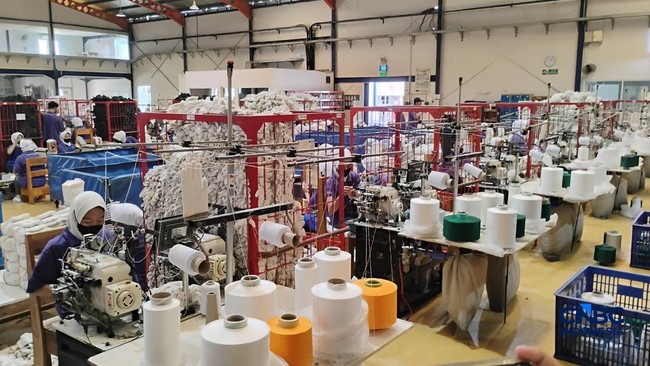
Jakarta – Indonesia’s manufacturing activity has shown improvement, though not significantly. Data from the Purchasing Managers’ Index (PMI) released by S&P Global on Tuesday, 2 June 2026, shows Indonesia’s PMI standing at 50.0 in May 2026. This figure represents an improvement following a contraction recorded in April 2026 (49.1).
The PMI uses 50 as a base point. If above 50, it signals that business is in an expansion phase. Below 50 indicates contraction.
Manufacturers Face Raw Material Difficulties
S&P Global explained that Indonesia’s manufacturing operating costs surged in May 2026, recording the second-fastest increase in the history of the S&P Global survey. Companies largely attributed this condition to rising raw material prices and continued production declines.
Soaring raw material prices and supply disruptions continue to weigh on factory production, which has been declining for three consecutive months.
Despite this, domestic demand remains reasonably robust. New orders rose for the second consecutive month, although exports experienced a deeper contraction.
Amid difficulties in obtaining raw materials, companies have begun reducing purchases, cutting inventories, and reducing workforce numbers.
Industry players remain optimistic about future prospects, though business confidence levels remain below historical averages.
“Indonesia’s manufacturing industry remained under pressure in May, as production was hampered by rising raw material prices and limited input availability,” said Usamah Bhatti, Economist at S&P Global Market Intelligence, according to S&P’s website.
He added that whilst companies recorded stronger sales growth, this largely reflected efforts by customers to increase inventories amid price and supply disruptions.
Furthermore, improved demand appears to be limited to the domestic market, as export sales fell at the deepest rate in nearly five years.
Difficulty obtaining raw materials caused purchasing and input inventories to decline. The workforce was also reduced due to weakening production requirements.
Survey data also showed that new orders continued to grow, recording the fastest increase since February. Some companies cited customers increasing stocks amid continued high price pressures.
However, export orders fell for the third consecutive month, recording the deepest contraction since August 2021 due to conflict in the Middle East and rising prices.
Although orders increased, expensive raw materials and supply constraints caused production to fall again for the third consecutive month, though the decline was milder than in April.
Input cost inflation accelerated sharply and became the second-highest in the survey’s history since September 2013. Companies raised selling prices at the fastest rate since October 2013.
Higher prices and supply scarcity have dampened purchasing activity. Many companies also began using old stocks due to difficulties in obtaining raw materials.
Supplier delivery times lengthened for the eighth consecutive month due to delays and supply disruptions related to the conflict.
The amount of unfinished work increased for the first time since February as raw material shortages hampered production completion. Capacity pressures were exacerbated by workforce reductions for the third consecutive month.
Companies remain confident that production growth will increase again within the next year, with sentiment improving compared to April. However, overall business confidence levels remain weak.