
Indonesia Mandates B50 Biodiesel, Aims to Save Rp 157 Trillion in Foreign Exchange
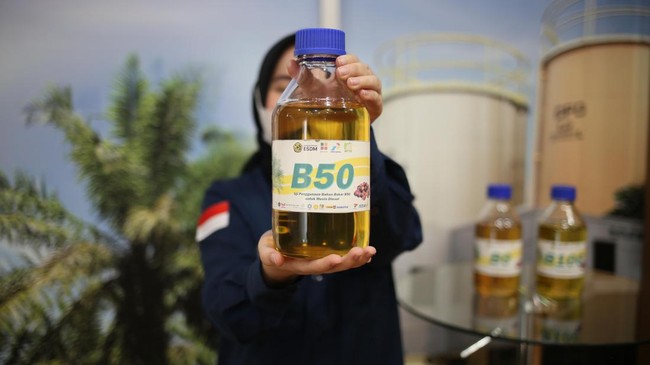
The government is set to begin implementing a mandatory 50% biodiesel blending policy (B50) for diesel fuel starting 1 July 2026. This policy serves as one of the government’s strategies to reduce dependence on diesel imports while strengthening national energy security amidst global geopolitical uncertainties.
The Minister of Energy and Mineral Resources, Bahlil Lahadalia, stated that the implementation of B50 has the potential to save foreign exchange reserves by up to Rp157.28 trillion by the end of 2026. This is achieved by suppressing or even halting diesel imports.
“Next July, we will officially inaugurate B50; it will protect Indonesia’s face from our diesel import dependency. And starting this year, we will no longer conduct diesel imports,” Bahlil said during the CNBC Indonesia Energy Forum last Thursday (25/06/2026).
With the implementation of B50, Indonesia’s oil import requirements are expected to drop from approximately 1 million barrels per day (bpd) to around 700,000 barrels per day. Looking ahead, Bahlil has proposed to President Prabowo Subianto the possibility of developing B70 to B80 blends.
What is B50? B50 is a diesel fuel consisting of a 50% blend of biodiesel (B100) based on palm oil or Fatty Acid Methyl Ester (FAME) with 50% pure diesel. This policy is a continuation of the B40 programme that has been in place since early 2025.
There are several reasons why the government is accelerating the implementation of B50. Firstly, to reduce diesel imports. The application of B50 allows Indonesia to cease importing certain diesel types, specifically CN 48. Currently, a portion of diesel needs is still met from abroad, making the country vulnerable to global oil price fluctuations.
Secondly, to save national foreign exchange. Based on data from the Ministry of Energy and Mineral Resources, the B50 programme is projected to provide significant economic benefits to the country through increased added value for crude palm oil (CPO). From a fiscal perspective, the policy has the potential to save national foreign exchange by up to Rp157.28 trillion in 2026, an increase from the initial B40 target of Rp140 trillion.
Regarding the B50 regulations, the government has issued the Decree of the Minister of Energy and Mineral Resources Number 257.K/EK.01/MEM.E/2026 concerning the Obligation to Blend Biofuel Types of Biodiesel with Fuel in the Form of Diesel Fuel at a Rate of 50% under a Financing Framework by the Plantation Fund Management Agency.
This regulation mandates the blending of biofuels (biodiesel) into diesel fuel at a rate of 50% (B50) and comes into effect on 1 July 2026. The regulation was signed by Minister Bahlil Lahadalia on 17 June 2026.
Key points regulating the B50 implementation include:
First: To accelerate the government’s policy implementation, the minimum implementation target for biodiesel blending with diesel is set at 50% for all types of diesel fuel.
Second: Biofuel enterprises, distributors, and fuel enterprises must apply the standards and quality specifications for biodiesel as outlined in the Ministerial Decree.
Third: The quality standards for biodiesel apply specifically to the 50% blending ratio with diesel.
Fourth: Biofuel enterprises, distributors, and fuel enterprises must maintain the quality of the blended biodiesel according to the specified standards.
Fifth: The use of biodiesel as a blend for certain diesel fuels is subject to incentive provisions through a financing framework by the Plantation Fund Management Agency, in accordance with the Steering Committee’s policy.
Sixth: In the event that fuel enterprises fail to implement the mandatory blending or biofuel enterprises fail to supply the required biodiesel, administrative sanctions including written warnings, temporary suspension, and/or revocation of business licences will be imposed.
Seventh: Biofuel and fuel enterprises must undertake all necessary preparations for the implementation and blending process.
Eighth: The Minister will conduct an evaluation of the implementation of the biodiesel blending every three months.
Ninth: Upon the commencement of this Ministerial Decree, fuel enterprises still holding stocks of biodiesel for 40% blending may continue to distribute their existing supply.