
Indonesia maintains strong economic fundamentals, government says
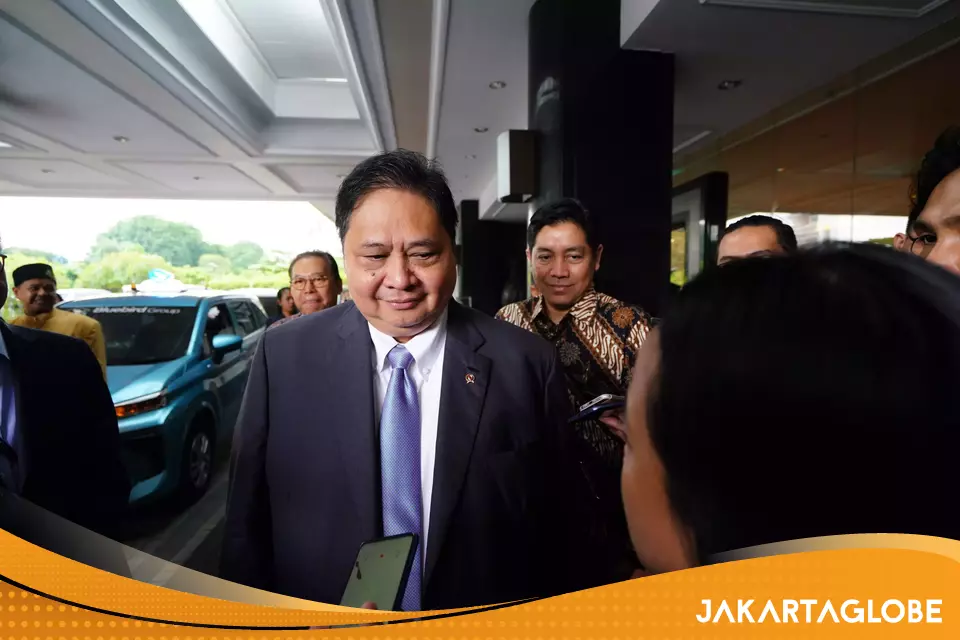
Indonesia Maintains Strong Economic Fundamentals: Govt
Jakarta. The government said Thursday that Indonesia had maintained its economic fundamentals as the Prabowo Subianto administration marked its second year.
Throughout 2025, the Indonesian economy rose by 5.11% year-on-year (yoy), followed by a 5.61% yoy expansion in Q1 2026. The economy expanded 5.29% yoy in Q2 2026, and soared 5.45% (ctc). 2026 also saw the highest first quarter growth since 2013.
“Amid the global pressure, the Indonesian economy continues to grow strongly and consistently above 5%. This shows that the foundation of our domestic economy is solid and the policies pursued by the government are effective,” Haryo Limanseto, the spokesperson at the Coordinating Ministry for Economic Affairs, said.
About 22.93 million people remain in poverty as of March 2026, down by 0.43 million people compared to September 2025. Poverty rate fell to 8.07%, the lowest in recorded history.
In the employment sector, the total working population reached 148.19 million people, with labor absorption increasing by 522,000 people during February–May 2026. The number of unemployed people fell by 24,000 people to 7.22 million people, so that the Open Unemployment Rate (TPT) fell to 4.65% with the portion of the formal workforce continuing to increase.
“Coordinating Minister for Economic Affairs Airlangga Hartarto said that good growth is growth that creates jobs and reduces poverty. In the first half, the jobs created were of higher quality because the portion of formal workers increased,” Haryo explained.
Positive Prospects for Economic Indicators
A number of recent indicators show that domestic economic activity continues to move positively entering Semester II-2026. Inflation in September 2026 was recorded at 3.28% (yoy), while Indonesia’s Manufacturing PMI increased to an expansion level of 52.4 in September 2026. Consumer confidence index rose to 118.1 points in September,.
Indonesia attracted Rp 1,010.6 trillion in the first half, up by 7.2% yoy and equivalent to 49.5% of the annual target. Foreign direct investment totaled Rp 507.6 trillion, while domestic investors put around Rp 502.9 trillion. Non-Java investment totaled Rp 507.8 trillion or about 50.2% of the total.
Indonesia registered a surplus in August 2026, reaching $3.55 billion. The January-August trade balance saw a surplus of $7.25 billion.
This achievement was supported by a non-oil and gas trade surplus of $28.54 billion, which offset an oil and gas trade deficit of $21.29 billion. During the same period, the value of Indonesia’s exports reached $193.64 billion—a growth of 4.74% compared to the January–August 2025 period. This trade surplus contributes to the external resilience of the national economy amidst global trade dynamics.
International confidence in Indonesia’s economic fundamentals is also reflected in the decision by S&P Global Ratings on July 13, 2026, to reaffirm Indonesia’s sovereign credit rating at BBB with a stable outlook, keeping the country within the investment-grade category.
The government is expanding its financing sources through plans to issue “Panda Bonds”—debt securities denominated in Renminbi—which have been assigned an AAA rating with a stable outlook by a Chinese rating agency.
Accelerating Growth
The government continues to bolster strategic sectors capable of generating added value, reducing import dependency, and unlocking new sources of growth. Indonesia has launched the mandatory B50 biodiesel program since July 1, an initiative expected to save up to Rp 170 trillion in foreign exchange, while creating added value to the palm oil industry.
The government is also pursuing renewable energy and green economic ecosystem. To this end, Indonesia is fast-tracking energy transition projects, bolstering investment in clean energy, expanding domestic industrial capacity, and adopting low-emission technologies across the industrial and transportation sectors.
Indonesia has also amended the 2025 government regulation on risk-based licensing and even set up a debottlenecking taskforce.
The government also intends to improve the national logistics ecosystem to slash costs and boost economic competitiveness. This initiative involves enhancing connectivity infrastructure, integrating and digitizing logistics services, and improving the competitiveness of human capital and logistics service providers.
Tags: Keywords:
Source: jawawa.id (https://jawawa.id/newsitem/indonesia-maintains-strong-economic-fundamentals-government-says-1792713016)
Originally published by jakartaglobe.id (https://jakartaglobe.id/special-updates/indonesia-maintains-strong-economic-fundamentals-govt)