
Indonesia Loses Crown as Singapore Becomes ASEAN’s Largest Equity Market
Indonesia Loses Crown as Singapore Becomes ASEAN’s Largest Equity Market
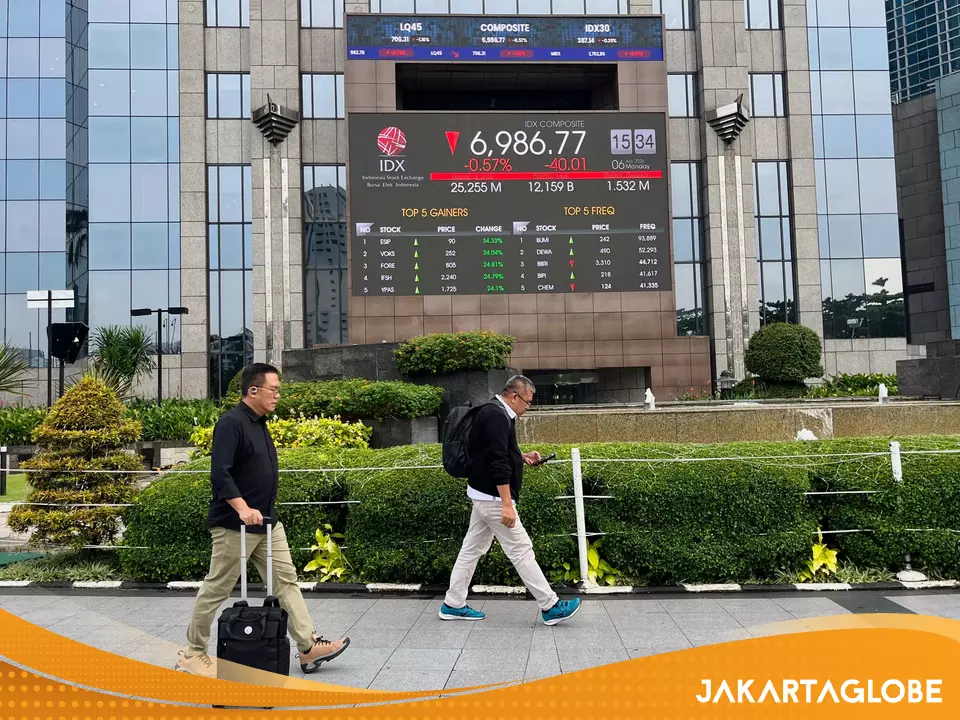
Jakarta. Singapore has overtaken Indonesia as Southeast Asia’s largest stock market after a sharp selloff in Indonesian equities erased more than 30% of market value since January, according to Bloomberg data.
Singapore’s stock market capitalization climbed to around $645 billion, surpassing Indonesia’s $618 billion, Bloomberg reported on Tuesday. The shift highlights diverging investor sentiment between the two neighboring markets as funds increasingly favor Singapore’s stability during a period of global uncertainty.
Singapore’s benchmark Straits Times Index hit a record high this week, supported by safe-haven inflows amid volatility linked to the Iran war, while Indonesian equities continued to struggkucle under foreign outflows, currency pressure, and concerns over policy direction.
Bloomberg data showed Indonesian stocks have lost nearly $360 billion in value this year, while foreign investors have withdrawn more than $4 billion from Southeast Asian emerging-market equities, with Indonesia accounting for more than half of the outflows.
Investor concerns in Indonesia have also been amplified by the possibility of a downgrade from emerging-market to frontier-market status in MSCI’s classification review next month. Fitch Ratings and Moody’s Ratings have also revised Indonesia’s credit outlook lower in recent months, adding to market caution.
Indonesia’s recent market turbulence has been compounded by concerns over fiscal policy, weakening rupiah exchange rates, and rising imported raw material costs as global energy prices climb.
Meanwhile, Singapore has benefited from a series of market-support measures, including government initiatives aimed at revitalizing the city-state’s equity market and policies supporting capital inflows.
Although Singapore’s economy is significantly smaller than Indonesia’s, investors have increasingly viewed the city-state as a defensive market amid geopolitical and macroeconomic uncertainty.
Senior Technical Analyst at Mirae Asset Sekuritas Indonesia, M. Nafan Aji Gusta, said Indonesian equities remained under pressure technically, although rising trading volume could indicate the potential for a near-term rebound.
Investors are also awaiting clearer signals from President Prabowo Subianto regarding fiscal policy direction and measures to stabilize financial markets, he added.
“If the speech provides certainty and shows support for market stability, the opportunity for a technical rebound is wide open,” Nafan said. “But if it is seen as lacking concrete measures, selling pressure may continue.”
Indonesia’s authorities have recently introduced reforms aimed at strengthening market credibility, including raising minimum free-float requirements to 15% for listed firms over a phased implementation period.
Market participants are now closely watching MSCI’s upcoming review next month, which could determine whether Indonesia retains its emerging-market status.
As of 3:35 P.M. Jakarta time, Indonesia’s benchmark Jakarta Composite Index (JCI) dropped 1.08% to 6,300 with turnover Rp 19.8 trillion ($1.12 billion). Strait Times Index (STI) dropped 0.57% to 5,042.
Tags: Keywords:
Source: jawawa.id (https://jawawa.id/newsitem/indonesia-loses-crown-as-singapore-becomes-aseans-largest-equity-market-1779542923)
Originally published by jakartaglobe.id (https://jakartaglobe.id/business/indonesia-loses-crown-as-singapore-becomes-aseans-largest-equity-market)