
Indonesia Lags Behind Thailand, Vietnam, and Singapore in Processed Food Exports, Deputy Minister Urges Action
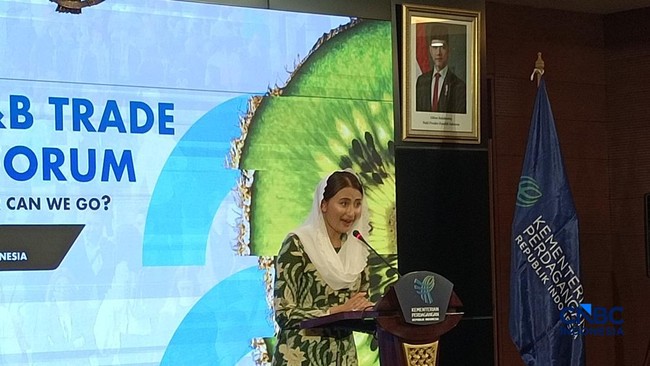
Indonesia’s position in the export competition for processed food and beverages in ASEAN still trails behind neighbouring countries, according to Deputy Trade Minister Dyah Roro Esti Widya Putri. Although Indonesia ranks among the largest food and beverage exporters in the region, it faces a significant gap with competitors, especially Thailand.
Based on the Global Food and Beverage Export Outlook, Indonesia’s total food and beverage export value in 2025 reached US$49.52 billion. This figure places Indonesia as the second-largest food and beverage exporter among the countries compared, with a market share of around 23%. However, when looking specifically at processed food exports, Indonesia’s position drops to fourth in ASEAN.
Roro stated that Indonesia’s processed food export value in 2025 was recorded at US$6.25 billion. This figure is far below Thailand’s US$17.69 billion. Meanwhile, Vietnam recorded processed food exports of US$8.89 billion and Singapore US$6.5 billion. “We must frequently observe how our neighbouring countries are advancing their F&B sectors, with the intention of learning and finding out what steps we need to take to progress further,” she said at the Indonesia F&B Trade Promotion Forum at the Ministry of Trade Auditorium in Jakarta on Tuesday.
Thus, the value of Indonesia’s processed food exports is still approximately US$11.44 billion behind Thailand’s. Thailand’s processed food export value is almost three times that of Indonesia. Roro assessed that Indonesia’s fourth-place ranking in ASEAN indicates there is still ample room to improve the competitiveness of the national food and beverage industry. “If they can do it, why can’t Indonesia? There are things we need to prepare together, and that spirit of collaboration and mutual cooperation is what we need,” she said.
Data compiled by the Ministry of Industry shows that the structure of Indonesia’s food and beverage exports is still largely supported by several main commodities. Of the five food and beverage products with the largest export value for Indonesia in 2025, palm oil was the largest at US$34.4 billion. This was followed by fishery products at US$4.2 billion, cocoa at US$3.6 billion, coffee, tea and spices at US$3.4 billion, and processed food at US$2 billion.
When compared to Thailand, the export structure appears different. Thailand’s five largest food and beverage products consist of processed meat and fish worth US$7.1 billion, animal feed at US$3.5 billion, processed food at US$3.5 billion, sugar at US$3.1 billion, and fruits and vegetables at US$3 billion. Meanwhile, Malaysia recorded food and beverage exports of US$34.02 billion, Vietnam US$27.91 billion, and Singapore US$11.72 billion in 2025.
Roro stated that the food and beverage sector is a strategic sector that not only supports national economic growth but also plays a role in strengthening the competitiveness and image of Indonesian products in the global market. “We realise that the F&B sector is a very strategic sector, which is not only an important pillar in supporting our overall national economic growth, but also the front guard in strengthening the competitiveness and image of Indonesian products in the global market,” she said.
According to her, Indonesia needs to look at the achievements of neighbouring countries as a benchmark to determine the steps needed to make national F&B products more competitive in the international market. Roro emphasised that improving quality is a task for Indonesian food and beverage business players who want to expand their export markets, as each country has product standards that must be met.
“When we talk about the connotation of exports, it is about how we can strengthen the quality of the F&B products we can offer to penetrate the international market. Because we know every country has its own standards, some countries may have quite complicated standards that we need to fulfil, but I am sure with the persistence and spirit of all of you, we can realise this together,” she said.
She assessed that Indonesia actually has significant capital to develop the food and beverage industry. In addition to a strong industrial and commodity base, Indonesia also has a large domestic market. However, this domestic market potential must be accompanied by the ability of local products to upgrade and compete in the global market. “So this domestic market is very important. But on the other hand, the quality of these products must also become more global,” she said. She also stressed that Indonesia’s position, which is still below several ASEAN countries, is not a reason to stop catching up. “If they can do it, why can’t Indonesia,” Roro asserted.
Source: jawawa.id (https://jawawa.id/newsitem/indonesia-lags-behind-thailand-vietnam-and-singapore-in-processed-food-exports-deputy-minister-urges-action-1786431069)
Originally published by CNBC Indonesia (https://www.cnbcindonesia.com/news/20260811120825-4-758224/ri-kalah-lawan-thailand-vietnam-singapura-wamendag-kasih-pesan-tegas), translated from Indonesian