
Indonesia Lacks Uniform CPO Price Benchmark, Says GAPKI
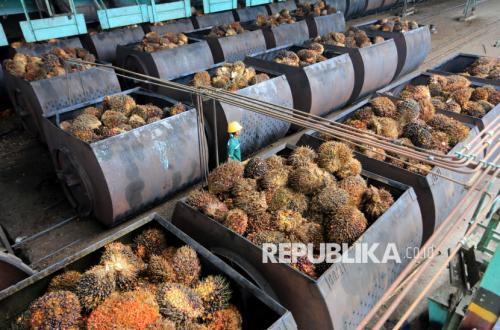
The Indonesian Palm Oil Association (GAPKI) maintains that Indonesia does not yet possess a uniform price benchmark for crude palm oil (CPO). This lack of a standard could serve as the basis for assessing the fairness of export transaction prices.
This condition is considered a challenge in determining whether a transaction can be categorised as an under-invoicing practice. The Head of Taxation and Fiscal Affairs at GAPKI, Dr. Adv. Yustinus Lambang Setyo Putro, stated that assessments of alleged CPO export under-invoicing cannot be based solely on price differentials.
According to him, the fundamental question that must be answered first is which reference price is being used for comparison. “The question is, which price will be used to determine whether a transaction is under-inasting or meets the arm’s length principle?” Yustinus said in a press statement in Jakarta on Monday (29/06/2026).
Yustinus explained that while Indonesia launched a CPO Exchange in 2023, the exchange has not yet become the primary market reference because not many business players are actively participating as members. Meanwhile, the government still uses reference prices that are a combination of several international indicators, including CIF Rotterdam prices, the Malaysian Palm Oil Board (MPOB), and references from the Indonesian CPO Exchange.
He noted that the absence of a national benchmark causes potential differences in the interpretation of price fairness in exports between business players and authorities. “So far, we have largely used daily MPOB prices as a reference, then adjusted them for freight and insurance to reflect the price at the point of delivery. The problem is, there is no single Indonesian price standard to serve as a common reference,” said Yustinus.
He emphasised that palm oil export prices are also influenced by many variables, meaning they cannot be compared directly using only a single reference figure. The first factor is the product type. Palm oil commodities consist of CPO, kernels, and various downstream products, each of which has different prices, HS Code (Harmonised System Code) classifications, and different export duties and levies.
“The HS Code must be strictly accurate because every product has different prices and export tariffs. This is an important part that must be verified from the export declaration process,” Yustinus explained.
In addition to the product type, he added, the terms of sale also determine the transaction price. Prices under a Free on Board (FOB) scheme at Indonesian ports will naturally differ from Cost, Insurance, and Freight (CIF) prices in Malaysia, India, or Europe due to the components of transport and insurance costs.
Source: jawawa.id (https://jawawa.id/newsitem/indonesia-lacks-uniform-cpo-price-benchmark-says-gapki-1782748405)
Originally published by Republika (https://ekonomi.republika.co.id/berita/thefib484/soal-under-invoicing-pakar-indonesia-belum-ada-acuan-harga-sawit), translated from Indonesian