
Indonesia Lacks Technology to Process Rare Earth Elements, Says Mining Institute
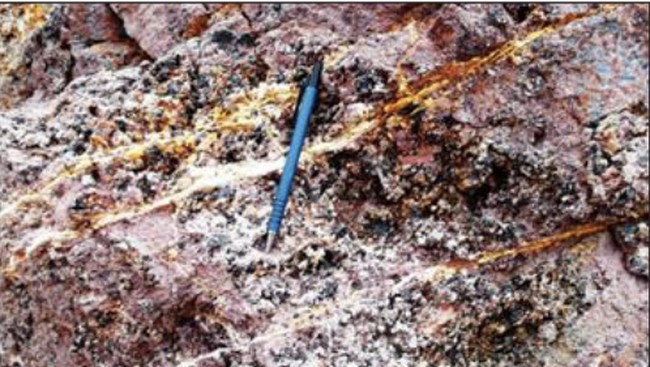
Jakarta, CNBC Indonesia - The Indonesian Mining Institute (IMI) has highlighted the challenges faced by Indonesia in mastering the technology for processing Rare Earth Elements (REE). Although the government has begun committing to the development of REE, Indonesia’s current position is considered far behind several countries that already possess large-scale, economically viable processing technologies.
Chairman of the IMI, Irwasting Arif, explained that the development of the domestic REE industry is still in its very early stages. He outlined several countries that are now major global players in mastering the refining technology of these strategic minerals, including China, India, and neighbouring Malaysia.
“When we talk about rare earth metals in Indonesia, we actually have no experience yet. We are still in the early stages,” explained Irwandy during a webinar hosted by the Mineral Industry Agency (BIM) regarding the prospects and future of Indonesia’s rare earth metals, reported on Monday.
Irwandy noted that the dominance of REE processing technology is currently held by China. The nation not only controls the mining aspect but also monopolises almost the entire global separation and refining process through companies such as Shenghe Resources Holding Co and China Northern Rare Earth.
“China accounts for 68 to 70% of the world’s rare earth mining production. Precisely more than 90%, approximately 91%, of the global refining and separation processes are controlled by them as well. The Middle East has oil, but China has rare earth metals,” Irwancy stated.
In addition to China, India has established processing facilities through Indian Rare Earths using caustic cracking technology. In Southeast Asia, Malaysia has progressed further as a global REE processing hub through the operation of a plant owned by the Australian company Lynas Rare Earths in Pahang.
Other nations with mature technological roadmaps include Canada, via Medallion Resources, which has entered the pre-commercial stage, and Australia, through Hastings Technology Metals, which is preparing for construction. Meanwhile, Indonesia currently only possesses rudimentary processing at the laboratory scale and several small-scale pilot plants.
“To this day, Indonesia does not possess rare earth processing or refining technology that has reached an economic scale. There are some attempts at the laboratory scale, and some have reached the pilot scale, for example, in Tanjung Ular, Bangka,” said Irwandy.
Currently, the primary challenge for Indonesia is the very limited availability of processing and refining facilities. Through the Mineral Industry Agency (BIM) and PT Perminas, the government is currently being instructed by the President to accelerate research into mastering this technology so that the economic value of REE can be realised by the state.
“The economic value of minerals cannot yet be maximised because we do not have adequate downstream processing technology. This is the main challenge. However, alongside this challenge, there is a strategic opportunity: the mastery of REE processing technology, the research for which is being conducted by BIM under a presidential mandate,” he concluded.
Potential of Rare Earth Elements in Indonesia
Irwandy Arif explained that REE is a collection of 17 chemical elements in the periodic table that possess unique magnetic and chemical properties. He noted that these minerals are classified into two large groups: light rare earth elements and heavy rare earth elements.
The group of 17 elements includes scandium (Sc), yttrium (Y), lanthanum (La), cerium (Ce), praseodymium (Pr), neodymium (Nd), promethium (Pm), samarium (Sm), europium (Eu), gadolinium (Gd), terbium (Tb), dysprosium (Dy), holmium (Ho), erbium (Er), thulium (Tm), ytterbium (Yb), and lutetium (Lu).
The division into heavy and light categories is based on orbital electron configuration, where the heavy group tends to be rarer and possesses much higher economic value.
In Indonesia, the presence of REE is generally found as a by-product of mining activities for other commodities such as tin, nickel, and bauxite. Some types of minerals containing REE in the country include monazite, xenotime, and zircon, which are widely found in alluvial tin deposits in the Bangka Belitung Islands.
In addition to being by-products, the government recently identified the presence of primary-type rare earth reserves in the Mamuju region, West Sulawesi. This finding has become a new focus of attention because the grade is significantly higher than that of by-product minerals, opening opportunities for Indonesia to build its own strategic mineral processing industry.
“There is one place in Indonesia, specifically in Mamuju Regency, West Sulawesi, which contains primary rare earth minerals. It is not a by-product mineral,” explained Irwandy.
Based on research data, the findings in Mamuju show a very high total REE grade reaching 4,500 to 6,000 ppm, far exceeding the levels in Bangka Belitung, which range from 1,000 to 2,391 ppm. Meanwhile, North Sumatra also possesses…