
Indonesia: King of Spices, Yet Imported Ginger Floods the Market
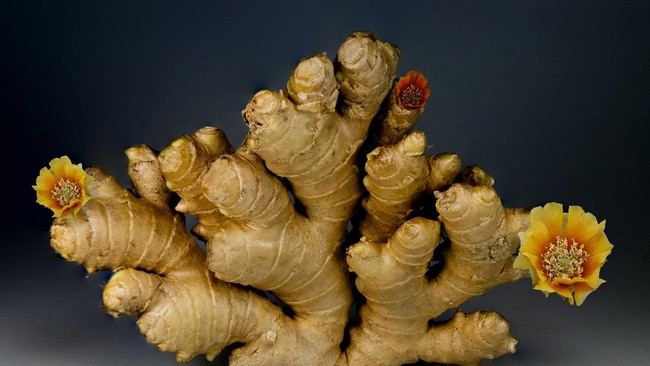
Ginger is one of the spices most closely associated with the lives of Indonesians. However, despite persistently high demand, domestic ginger supply has continued to shrink over recent years. The Central Statistics Agency (BPS) reported that national ginger production in 2025 reached 168.97 thousand tonnes, a drop of 11.19% or around 21.29 thousand tonnes compared to 2024, which still recorded 190.26 thousand tonnes. The production decline coincided with a shrinking harvest area, from 7.49 thousand hectares to 6.51 thousand hectares. In a single year, Indonesia lost nearly a thousand hectares of ginger fields.
Examined over a longer period, this weakening trend has been ongoing for several years. In 2021, Indonesia’s ginger production still reached 307.24 thousand tonnes with a harvest area of 10.61 thousand hectares. Four years later, production has fallen to just 168.97 thousand tonnes. This means that between 2021 and 2025, national production was slashed by more than 138 thousand tonnes, while the harvest area contracted by approximately 4.1 thousand hectares. The reduction in land area is the primary factor explaining the weakened production. As planting area decreases, harvest volume automatically follows suit. This condition reduces the domestic supply’s ability to meet market needs, especially as demand from the food, beverage, pharmaceutical, and herbal product industries continues steadily.
Nevertheless, Indonesia’s ginger production remains concentrated on the island of Java. According to BPS, East Java was the largest producer in 2025, with production of 41.16 thousand tonnes, or about 24.36% of the national total. West Java followed with 37.55 thousand tonnes and a 22.22% contribution, while Central Java produced 27.36 thousand tonnes, representing around 16.19% of national production. In terms of harvest season, the peak of production occurred in the third quarter of 2025, when output reached 62.16 thousand tonnes from a harvest area of 2.85 thousand hectares. The large contribution of the third-quarter harvest means the national ginger supply is still heavily influenced by seasonal patterns and weather conditions during that period.
The production slump is also reflected in foreign trade performance. The value of Indonesia’s ginger exports in 2025 reached only US$3.88 million. This figure plunged 54.43% compared to the previous year, which reached US$8.51 million. By volume, exports also fell to 2,619 tonnes from 8,229 tonnes in 2024. This is a stark contrast to several years ago, when export performance had soared. In 2023, Indonesia’s ginger export volume reached 36,407 tonnes with a value of US$28.4 million. Within two years, exports underwent a very deep correction. This situation demonstrates an increasingly limited national supply and a reduced ability for Indonesia to serve foreign markets. The United States was the main export destination for Indonesian ginger in 2025, with a value of US$0.99 million. Malaysia was second with US$0.76 million, followed by Taiwan with US$0.46 million. These three countries absorbed the majority of Indonesia’s ginger exports throughout the year.
While exports weakened, imports moved in the opposite direction. BPS recorded that the value of ginger imports in 2025 reached US$11.61 million, surging 51.7% compared to the previous year. Import volume even penetrated 17,509 tonnes, a sharp increase from 10,716 tonnes in 2024. This data paints a contrasting picture. The value of imports is almost three times greater than the value of exports. In terms of volume, imports also far exceed exports. This situation shows that domestic market needs are increasingly being met by supplies from abroad. Thailand was the largest supplier, with an import value of US$4.31 million and a volume of 8.44 thousand tonnes. Vietnam followed with a value of US$4.11 million and a volume of 7.80 thousand tonnes, while China sent ginger worth US$1.61 million with a volume of around 470 tonnes. These developments illustrate Indonesia’s changing position in the global ginger trade. As a spice-producing country, Indonesia still has considerable production, but the rate of decline in harvest area and production in recent years has narrowed export opportunities, while domestic demand continues to open the door for imported products.
Source: jawawa.id (https://jawawa.id/newsitem/indonesia-king-of-spices-yet-imported-ginger-floods-the-market-1781779949)
Originally published by CNBC Indonesia (https://www.cnbcindonesia.com/research/20260617135455-128-743389/ri-raja-rempah-tapi-jahe-impor-merajalela), translated from Indonesian